

A blown tire does not automatically make the driver responsible for a crash. The cause may point to the driver, a tire manufacturer, or a mechanic, depending on evidence of unsafe driving, a defective tire, or improper repair. A tire blowout accident attorney can investigate these possibilities and help identify who may be legally responsible.
It’s understandable to feel unsure after a sudden tire failure, especially when you’re dealing with injuries, medical bills, missed work, or questions from insurers. The key is to look beyond the blowout itself and determine what caused the tire to fail and how the crash happened.
This article explains why blowouts can make a vehicle difficult to control, what evidence can help clarify responsibility, and when legal guidance may help you assess your options. You’ll also learn how fault may be shared when more than one person or business contributed to the crash.
Key Takeaways
- A tire failure can involve more than one potential cause, so the source of the failure matters when assessing responsibility.
- Evidence about the tire, vehicle, road conditions, and repairs can help clarify how the crash happened.
- Injuries and disputed fault may make legal guidance useful, and filing deadlines depend on the circumstances.
- Keeping relevant records and documenting the crash can support an investigation into a possible defect or negligent repair.
- An attorney may help organize medical documentation, assess potential claims, and address questions from insurers.
What Are Tire Blowouts and Why Are They So Dangerous?
A tire blowout happens when a tire bursts and loses pressure suddenly. The vehicle may veer or become difficult to control, putting its occupants and nearby road users at risk. Responsibility depends on what caused the failure and how each person or business contributed. A tire defect, a pothole, or a driver’s actions can point to different potential sources of liability.
A manufacturer or seller may face a product liability claim if a faulty tire caused an injury. For example, a design flaw that makes a tire line more prone to tread separation could support a claim. Evidence may include the damaged tire, manufacturing information, and records showing when and how it was sold. A seller’s potential responsibility depends on its role and the facts connecting the product to the crash.
Road conditions can also matter. A pothole may damage a tire, trigger a blowout, and cause a vehicle to leave its lane. A government entity responsible for the road may be liable if it knew or reasonably should have known about the hazard and failed to address it. A private party responsible for maintaining a road or property may also be a potential defendant if poor conditions contributed.
The driver or vehicle owner may share responsibility if their conduct or maintenance contributed to the collision. For example, the driver’s response after a blowout, the vehicle’s condition, and whether the disabled vehicle displayed hazard lights may affect how fault is assessed. A traffic citation may be relevant evidence, but it does not, by itself, prove civil liability. The facts behind the citation and the crash still matter.
Injured people may seek compensation for medical and rehabilitation costs, lost income, property damage, pain and suffering, or lasting effects such as disability. Which losses apply depends on the harm and supporting records, including medical documentation and evidence of missed work.
Settlement value depends on documented losses, injury severity and duration, effects on work and daily activities, and how fault is allocated. In Li v. Yellow Cab Co., the California Supreme Court adopted pure comparative negligence, allowing responsibility to be divided from 0% to 100%. An injured person’s share of fault can affect potential recovery. A consultation can help organize evidence and assess these factors.
Common causes of tire blowouts
A blowout can begin with underinflation, worn tread, a manufacturing defect, or damage from road debris. A tire that strikes a sharp object may develop a puncture or weakened area. If the damage worsens while the vehicle is moving, pressure can drop suddenly and contribute to a collision. Poor road conditions and overloaded vehicles can also increase tire stress.
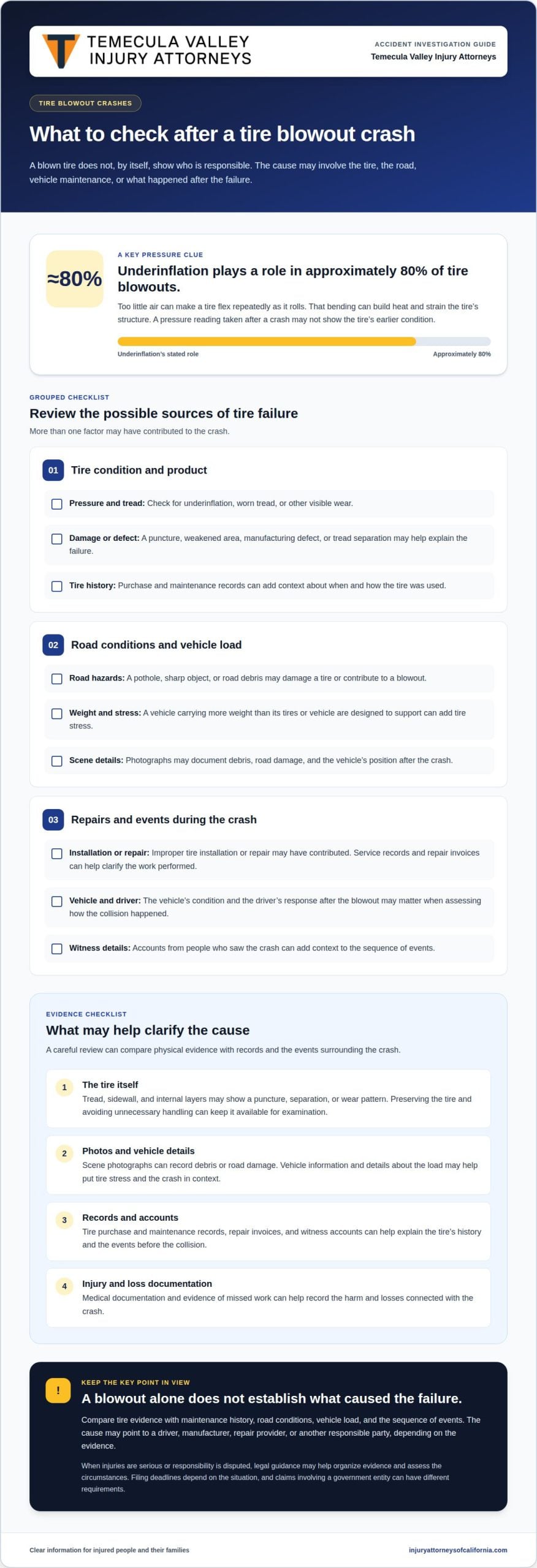
Tire pressure is a key factor. Underinflation plays a role in approximately 80 percent of tire blowouts. With too little air, a tire flexes more as it rolls. That repeated bending can build heat and strain the tire’s structure, making failure more likely. A pressure reading taken after a crash may not show the tire’s condition beforehand, so maintenance records and other evidence can help explain what happened.
Vehicle weight matters, too. Carrying more weight than a tire or vehicle is designed to support can place added stress on the tire, especially during travel or over rough surfaces. Relevant evidence may include the vehicle’s load, the tires installed, visible wear, and any damage from an impact. A tire can also fail after improper installation or repair, so service records may help establish whether the work contributed.
An investigation looks for clues that distinguish these possibilities. The damaged tire’s tread, sidewall, and internal layers may show a puncture, separation, or wear pattern. Photographs of the scene can document debris or road damage. Tire purchase and maintenance records, repair invoices, vehicle information, and witness accounts can add context. Preserving the tire and avoiding unnecessary handling can help keep physical evidence available for examination.
These details matter because a blowout alone does not establish what caused the failure. A lawyer may compare tire evidence with maintenance history, road conditions, vehicle load, and the sequence of events before the collision. For example, a puncture may suggest road debris, while unusual separation may prompt closer review of the tire’s construction or repair history. If you’re unsure how to preserve evidence or respond to an insurer, you can discuss your situation with our team.
When to contact a personal injury attorney
Consider legal help if a blowout crash caused serious injury, fault is disputed, or there are questions about a tire defect. Acting promptly can help preserve evidence and keep filing deadlines in view.
Injuries from Blowout Accidents
Blowout crashes can cause serious injuries, including fractures, traumatic brain injuries, and spinal cord injuries. Treatment records, recovery needs, and effects on work or daily activities help document how the crash changed your life. Keep records of appointments, diagnoses, and missed work, and note symptoms that appear after the collision.
Legal Help and Filing Deadlines
An attorney can organize medical records, crash reports, witness details, and tire evidence to assess how the injury occurred. A lawsuit must meet the applicable filing deadline, and claims involving a government entity can have different requirements. Early legal guidance can help identify the deadline that applies and the evidence that needs prompt preservation.
A tire blowout accident attorney may be useful when an insurer disputes responsibility or the evidence points to a manufacturer, repair shop, or another party. Look for a lawyer who can explain how they will investigate the tire, vehicle, and maintenance history, and who answers your questions clearly.
Ask for a written explanation of the attorney’s fee arrangement and any case expenses before signing an agreement. The written terms should explain how charges are handled, when payment is due, and what happens if the case does not proceed as expected. Do not rely on assumptions about how a lawyer charges.
Contact a lawyer promptly if you have a fracture, head or spinal injury, ongoing symptoms, or difficulty returning to work. Bring available medical records, insurance correspondence, photographs, and repair or tire documents. These materials can help the attorney assess the claim and explain practical next steps without requiring you to reconstruct the case from memory.
In California, you generally have two years from the date of injury to file a personal injury lawsuit. Different deadlines may apply in some circumstances, including claims involving a government entity. Confirm the deadline for your specific situation.
Defective tires, parts, and negligent repairs
A tire or component defect may cause a blowout even when the driver uses the vehicle normally. A tire’s layers may separate because of a design or manufacturing flaw, while a defective valve or other part may contribute to pressure loss. A manufacturer or seller may face a claim when evidence connects a faulty product to the crash and injury. The tire’s condition, identifying information, and purchase records can help trace its origin.
Repair work can also be relevant. A mechanic or service business may be responsible if it failed to inspect or replace a damaged tire, or performed work that contributed to the failure. For example, an invoice showing a recent tire repair may help establish what service occurred. The repair record alone does not prove negligence, but it can guide a review of the work, the tire, and the crash sequence.
Proving negligence means connecting a party’s conduct to the injury with evidence. An investigation may compare the failed tire and other parts with inspection records, maintenance history, photographs, and witness accounts. It may also examine whether damage came from a road impact, normal wear, a product flaw, or improper service. The clearer the connection between a specific act or defect and the collision, the stronger the basis for assigning responsibility.
Keep damaged tires and parts, and preserve receipts, service invoices, and photographs. Avoid repairs or disposal that could destroy evidence before the tire’s condition is documented. A product or repair dispute may involve several parties, so records showing who made, sold, installed, or serviced a tire can matter. A car accident claim may involve these product and maintenance questions alongside evidence about how the crash happened.
California uses pure comparative negligence. If a driver’s conduct also contributed, responsibility may be divided among the parties, and the driver’s share can affect damages. For instance, evidence of both a defective tire and a driver’s actions may require assessing each contribution rather than treating one cause as the whole explanation.
An injury lawyer can organize records and assess whether the evidence supports a claim involving a manufacturer, seller, or repair business. The central questions are what failed, who had a role in that failure, and how it caused the injury. Clear documentation helps answer those questions and distinguish a product defect from poor maintenance or unrelated damage.
Legal assistance after a tire blowout accident
After a serious tire blowout crash, prompt medical care and preserved evidence can support your injury claim. An accident lawyer may investigate the tire, crash records, and documented losses to assess potential compensation.
Immediate Steps After a Crash
After a blowout collision, stay at the scene and wait for the police officer if it is safe to do so. Photograph the vehicle, tire, road, and surrounding damage, and collect witness contact details. Seek medical attention promptly, even if symptoms are not immediate, because injuries may become apparent days or weeks later.
Keep the damaged tire and avoid discarding it. Notify your insurer about the accident, and promptly provide your insurer with any lawsuit papers. These steps create a record of the crash and help preserve physical evidence while the tire’s condition can still be examined.
Legal Assistance for Accident Claims
An attorney can collect police records, witness accounts, medical reports, and information about the tire’s manufacturer and inspections. For a suspected defect, the investigation may examine the tire and its production or inspection records. Tire specialists, automotive engineers, or accident reconstructionists may help explain technical findings and assess how the failure contributed to the crash.
Medical documentation helps connect the collision to your injuries and describe their effects. An attorney can organize treatment records, rehabilitation information, and documentation of missed work. These materials help show the injury’s impact, while photographs, invoices, and witness statements can clarify how the tire failed and how the crash unfolded.
Legal assistance can also help address insurer questions and disputed responsibility. If the other insurer rejects liability, your own collision coverage may be an option, and your insurer may pursue the dispute with the other driver’s insurer. The available path depends on your coverage and the claim’s facts.
Preserving the tire, medical records, and crash documentation gives an investigation specific evidence to assess.
Temecula Valley Injury Attorneys
Temecula Valley Injury Attorneys helps injured people understand their options after a tire blowout crash. We can review how the collision happened, what evidence may identify the tire’s failure, and which parties could be responsible. This can help when medical needs, missed work, insurance questions, and uncertainty about fault are all demanding your attention.
Our team can examine available tire information, maintenance and inspection records, police records, medical reports, photographs, and witness accounts. Together, these details may help show whether a defect, repair issue, road hazard, or driver conduct contributed to the crash. In some cases, attorneys consult tire specialists, automotive engineers, or accident reconstructionists to better understand technical evidence.
We can also help organize records documenting your injuries and their effects. Medical reports and treatment records describe the care you received, while employment information may show time away from work. Keeping these materials together can make it easier to explain your losses and respond to insurer questions. We can review communications and help you understand issues raised about responsibility or compensation.
A blowout may lead to different kinds of vehicle collisions, and the legal questions can depend on who was involved and how the crash unfolded. Our car accident attorney service can address injury claims involving cars. We also provide motorcycle accident attorney, truck accident attorney, and pedestrian accident attorney services. The relevant focus depends on your role in the crash, the vehicles involved, and the evidence available.
Consider legal guidance if you suffered an injury, fault is disputed, an insurer questions your claim, or a tire defect or repair may have played a part. You do not need to assemble every document before evaluating your options. Information about the crash, injuries, insurer communications, and records already available can help clarify which questions need attention.
Understanding what the evidence can establish may help you decide how to approach the claim. The next steps depend on the collision’s facts and the issues raised by the insurer or other parties.
Take a Clear Next Step
After a tire blowout crash, you may still be sorting through medical care, insurance questions, and uncertainty about what comes next. You don’t have to resolve every detail before asking for guidance. A conversation with a tire blowout accident attorney can help you understand what information matters and which options may fit your circumstances.
Temecula Valley Injury Attorneys represents people injured in car, motorcycle, and truck accidents in Temecula. We can listen to what happened, discuss the evidence you have, and explain how our team may assist with your injury claim. You can bring questions about a defective tire, disputed responsibility, or an insurer’s position. We offer free initial consultations. A consultation does not commit you to legal action. Se habla español.
If you’d like to discuss your situation, contact Temecula Valley Injury Attorneys. A clear conversation can help you move forward with greater confidence.
Frequently Asked Questions
What if I’m Partially Responsible?
Partial responsibility does not automatically prevent you from seeking compensation in California. The state uses pure comparative negligence, which means fault may be allocated among those who contributed, and your share can reduce potential recovery. For example, investigators may consider whether your actions affected the collision even if a tire defect also played a role. Preserve evidence and avoid assuming that a traffic citation alone decides civil fault.
When can a tire blowout accident lead to a personal injury claim?
A blowout crash may support a personal injury claim when another party’s negligence or a faulty product caused harm. For instance, evidence could connect a tire defect, unsafe repair, or failure to replace a damaged commercial vehicle tire with the collision and your injury. Medical records help document the harm, while crash and tire evidence can help establish how it happened. The circumstances determine which potential claim applies.
Who may be liable for a tire blowout crash: driver, tire maker, mechanic, or trucking company?
Responsibility may rest with a driver, tire manufacturer or seller, mechanic, or a business responsible for a commercial vehicle. A driver’s conduct, a tire defect, or a repair that contributed to failure may each warrant investigation. A business may face liability if it failed to inspect or replace damaged commercial vehicle tires. More than one party may have contributed, so the evidence and each party’s role matter.
How can investigators prove a tire defect or improper tire maintenance caused a crash?
Investigators can compare the tire’s physical condition with manufacturing, inspection, and service records. For example, a repair invoice may show recent work, while the tire’s internal layers or tread may provide clues about failure. Police records, witness accounts, and crash reconstruction can help connect the failure to the collision. Tire specialists or automotive engineers may explain technical findings and assess whether a defect or maintenance issue contributed.
What evidence should I preserve after a tire blowout accident?
Keep the damaged tire and any related parts, and avoid altering or discarding them. Preserve photographs of the vehicle and scene, repair invoices, tire purchase or maintenance records, police documentation, and insurer communications. Write down witness names and contact details while you can still identify them. Medical records and appointment information can document your injury and care. If an insurer requests evidence, keep a copy of what you provide.
How long do I have to file a tire blowout injury lawsuit in my state?
In California, the filing deadline depends on the claim and the parties involved, so don’t assume one timeline fits every case. Claims involving a government entity may have separate requirements, and circumstances such as a minor’s injury can affect the applicable deadline. Delays can also make evidence harder to preserve. Identify potential defendants and get legal guidance promptly to determine which deadline applies to your situation.
How do tire blowout accident attorneys charge, and what fees should I expect?
Ask for a written explanation of the attorney’s fee arrangement and case expenses before signing. It should explain how charges are handled, when payment is due, and what happens if the case does not proceed as expected.


