

A motorcycle crash claim may cover more than the first medical bill. A motorcycle injury lawyer in San Diego can help identify damages that may be recoverable, including past and future medical expenses, lost wages, pain and suffering, and motorcycle damage. The losses you can claim depend on your injuries and the evidence supporting them.
It’s understandable to worry about treatment costs, missed work, and whether an insurance offer reflects the full impact of your injuries. This article explains how medical expenses and lost wages are evaluated, what non-economic damages may include, and how responsibility for the crash can affect compensation.
You’ll also learn how a fatal motorcycle accident may affect a claim and when legal representation can help you understand your options and respond to insurance issues. The goal is to clarify the damages involved and the next steps to consider.
Key Takeaways
- Identify the types of losses a motorcycle accident claim may include, from treatment needs to damage to your bike.
- Understand how records of medical care and missed work can help document financial losses.
- Learn how non-economic damages account for the personal effects of an injury, not just bills and paychecks.
- See how legal representation may help assess evidence, address insurance issues, and evaluate your options.
- Find out how a fatal crash may raise separate wrongful-death claims for eligible family members.
What Are Common Motorcycle Accident Injuries?
A motorcycle accident can cause road rash, fractures, head injuries, or damage to the spine and joints. The type and severity of an injury affect treatment needs, your ability to work, and the evidence used to evaluate a claim. Prompt medical assessment also creates a record connecting reported symptoms to the crash.
California motorcycle operators and passengers must wear helmets that comply with U.S. Department of Transportation standards under California Vehicle Code section 27803, according to the California Legislature. If a rider wasn’t wearing a helmet, that fact may matter when evaluating a head injury. It doesn’t automatically prevent recovery for unrelated injuries.
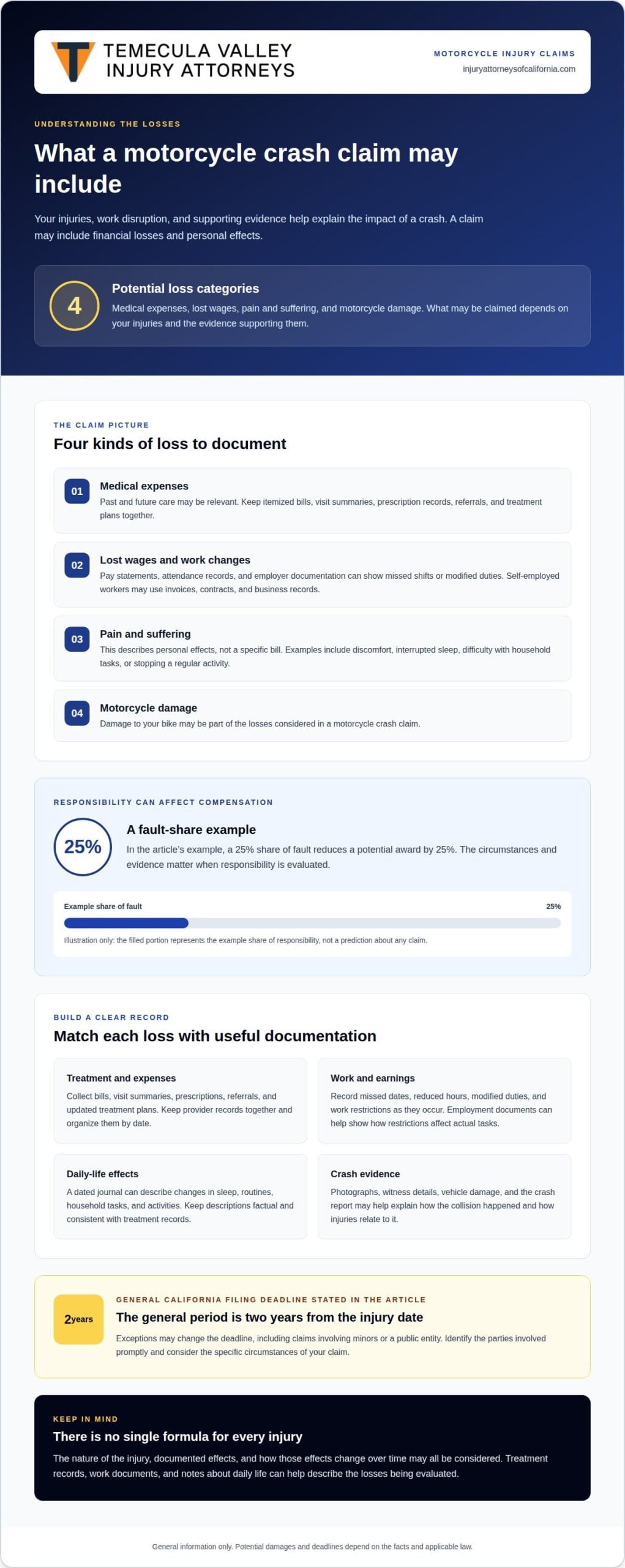
California uses pure comparative negligence. This means an injured person’s compensation may be reduced by their share of responsibility, but fault does not automatically erase a claim. For example, a 25% share of fault reduces a potential award by 25%. Evidence such as photographs, witness accounts, vehicle damage, and the crash report can help clarify how the collision happened.
Motorcyclists have rights when another road user causes a crash. A driver’s failure to yield, unsafe turn, or failure to notice a rider may be relevant evidence. Lane splitting does not automatically establish comparative fault, though the rider’s conduct and surrounding circumstances may matter. A motorcycle accident attorney can assess the available evidence and how fault arguments may affect a California claim.
Equipment requirements can also arise when insurers dispute responsibility. California Vehicle Code section 26709 requires motorcycles to have right and left mirrors. Under section 27800, a motorcycle carrying a passenger must have a securely fastened seat, footrests, or a sidecar. These requirements do not determine fault by themselves, but the motorcycle’s condition may become relevant to an investigation.
For an injury claim, California’s general filing deadline is two years from the date of injury. Exceptions may change that deadline, including claims involving minors or a public entity, so identify the parties involved promptly.
After a San Diego crash, get medical care, report the collision to law enforcement, and preserve photographs, witness details, and medical records. To obtain an accident report, identify the responding agency and follow its records-request process. Keep the report with your claim documents. Scene evidence can help explain both your injuries and how the crash happened.
Motorcycle injury claims don’t follow one fixed timeline. Treatment status, access to medical records, disputed fault, and whether negotiations resolve the claim all affect how long it takes. A personal injury claim is easier to evaluate when medical documentation and crash evidence are organized.
Calculating medical expenses, lost wages, and pain and suffering
Clear records help show how the crash affected your health, work, and daily routines. Organizing them by date makes it easier to trace treatment and time away from work.
Expense and Wage Calculations
Medical expense documentation may include itemized bills, visit summaries, prescription records, and treatment plans. Keep records from each provider together, including referrals for rehabilitation or specialist care. A referral can explain why a service followed the crash, while appointment records show how treatment progressed. If a bill includes services unrelated to the collision, separate documentation can help distinguish those charges.
Lost wages require a separate record trail. Gather pay statements, attendance records, and employer documentation showing missed shifts or modified duties. If you’re self-employed, invoices, contracts, and business records may help show interrupted work. For example, a rider who returned part-time may have missed hours and reduced duties to document. Record dates and work changes as they happen rather than relying on later estimates.
Future treatment and earning effects also need supporting information. Medical records may describe continuing care or functional restrictions. Employment documents can show how those restrictions affect actual tasks, such as lifting, standing, or riding between job sites. These details help distinguish a temporary disruption from a longer-term change. Keep copies of updated treatment plans and work restrictions as they become available.
Some providers offer treatment under a lien agreement, which addresses payment for care later. Read the written terms carefully and keep a copy. Review how the agreement describes payment, which services it covers, and how any balance may be addressed. A lien does not establish that treatment is related to the crash or that an insurer will pay the claim. Preserve bills and records even when payment is deferred.
Pain and Suffering Calculations
Pain and suffering describes the personal effects of an injury, not a specific bill. Relevant details may include discomfort, interrupted sleep, difficulty with household tasks, or having to stop a regular activity. A dated journal can help you describe changes consistently, while treatment notes can provide context about symptoms discussed during care.
No single formula captures everyone’s experience. An evaluation may consider the nature of the injury, its documented effects, and how those effects change over time. For example, note when a familiar activity becomes difficult and what limitation you experience. Keep descriptions factual and consistent with your records. Treatment documents, work records, and notes about daily life together provide a clearer account of the losses being evaluated.
Economic and non-economic damages
A personal injury claim may seek compensation for financial losses and personal harm caused by a crash. These categories describe different effects of the same accident, and evidence helps explain how each relates to the injury. A settlement discussion should account for documented losses, not just the first bill or missed shift.
Economic damages are financial losses that can be documented or calculated. They may include medical expenses, lost wages, reduced earning ability, and motorcycle damage. Hospital statements, rehabilitation records, employer attendance logs, and repair estimates can help show specific losses. Organize documents by date and type so each item can be connected to the crash and distinguished from unrelated expenses.
Future losses need a different kind of support. Medical records may describe continuing care or restrictions that affect work duties. Employment records can help show how missed time or changed responsibilities affected income. The question is whether the evidence connects a loss to the accident and supports its expected duration. A clear record helps distinguish documented effects from assumptions.
Non-economic damages address harm that does not arrive as an invoice. They may include physical pain, emotional distress, and the loss of activities that were part of your daily life. A serious injury may affect sleep, mobility, family routines, or familiar hobbies. Treatment notes and consistent descriptions of these changes can help communicate their impact. No receipt can capture those effects, so the evidence must clearly explain your experience.
Drivers and insurers may focus on visible records, but the full personal injury claim includes more than financial paperwork. A useful account connects the injury, treatment, daily limitations, and recovery progress. For instance, a rider who can no longer perform regular household tasks can document those changes through treatment discussions and a dated activity journal. Such details provide context without replacing medical evidence.
Punitive damages are different from compensation for losses. California Civil Code §3294 provides for punitive damages in cases involving egregious conduct. They are intended to address qualifying misconduct, rather than reimburse medical care, lost income, or personal harm. Their availability depends on proof that meets the legal standard; a serious injury alone does not establish entitlement.
For each damage category, organize the supporting records and note what each item demonstrates. An attorney can assess whether the evidence supports the claimed losses and identify gaps before settlement discussions. A motorcycle accident claim may involve several overlapping kinds of harm, so separating financial documentation from evidence of personal impact makes the case easier to evaluate.
Legal representation and consultations
A consultation can help you understand how an attorney would assess your motorcycle claim. Bring the crash report, insurance correspondence, and a brief timeline of treatment and missed work.
Contingency-Fee Representation
With contingency-fee representation, the attorney’s fee is tied to the case outcome, as defined by the written agreement. Read the agreement carefully before signing. It should explain how the fee is calculated, how case expenses are handled, and what happens if there is no recovery. Ask for plain-language explanations of any terms you don’t understand.
Clarify whether expenses are separate from the attorney’s fee and when they may be owed. For example, ask how charges for obtaining records or other case materials are handled. The written terms matter more than a general description, so keep a copy and compare it with what the attorney explained during the consultation.
Choosing and Comparing Lawyers
When choosing a motorcycle injury lawyer in San Diego, ask about experience with motorcycle collisions, disputed fault, injury evidence, and insurance negotiations. Compare how each attorney explains next steps, responds to your questions, and describes who will handle routine updates. A clear consultation should leave you understanding the proposed approach, without pressure to decide immediately.
When comparing reviews and results, look for details relevant to your concerns, such as communication and case handling. A past settlement or verdict does not predict what will happen in your accident case. Every claim has different evidence, injuries, fault questions, and available coverage. Treat online reviews as one source of perspective, not a substitute for discussing your own facts.
Use the consultation to ask what information the attorney needs and how the firm will communicate with you. For example, clarify who will answer questions about an insurance offer and how you’ll receive updates. These practical details help you assess whether the working relationship fits your needs.
Relevant Attorney Experience
A San Diego motorcycle accident attorney should be prepared to evaluate collision evidence, injury documentation, comparative-fault arguments, and insurance positions. Ask how the attorney approaches a case where a driver disputes seeing a rider or the crash report leaves fault unresolved. Specific answers can show how the lawyer analyzes issues that may shape your claim.
Also ask who will handle negotiations and how the process works if a dispute continues. An accident attorney should explain the choices and tradeoffs in understandable terms. You deserve to know how questions will be addressed, what records may be needed, and that settlement decisions remain yours.
Recoverable damages and wrongful death
A fatal motorcycle collision raises different questions from an injury claim. The family’s potential claim is separate from the damages the injured person could have pursued. California Code of Civil Procedure §377.60 governs wrongful death damages in fatal cases. The central issues are who may bring the claim, what losses the law recognizes, and how evidence connects those losses to the collision.
For a nonfatal crash, damages may address the injured person’s documented financial losses and personal harm. A collision involving several vehicles may also raise questions about each driver’s conduct and share of responsibility. Evidence can help establish what happened and how the crash affected those involved. Preserving relevant records helps clarify liability and supports evaluation of losses connected to the collision.
In a fatal case, eligible surviving family members may have a wrongful death claim. It focuses on losses they suffered because of the death, rather than simply transferring the deceased person’s personal injury claim. Family relationships, the circumstances of the collision, and available evidence help determine whether a claim may proceed and what damages may be considered.
Keep records showing how the collision affected the family. Useful materials may include documents establishing family relationships, funeral and related records, and communications about the event. Preserve photographs, witness contact details, and any crash report as well. These records do not establish liability on their own, but they can help support the account of the collision and its consequences.
When more than one driver or vehicle may have contributed, an early account should not be treated as the final answer. Investigators and insurers may examine vehicle positions, damage, statements, and other evidence. In a fatal collision, establishing fault and identifying the proper claimants are separate parts of evaluating the case. Organized records can help preserve details for review.
Families often need a clear explanation of how an injury claim differs from a wrongful death claim. A wrongful death claim addresses the family’s legally recognized losses, while a surviving injured person’s claim concerns that person’s own harms. Which claims apply depends on who was injured, who died, and the circumstances supported by evidence.
To organize a potential claim, preserve crash records, identify witnesses, and keep documents showing the family’s losses together. Avoid discarding damaged personal property or communications related to the collision. These steps help create a useful record for evaluating liability and damages.
Temecula Valley Injury Attorneys: Motorcycle Accident Attorney
Temecula Valley Injury Attorneys helps injured riders understand their options after a motorcycle crash. Our team can review available evidence, explain potential damages, and address questions about disputed fault or insurance communications. Legal guidance may help when injuries, missed work, or a settlement offer make it difficult to decide what to do next. We can discuss how the facts of your San Diego motorcycle accident may affect a claim.
If the collision involved another type of vehicle or road user, our car accident, truck accident, and pedestrian accident services may also be relevant.
Choose Your Next Step With Confidence
You don’t need to resolve every question before seeking guidance. Start by identifying what matters most now, whether that’s understanding an insurance communication, organizing records, or learning about your options. A motorcycle injury lawyer in San Diego can discuss how your crash relates to your concerns and what information may clarify the way forward.
Temecula Valley Injury Attorneys represents people in motorcycle, car, and truck accident matters. A conversation with our team can help you explain what happened, ask questions, and consider whether legal representation fits your needs. You remain in control of your decisions, including whether to move forward.
Contact Temecula Valley Injury Attorneys to discuss your situation. Taking one informed step can help you approach what comes next with greater clarity.
Frequently Asked Questions
What Damages Can I Recover After a Motorcycle Accident?
You may seek compensation for crash-related losses, including medical care, missed income, motorcycle damage, and effects on daily activities. A useful next step is to sort records into categories: treatment documents, work records, repair information, and notes about changes to everyday routines. This helps show how different losses connect to the collision instead of presenting one unexplained total.
What Is My Motorcycle Accident Case Worth?
There is no reliable standard value for every motorcycle accident case. The evaluation depends on the injuries, treatment, documented financial effects, evidence about how the crash happened, each party’s share of fault, and available insurance coverage. For example, an ongoing work restriction may affect the assessment differently from a temporary absence. The type of accident alone cannot determine a case’s value.
What if I wasn’t wearing a helmet?
Not wearing a helmet may affect how fault is evaluated for a head injury, but it does not automatically prevent recovery for other injuries. The relevant question is whether helmet use relates to the particular harm being claimed. Preserve medical records describing each injury and how it occurred. Evidence about the collision and injuries can help distinguish helmet-related arguments from unrelated damage.
How much does it cost to hire a San Diego motorcycle accident lawyer?
The initial consultation is free. The cost of representation depends on the written agreement, so review its fee and case-expense terms before signing. Ask how the fee is calculated, which expenses may arise, and how they are handled if the claim does not result in a recovery.
What Happens If I’m Blamed For a Motorcycle Accident?
Being blamed does not automatically end an injury claim. California follows pure comparative negligence, so compensation may be reduced according to the injured person’s share of responsibility. Gather evidence that clarifies what happened, such as photos, witness information, and records of statements made after the crash. A police report is one source of evidence, not a final decision about legal fault.
How much does a motorcycle injury lawyer cost in San Diego?
The terms of legal representation should be set out in a written agreement that explains applicable fees and case expenses. Before signing, ask for clear explanations of unfamiliar terms and keep a copy of the agreement. Do not assume every attorney uses the same fee structure or handles expenses in the same way.
Do San Diego motorcycle accident lawyers offer free consultations?
We offer a free initial consultation to discuss your motorcycle accident and questions about potential next steps. Use the meeting to explain what happened, ask what information could help assess your situation, and understand the proposed process. Bringing relevant claim documents can make the conversation more specific, but you can still ask questions without them.
What are California’s motorcycle helmet laws, and how does helmet use affect injury claims?
California motorcycle operators and passengers must wear helmets that comply with U.S. Department of Transportation standards under California Vehicle Code section 27803, according to the California Legislature. In an injury claim, helmet use may be relevant to head injuries, but its effect depends on the injury at issue. A helmet argument does not automatically resolve responsibility for a crash or unrelated injuries.


