

A motorcycle passenger injury claim in San Diego may seek compensation from the motorcycle operator’s liability insurer if the operator caused the crash, or from another responsible party’s insurer. An injured passenger generally has two years from the crash date to file a personal injury lawsuit, according to the California Legislature. The insurance process can still involve questions about fault, available coverage, and how the crash affected your health and ability to work.
Being a passenger doesn’t mean you caused the collision, but it also doesn’t guarantee that an insurer will accept responsibility. Learn what challenges may arise after a crash, which records and other evidence can support your claim, and what insurance policies may apply. This guide also explains filing deadlines and why claims involving a government entity may follow different procedures.
Key Takeaways
- Filing timelines can depend on who may be responsible, especially when a government entity is involved.
- Medical records, photographs, witness accounts, and crash-related documents can help show how the collision affected you.
- Helmet use and other circumstances may arise in discussions about fault, but they do not automatically determine the outcome of a claim.
- Depending on who caused the crash and what coverage applies, a claim may involve the motorcycle operator’s insurer or another policy.
- Reviewing the available evidence and insurance coverage can help clarify which compensation options may apply to your injuries and losses.
What is the deadline for filing a motorcycle accident claim in San Diego?
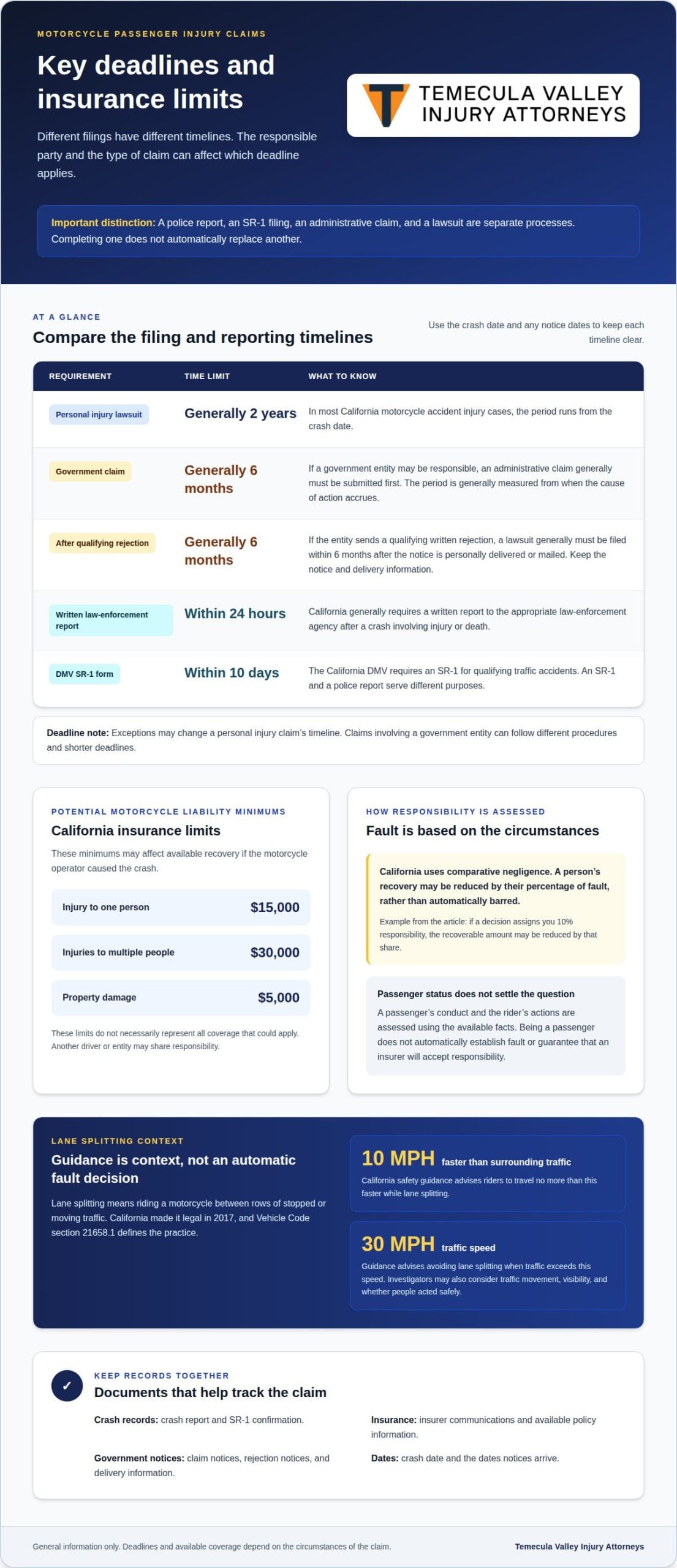
In most California motorcycle accident injury cases, you have two years from the crash date to file a personal injury lawsuit. A motorcycle passenger injury claim in San Diego may follow a different process if a government entity contributed to the crash. In that situation, an administrative claim generally must come first, and deadlines can be shorter.
For a claim against a government entity, California generally allows six months after the cause of action accrues to submit an administrative claim. If the entity sends a qualifying written rejection, a lawsuit generally must be filed within six months after the notice is personally delivered or mailed. Keep the rejection notice and delivery information, since those dates can determine the next filing deadline.
Two separate reporting requirements may also apply. California law generally requires a written report to the appropriate law-enforcement agency within 24 hours after a crash involving injury or death, according to the California Legislature. For qualifying traffic accidents, the California Department of Motor Vehicles requires an SR-1 form within 10 days of the accident. A police report and an SR-1 filing serve different purposes; completing one does not replace the other.
California uses comparative negligence to assess each party’s share of responsibility. Your recovery may be reduced by your percentage of fault, rather than automatically barred. For example, if a decision assigns you 10% responsibility, the recoverable amount may be reduced by that share. A passenger’s conduct and the rider’s actions are assessed based on the available facts, not simply because the passenger rode on the motorcycle.
Lane splitting means riding a motorcycle between rows of stopped or moving traffic. California made lane splitting legal in 2017, and Vehicle Code section 21658.1 defines the practice. Lane splitting alone does not determine fault after a motorcycle accident. Investigators may consider traffic movement, visibility, speed, and whether each person acted safely under the circumstances.
California safety guidance advises riders to travel no more than 10 MPH faster than surrounding traffic while lane splitting and to avoid splitting when traffic exceeds 30 MPH. These guidelines can provide context when insurers review a crash. They do not replace a case-specific assessment of what happened, including whether a driver changed lanes unsafely or failed to notice the motorcycle.
California motorcycle liability insurance minimums are $15,000 for injury to one person, $30,000 for injuries to multiple people, and $5,000 for property damage. These limits may affect available recovery if the operator caused the crash. They do not necessarily represent all coverage that could apply, especially when another driver or entity may share responsibility.
For a San Diego accident, preserve the crash report, SR-1 confirmation, insurer communications, and any government claim notices. Note the crash date and when notices arrive. A personal injury claim may involve exceptions that change deadlines, so identifying every potentially responsible party and applicable filing date is essential.
Evidence used to support motorcycle accident claims
Evidence helps explain how a motorcycle accident happened, who may have contributed, and how your injuries affected daily life. As a passenger, you can offer an account separate from the motorcycle operator’s. A lawyer may compare scene photographs, witness descriptions, medical records, and vehicle information to identify details that support or complicate your claim.
Useful evidence may include:
- Photographs of the vehicles, road conditions, visible injuries, and relevant traffic signs.
- Names and contact details for people who witnessed the collision.
- Medical records, treatment notes, prescriptions, and receipts related to care.
- Work records showing missed shifts or changes in your duties.
- Notes describing daily limitations, such as difficulty walking or sleeping.
Each piece of evidence answers a different question. A photograph may show vehicle positions, while a witness account may describe a turn or lane change. Medical records connect the collision to documented symptoms and care. A motorcycle accident attorney can gather police reports, witness accounts, and scene photographs, then compare them with your treatment records and the parties’ statements.
Video may clarify movements that witnesses remember differently. Possible sources include an onboard bus camera, a nearby business, a traffic system, or a witness’s recording. In a bus collision, a legal team can identify potential camera locations and promptly seek preservation, since retention periods vary. Keep relevant communications and documents together, and don’t alter or discard potential evidence.
Evidence can also support claims for compensation. Records may document medical care, lost income, and the effects of pain on ordinary activities. For example, a treatment note describing a shoulder injury and a work record showing missed shifts may help document separate losses. Serious injuries may require continuing care, so organized treatment records and notes about daily limitations can show how the harm develops over time.
When choosing a San Diego motorcycle accident lawyer, look for a clear, evidence-based approach to your passenger claim. Consider how the attorney plans to assess witness accounts, medical documentation, available footage, and conflicting descriptions of the crash. You should understand what information the legal team needs, how it will provide updates, and how it will address insurer questions. These practical details can help you decide whether the working relationship suits your needs.
Personal injury claims turn on the facts and documentation, not a single photograph or statement. Keeping relevant materials organized can make it easier to explain what happened and answer questions about the collision.
What challenges do injury victims face soon after a San Diego Motorcycle Accident?
Medical concerns, questions about fault, and calls from insurers can arise together after a motorcycle crash. Helmet use and each person’s actions may affect how insurers assess responsibility and a possible settlement.
Helmet Use and Comparative Negligence
California motorcycle operators and passengers must wear helmets that meet U.S. Department of Transportation standards under Vehicle Code section 27803, according to the California Legislature. If you weren’t wearing a compliant helmet, an insurer may argue that your conduct contributed to your injuries. That argument does not automatically prevent recovery. Comparative negligence reduces compensation according to the injured person’s share of responsibility.
Details matter. The helmet’s condition, the circumstances of the crash, and medical evidence about your injuries may help show whether helmet use relates to a particular injury. Keep the helmet and related photographs available for review. Don’t assume an insurer’s position on helmet use settles the question of fault.
Passenger Conduct and Fault
A passenger’s conduct may become relevant if an insurer claims it contributed to the collision or worsened an injury. The review may consider what the passenger knew, what actions they took, and whether those actions were connected to the crash. Simply riding on a motorcycle does not establish that the passenger caused the accident.
For example, the operator’s lane change, another vehicle’s movement, and the passenger’s position may all need review. Give your lawyer a clear account of what happened before and during impact. Separate what you observed yourself from what someone later told you. This distinction can help address conflicting accounts without overstating what you know.
Insurance Negotiations and Claim Tactics
After a crash, an insurer may request documents, ask for a recorded statement, or make a settlement offer. Read each request carefully and keep copies of your replies. Statements about pain or missed work may be compared with medical records and employment documents. If details differ, explain the context rather than guessing or filling in gaps.
A quick offer may arrive before the full effects of serious injuries are clear. Before accepting, consider whether the proposed settlement accounts for documented medical bills, lost income, and ongoing limitations. Ask how the insurer calculated its position and which records it considered. Keep a written record of calls, dates, names, and requested documents.
Insurance discussions may also involve disputed fault between the motorcycle operator and other vehicles. Organize relevant medical records, bills, and work information before answering questions about your losses. If an insurer disputes your account, compare its explanation with available reports and witness information. A consistent record can help you understand what the insurer is weighing and identify unanswered questions.
Don’t sign a release or accept a settlement without understanding which claims it resolves. A release may affect your ability to seek further compensation for the same crash. If you’re uncertain about a request or proposed terms, get legal guidance before responding. Make decisions based on available evidence, not pressure or assumptions.
Compensation through insurance claims or personal injury cases
After a motorcycle crash, compensation may come through an insurance claim, a personal injury lawsuit, or both as the matter develops. The available route depends on who caused the collision, which policies apply, and the documented harm. A passenger may have a claim even if the motorcycle operator, rather than another driver, caused the accident.
Economic and Non-Economic Losses
Economic losses are measurable expenses tied to an injury. They may include medical bills, rehabilitation expenses, and income lost while you recover. Bills, treatment records, and work documentation can show how those losses relate to the crash. If care continues, updated records can document further treatment and explain how your needs change.
Non-economic damages address harm that does not come with a receipt, such as pain, emotional distress, and limits on ordinary activities. California Civil Code sections 3281-3294 address damages in personal injury claims. Evidence such as treatment notes and your account of daily limitations can help explain these effects. The specific losses and supporting evidence differ from one accident claim to another.
Insurance Policies and Hit-and-Run Crashes
If another driver caused the crash, that driver’s liability insurer may be responsible for a passenger’s injury-related losses. If the motorcycle operator caused it, the operator’s liability coverage may apply. Medical payments coverage, when available, may help pay medical bills regardless of fault. Uninsured or underinsured motorist coverage may also be relevant if an at-fault driver lacks sufficient coverage.
A hit-and-run can make it difficult to identify the responsible driver, but it doesn’t end the coverage review. A passenger’s lawyer can examine policies connected to the motorcycle and other involved vehicles, including whether uninsured motorist coverage may apply. The review may also consider personal health insurance for immediate medical expenses. Preserve insurer correspondence and claim records so coverage decisions can be assessed against the available facts.
When a Lawsuit May Be Considered
An insurance claim may resolve without a lawsuit, but a personal injury case can proceed in court if liability or damages remain disputed. The claim should account for supported medical expenses, lost income, and non-economic harm. Review a settlement for what it resolves, including whether it addresses future claims related to the same injuries.
Punitive damages are different from compensation for ordinary losses. California Civil Code section 3294 allows them when clear and convincing evidence establishes oppression, fraud, or malice. They do not apply automatically after a serious motorcycle accident. An attorney assessing potential compensation examines the conduct involved, available evidence, insurance coverage, and documented expenses before advising you about possible next steps.
Claims against the motorcycle operator’s liability insurance
If the motorcycle operator caused the collision, their liability insurance may cover a passenger’s medical expenses and injury-related lost income. The claim focuses on whether the operator’s driving contributed to the crash, what physical harm followed, and which policy terms apply. A passenger can pursue this route even if no other vehicle caused the accident.
The operator’s insurer reviews the circumstances before deciding whether to accept responsibility. It may compare the operator’s account with the collision report, witness statements, photographs, and medical records. For example, a witness who saw the motorcycle change lanes may help clarify a disputed account. The insurer also considers whether the documented injuries are connected to the crash.
To evaluate a claim, the legal team typically identifies the policy, reports the passenger’s injury claim, and organizes supporting records. Useful documents include:
- The crash report and available witness information.
- Medical records and bills related to the collision.
- Work records showing missed time or lost income.
- Insurer letters, claim numbers, and policy information.
These records help distinguish the passenger’s claim from the operator’s own injury or property damage claim. The passenger’s medical expenses and lost income are separate losses. Clear documentation can also address questions about when symptoms began, what care followed, and how the injuries affected work.
Disagreement about negligence can complicate a claim. The insurer may argue that another driver caused the collision, while that driver’s insurer may point to the motorcycle operator. A passenger’s account, independent witnesses, and physical evidence can help establish the sequence of events. California comparative negligence may reduce recovery if the passenger shares responsibility, but the operator’s fault is not automatically assigned to the passenger.
Available policy coverage matters, especially when multiple people are injured. California’s minimum liability limits were covered earlier, but an operator may have different policy limits or additional applicable coverage. The insurer’s payment is generally constrained by the policy and the losses supported by evidence. Identify available coverage before assessing whether a proposed settlement addresses your documented expenses.
Before accepting an offer, review what the release covers and whether it resolves claims for future losses related to the collision. Keep copies of every offer and insurer communication. If the insurer disputes how the crash happened, compare its explanation with the evidence and records gathered. A motorcycle accident attorney can help organize that review and explain the claim process.
If several people were injured in the same collision, each passenger’s claim may involve separate medical records, lost income, and injury evidence. The insurer’s evaluation should distinguish your losses from the operator’s or another passenger’s. Organizing your own treatment and work records can help keep your claim details from being confused with someone else’s.
Temecula Valley Injury Attorneys: Motorcycle Accident Attorney
We help injured motorcycle passengers review potential claims, available evidence, and insurance questions. Our team can assess who may have contributed to the collision and explain how we may assist in light of your circumstances.
We offer free initial consultations, so there is no risk for you to get started. Consulting does not commit you to legal action. Se habla español.
Contact Temecula Valley Injury Attorneys to discuss your situation. © 2026 Temecula Valley Injury Attorneys. Digital Marketing by Public Advertising Agency.
Take the Next Step With a Clear Plan
The next step is to create a clear account of your situation. A focused review can identify unanswered questions, organize relevant records, and clarify what information may be needed to discuss your options. You don’t have to decide how to approach an insurer or assess a settlement without first understanding the issues involved.
We represent people in motorcycle, car, and truck accident matters in San Diego. If you’re considering a motorcycle passenger injury claim in San Diego, our team can discuss the crash, potential insurance coverage, and concerns about medical bills or missed work. We’ll explain how we may help based on what you share, without promising a particular result.
Contact Temecula Valley Injury Attorneys to discuss your situation. A thoughtful conversation can help you choose a practical next step.
Frequently Asked Questions
What if I was not wearing a helmet?
You may still pursue an injury claim, even if you weren’t wearing a helmet. California requires motorcycle operators and passengers to wear helmets meeting U.S. Department of Transportation standards under Vehicle Code section 27803, according to the California Legislature. An insurer may argue helmet use affected your injuries, but that issue doesn’t automatically decide fault or end your claim. The relationship between helmet use and specific injuries matters.
What Is My Motorcycle Accident Case Worth?
A crash description alone cannot establish a reliable claim value. The amount depends on factors such as the nature of your injuries, documented treatment, effects on your ability to work, and available insurance coverage. Evidence of lasting limitations may also matter. A careful evaluation considers supported losses and any disputed responsibility, rather than relying on a generic estimate.
Can I Move Forward If A Police Report Says I Was At Fault?
Yes. A police report assigning you fault doesn’t automatically prevent you from pursuing a claim. The report is one part of the record, and other evidence may add context or conflict with its conclusions. Witness accounts, photographs, vehicle damage, and medical documentation can help clarify what happened. Tell your attorney about inaccuracies or missing details, and preserve information that supports your account.
Can bus or nearby camera footage be obtained after a collision?
It may be possible to locate and preserve footage from a bus camera, nearby business, traffic system, or witness recording. Availability and retention vary, so promptly identifying potential cameras matters. Note where cameras appeared to be positioned and when you noticed them. An attorney can direct preservation requests to relevant parties and assess whether footage captured the vehicles’ movements or the collision itself.
Does a rider’s possible share of fault end a California claim?
No. California comparative negligence generally allows an injured person to seek damages even when that person shares responsibility. Any recovery is reduced by the injured person’s assigned share of fault. For example, investigators may examine whether the rider’s actions and another driver’s conduct both contributed. The passenger’s responsibility is assessed separately, based on the passenger’s own actions and their connection to the injuries.
How Do I Prove Motorcycle Accident Liability And Damages?
Show how another party contributed to the crash and how the collision caused your losses. Relevant proof may include the crash report, photographs, witness accounts, medical records, treatment notes, and records of missed work or daily limitations. Keep claim letters and related documents together. A timeline linking the collision, symptoms, treatment, and time away from work can help present the events clearly.
What compensation can an injured motorcycle passenger claim in California?
A passenger may seek compensation for documented medical expenses, lost income, and non-economic harm, such as pain and limits on daily activities. The available categories depend on the facts and evidence. Treatment records, for example, can support injury-related care, while work records may document missed income. Punitive damages are distinct and may apply only in circumstances meeting California’s legal standard for oppression, fraud, or malice.
Who is liable when a motorcycle passenger is injured in San Diego?
Responsibility depends on who contributed to the collision. The motorcycle operator may be responsible if their driving caused it, and another driver may share responsibility. In a bus collision, an owner, operating company, employer, or maintenance provider may also be involved if its conduct contributed. Identifying potentially responsible parties requires examining vehicle movements, witness accounts, ownership information, and available insurance coverage.


