

What if the driver who caused your crash isn’t paying your medical bills right away? If you’re asking who pays for medical bills after a car accident, the answer often depends on timing. In California, the at-fault driver may ultimately be responsible, but their insurer generally doesn’t pay bills as treatment happens. While a claim is pending, you may need to use your health insurance, optional Medical Payments coverage on your auto policy, or another payment arrangement. If your crash happened in Temecula, these same payment questions may arise while insurers investigate.
Bills can arrive before you know what insurance covers them, and using your own coverage could involve a repayment claim later. This article explains payment options that may help address expenses now, how reimbursement or repayment claims may affect a settlement, and why the first payer isn’t always the party ultimately responsible. You’ll also learn what bills and records to keep, and which coverage, fault, and repayment questions may be worth discussing with an attorney. Every claim depends on its facts and available coverage, but understanding the possible payment paths can help you make informed decisions while your claim is unresolved.
Key Takeaways
- The person or insurer paying first may differ from the party ultimately responsible for your accident-related expenses.
- Auto insurance benefits, health coverage, or a liability claim may apply, depending on policy terms and the circumstances.
- When bills arrive, keep records of charges, payments, and insurance decisions.
- When considering who pays for medical bills after a car accident, account for possible coverage gaps, disputed claims, and repayment issues.
- An attorney may review insurance, medical bills, claim communications, and potential reimbursement concerns in your specific case.
Who pays medical bills after a car accident in California?
More than one payment source may be relevant, depending on your injuries, insurance policies, and the facts of the crash. The name on a medical bill shows who is being asked to pay. It doesn’t, by itself, determine which insurer may pay first or who may ultimately be financially responsible.
You may receive bills while treatment continues and insurers are still investigating fault. Your health insurance or applicable auto policy benefits may help pay bills sooner, subject to their terms. If another driver is legally responsible, their liability insurer may be a source of recovery later, but it generally doesn’t pay your providers as bills arrive. Any potential recovery depends on the claim, available coverage, and supporting records. Payment or reimbursement isn’t automatic.
These are separate questions: who receives the bill, what coverage may respond now, and who may ultimately bear responsibility. A fault dispute can complicate a claim, but it doesn’t, by itself, establish that no other payment option is available. Reviewing your policies and benefits may help identify possible sources while the liability investigation continues.
Why the first bill does not settle who is ultimately responsible
A provider may bill you before insurers agree about how the collision happened. Paying a bill now, or having a health plan pay it, is different from recovering that expense later through an injury claim. Whether a payment source applies, and whether it may seek repayment from a later recovery, depends on the policy, plan rules, and circumstances. Keep bills and payment records so the amounts can be reviewed as the claim develops.
Why California rules matter to your payment options
California insurance requirements and policy benefits are governed by state law and the language of the policies involved. California generally uses a fault-based system for injury claims, rather than automatically applying another state’s no-fault rules. The state’s auto insurance requirements don’t mean every driver has the same optional benefits or that every medical expense will be paid upfront. Review the actual policy terms and circumstances.
Rules for other states, including different no-fault systems or injury thresholds, shouldn’t be assumed to govern a California collision. The broader concepts of personal injury law include claims for harm caused by another party, but California law and the facts of your case determine how those concepts apply. Separating the bill, the first payment source, and potential responsibility can help you ask focused questions as you review your options.
Which insurance may pay your car accident medical bills first?
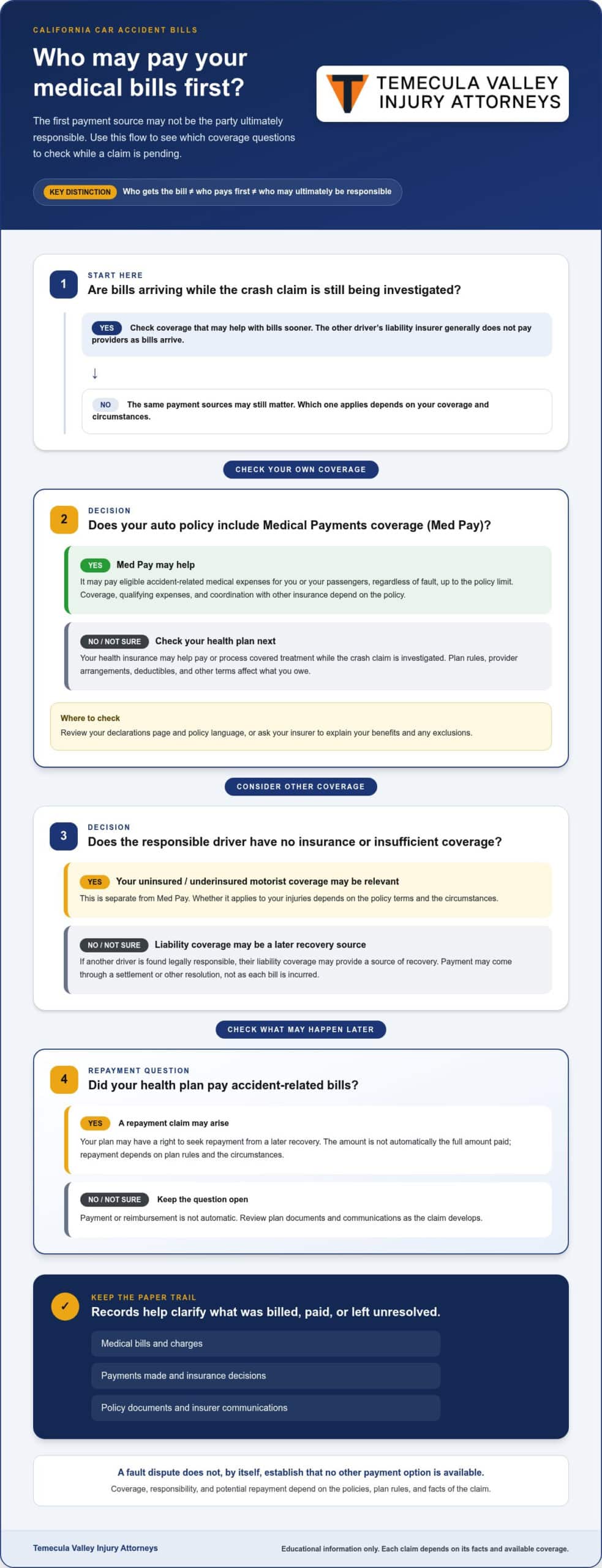
If you’re asking who pays for medical bills after a car accident, several types of coverage may come into play, but none applies automatically. Your auto policy may include Medical Payments coverage, often called Med Pay. Your health plan may also help process treatment bills, subject to its terms. The other driver’s liability coverage is different: it may provide a source of recovery if that driver is found legally responsible, but it generally doesn’t pay your providers as bills arrive.
In short: First-party coverage is insurance available through your own policy or health plan. Another driver’s liability coverage is a potential source of recovery based on responsibility for the crash.
Your own auto insurance and medical-payment benefits
Med Pay is optional auto coverage that may pay eligible accident-related medical expenses for you or your passengers, regardless of fault, up to the policy’s limit. Whether you have it, which expenses qualify, and how it coordinates with other insurance depend on your policy. Check your declarations page and policy language, or ask your insurer to explain the benefits and any applicable exclusions.
Uninsured or underinsured motorist coverage is a separate part of an auto policy. It may be relevant when the responsible driver has no insurance or insufficient coverage, but how it applies to your injuries depends on its terms and the circumstances. The California DMV’s insurance and collision guidance explains California’s financial responsibility requirements. Those requirements don’t establish that a particular optional benefit is included in your policy.
Health insurance and the at-fault driver’s coverage
Your health insurance may help pay or process covered treatment while the crash claim is being investigated. Plan rules, provider arrangements, deductibles, and other terms can affect what you owe. If your health plan pays accident-related bills, it may have a right to seek repayment from a later recovery. Don’t assume the full amount paid will automatically be owed back. Repayment can depend on the plan and circumstances.
Who pays for medical bills after a car accident may also depend on whether the at-fault driver’s liability insurer accepts responsibility and what coverage is available. Payment may come through a settlement or other resolution, rather than as each medical bill is incurred. Our car accident legal services address injury claims where insurance and responsibility need to be evaluated based on the specific facts. Review your policy documents and insurer communications to understand which coverage questions remain open.
What if the claim is disputed or insurance does not cover every bill?
A coverage limit, exclusion, or liability dispute can leave some expenses unresolved. Who pays for medical bills after a car accident may depend on more than one path: other applicable coverage, a claim against a legally responsible driver, or a payment arrangement with a medical provider. Which options apply depends on the policies, bills, and facts. A denial from one insurer does not, by itself, decide who caused the crash or settle every question about legal responsibility.
Start by identifying what the insurer actually denied. It may dispute whether a policy applies, whether a particular expense is covered, or who was responsible for the collision. Those are different issues. A denial states the insurer’s position on a claim or part of it; it isn’t necessarily a final determination of fault or your rights under other policies or California law.
When fault, coverage, or the amount owed is disputed
Insurers may investigate the collision, review policy language, and assess records before deciding whether to pay. Keep documents together so you can track what was billed, paid, challenged, or left outstanding. Useful records include:
- Itemized medical bills and receipts
- Explanations of benefits from your health plan
- Insurance claim letters, denial notices, and emails
- Records of payments you made or amounts still owed
Read a denial notice carefully and note any stated reason or response instructions. The California Department of Insurance explains what to do after an accident, including general steps for handling an insurance claim. The right response depends on the documents and circumstances. A brief account of a crash isn’t enough to determine fault or predict whether a disputed bill will be covered.
How reimbursement claims and medical liens may affect payment
A reimbursement claim is a request by a health plan or another payer to recover certain amounts it paid from money you later receive, if the applicable plan terms or law allow it. A medical lien generally means a provider or another party asserts a right to payment from a future recovery under an agreement or other legal basis. These are different arrangements, and neither should be treated as an automatic deduction from every settlement.
Ask for the basis and amount of any claimed repayment or lien, and keep related notices and agreements with your bills. The terms, enforceability, and applicable California rules can vary. If insurance leaves a balance, you can also review whether another policy may apply or discuss payment arrangements with the provider. No particular bill is guaranteed to be covered, reimbursed, reduced, or eliminated.
What should you do about medical bills after a California car accident?
While insurers review a claim, a few practical steps can help you organize treatment and billing records. Follow your medical providers’ instructions, notify insurers whose policies may apply, and track every bill and payment. If you have urgent symptoms, seek prompt professional medical attention.
Keep accident-related expenses identifiable. Clear records can help you see what was billed, what insurance processed, and what remains unpaid. Don’t assume an expense is covered or connected to the collision without supporting information.
Records to keep while insurers review the claim
Save documents as they arrive and keep copies in one place. Helpful records include:
- Provider names, dates of service, itemized bills, and receipts
- Health plan explanations of benefits and other insurance statements
- Claim numbers, adjuster correspondence, coverage letters, and payment confirmations
- A simple list of balances still owed and billing questions you have raised
Keep accident-related care separate from unrelated expenses. Accurate records make it easier to identify which charges concern the crash without overstating their connection.
Questions to clarify before paying or settling bills
If an insurer denies or delays payment, ask it to explain the decision and identify any information it still needs. Keep the response with the related bill. You can also ask a provider how it is billing you, whether a balance remains outstanding, and whether any agreement affects payment from a possible future recovery.
Before signing claim documents or agreeing to resolve a claim, understand what the paperwork says about medical expenses, outstanding balances, and potential reimbursement. The terms can affect how bills are handled, so don’t rely on assumptions about what will be paid or repaid. For context on how medical expenses may fit into a broader personal injury claim, consider the other losses and records involved as well.
How can a California car accident attorney help with medical bills?
Medical bills can involve multiple policies, a disputed claim, or questions about who may be repaid from a future recovery. A California car accident attorney may review your insurance policies, accident-related bills, claim communications, and reimbursement or lien notices to help you understand the issues and possible next steps. The review is specific to your circumstances and can’t guarantee that an insurer will cover a bill or that you’ll recover compensation.
When legal review may help clarify payment responsibility
Individual guidance may be useful if an insurer disputes fault, denies coverage, or requests more information, especially when multiple policies or substantial expenses are involved. An attorney can compare relevant policy language with your bills, treatment records, payment history, and claim correspondence. This can help identify what remains contested and what questions to raise with an insurer or provider. Whether a legal claim is available depends on the facts and applicable law.
Unresolved provider balances or a request to repay amounts from a potential settlement may also call for careful review. An attorney may examine the documents behind a claimed balance or reimbursement demand and explain how it could affect the claim. No particular payment, reduction, or outcome is assured. One insurer’s decision doesn’t necessarily answer every question about responsibility or other potential coverage.
Discuss your bills and claim with our team
For a clearer review, gather the crash details, medical bills, receipts, insurance explanations, claim numbers, and any letters or emails from adjusters. Be ready to describe what treatment you’ve received, which bills remain unpaid, and what each insurer has said. This information can help our team understand the payment questions you’re facing and discuss what options may be relevant to your situation.
Our team can discuss how the available records and policies may relate to your claim, without promising coverage or a particular result. For general information, this article is not a substitute for individualized legal advice. Your options depend on the specific facts, policy terms, and applicable law.
Get a clearer picture of your medical bill options
Who pays for medical bills after a car accident depends on the coverage available, the facts of the claim, and the terms of each policy. Your own auto benefits or health insurance may help address bills first, while a claim against a responsible driver may be resolved later. Keep itemized bills, insurance records, and payment notices so you can track what has been paid and what remains unresolved.
Disputed fault, multiple insurers, or a reimbursement request can make the next steps less clear. Temecula Valley Injury Attorneys can review your California car accident injury claim and discuss guidance based on your circumstances, without promising a particular outcome.
Contact Temecula Valley Injury Attorneys to discuss your situation. Clear records and case-specific guidance can help you understand the next steps.
Frequently Asked Questions
Who pays medical bills immediately after a car accident in California?
Who pays for medical bills after a car accident right away may depend on your available coverage. Your health insurance, Medical Payments coverage on your auto policy, or another payment arrangement may help address bills first. The provider may still bill you, and the at-fault driver’s insurer typically doesn’t pay bills as treatment happens. Track what each insurer processes and what remains unpaid. The first payment source doesn’t necessarily determine who may ultimately be responsible.
Can I use health insurance to pay medical bills after a car accident?
Yes, your health insurance may cover eligible accident-related treatment under your plan while a liability claim is pending. Coverage, deductibles, and provider arrangements depend on your plan. If the health plan pays, it may later seek reimbursement from a recovery, depending on the plan terms and applicable rules. Keep your explanations of benefits and payment records, and ask the plan to explain any reimbursement request before assuming an amount is owed.
Does the at-fault driver’s insurance pay my medical bills right away?
Usually, the other driver’s liability insurer doesn’t pay your providers as bills arrive. It generally investigates responsibility and evaluates the claim before making a settlement payment, if appropriate. That process may take time, and a fault dispute or coverage limits can affect what is available. In the meantime, your health plan, applicable auto coverage, or a provider billing arrangement may be relevant. Don’t assume a liability claim will cover every expense.
Can I be responsible for medical bills if the insurance claim is denied?
You may remain responsible for bills a provider has charged you if insurance doesn’t pay them, depending on your provider agreement, coverage, and the reason for denial. But an insurer’s denial alone doesn’t decide who caused the crash or whether another policy or liability claim may apply. If the other driver is uninsured, your own uninsured motorist coverage may be relevant, subject to its terms. Ask what the denial means and keep the notice.
Do I have to repay health insurance after a car accident settlement?
Possibly. A health plan may assert a reimbursement or subrogation claim for certain accident-related payments if its terms and applicable law allow it. That doesn’t mean every settlement automatically has the same deduction or that every requested amount is necessarily owed. Ask for the basis and itemization of a repayment request, and keep related plan documents and settlement communications. The outcome depends on the plan, the claim, and the specific facts.
What should I do if I cannot pay my medical bills while my claim is pending?
If you’re unsure who pays for medical bills after a car accident while your claim is pending, contact the provider’s billing office to ask about available payment arrangements. Notify relevant insurers, ask about delayed or denied payments, and keep itemized bills, receipts, claim letters, and explanations of benefits together. Track each unpaid balance and follow your medical providers’ instructions. If a bill or coverage decision is disputed, case-specific legal guidance may help you understand your options.


