

An airbag that fails to deploy, deploys unexpectedly, or injures someone during deployment may have a defect. But a malfunction alone does not prove who is responsible or whether it caused your injury. The vehicle, airbag components, crash evidence, and medical records all matter. A defective airbag injury lawyer can investigate how the system performed and whether a defect contributed to your harm.
It’s understandable to wonder whether the crash caused your injuries or the airbag made them worse. Finding out usually means looking beyond the airbag itself to how the crash happened and what the evidence shows.
This article explains signs of a possible airbag defect, evidence that may link it to an injury, and product liability claims and compensation you may be able to pursue. It also covers practical steps to preserve vehicle, repair, and medical records while you consider what to do next.
Key Takeaways
- A missed, unexpected, or forceful deployment can be a clue to investigate, but it doesn’t by itself establish a defect or prove what caused an injury.
- Potential claims may involve a vehicle or parts manufacturer, or a repair business, depending on how the airbag system was designed, made, or serviced.
- Vehicle and repair records, crash photographs, medical documentation, and expert analysis can help connect an airbag problem to your injuries.
- Keep relevant evidence intact where possible, and document symptoms and medical care as you assess what happened.
- Potential compensation may account for injury-related losses, while the available evidence and circumstances shape what a claim can seek.
Can I file a claim if my airbag caused minor injuries?
A minor injury does not automatically prevent a product liability claim if a defective airbag contributed to it. Partial fault or not wearing a seat belt may affect how responsibility and damages are assessed, but neither automatically determines whether you can pursue a claim.
Identifying Potentially Responsible Parties
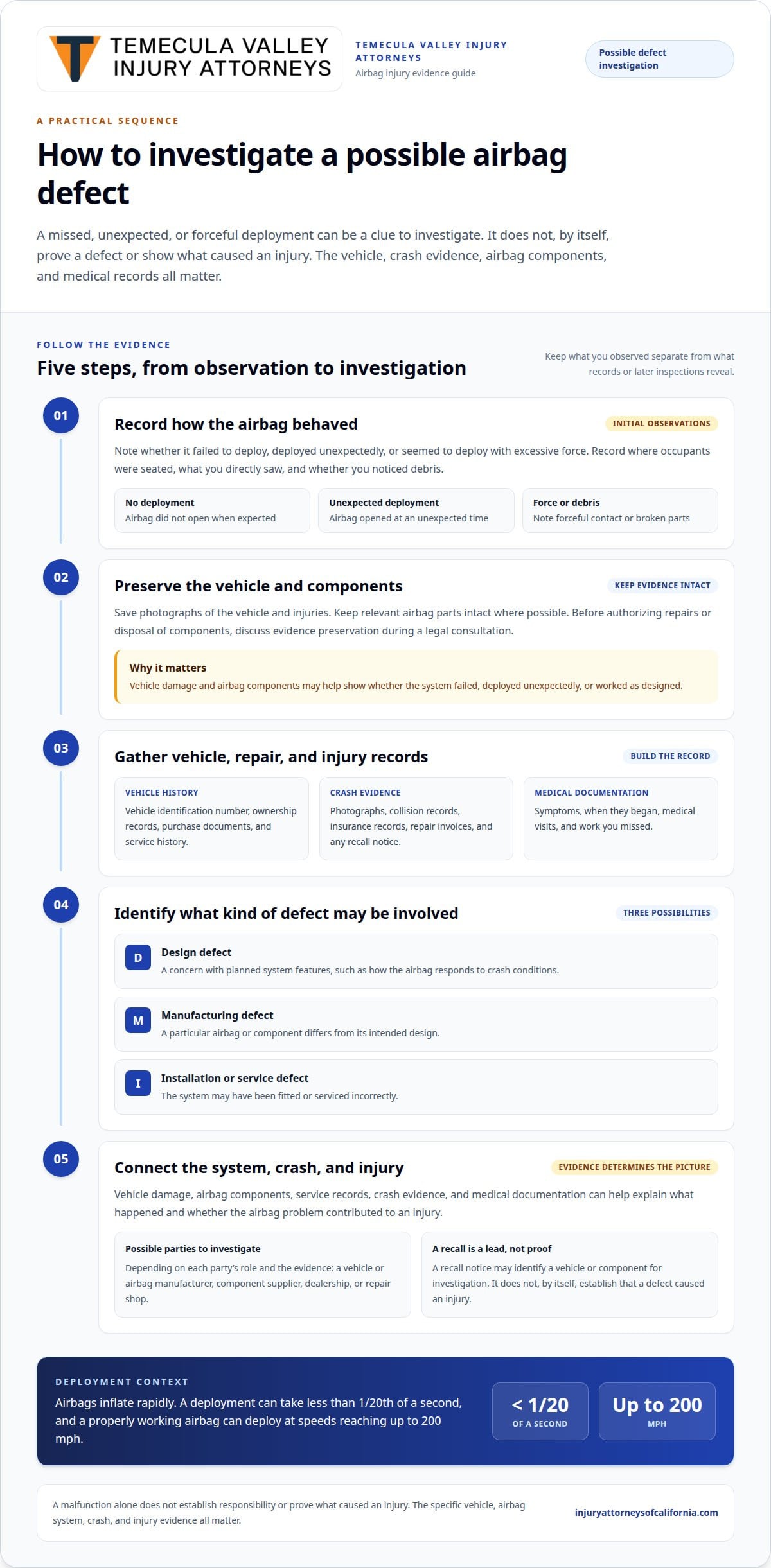
Start by gathering the vehicle identification number, ownership records, and service history. These details can help identify the automaker, airbag manufacturer, component supplier, dealership, or repair shop connected to the system. A recall notice may also identify a vehicle or airbag component for further investigation.
Responsibility depends on each party’s role and the evidence. An automaker or airbag manufacturer, for example, may face a claim if a design or manufacturing defect caused harm. A dealership or independent repair shop may be implicated if improper installation or servicing contributed to the malfunction. Records showing who handled the airbag system help clarify these possibilities.
Airbag Design, Manufacturing, and Installation Defects
A design defect concerns the airbag system’s planned features, such as how it responds to crash conditions. A manufacturing defect concerns a particular airbag or component that differs from its intended design. An installation defect may involve a system fitted or serviced incorrectly. Each theory requires evidence connecting the specific problem to your injury.
A sensor malfunction, for example, could prevent deployment or trigger deployment at the wrong time. A recall can provide a useful lead, but it does not by itself establish that a defect caused your injury. Vehicle damage, airbag components, service records, and medical documentation can help explain what happened.
Keep relevant evidence intact. Save recall notices, repair invoices, vehicle purchase documents, and photographs of the vehicle and your injuries. Before authorizing repairs or disposal of airbag components, discuss preserving evidence during a legal consultation. Those parts may help show whether the system failed, deployed unexpectedly, or worked as designed.
Minor injuries still deserve careful documentation. Record when symptoms began, each medical visit, and any work you missed. These details can help distinguish injuries caused by the crash from harm caused or worsened by airbag deployment. A claim may involve the other driver’s conduct as well as product liability, so preserve collision and insurance records too.
Product liability analysis focuses on the defect, the responsible party’s role, and the connection to injury. A California personal injury claim may involve several possible parties when a vehicle, airbag component, or repair contributed to harm. Identifying those parties early helps preserve records and direct the investigation.
What Injuries Commonly Occur in Airbag Injury Accidents?
An airbag can cause injury even when it deploys during a crash. It may also cause harm if it deploys unexpectedly, inflates with excessive force, or fails to deploy when needed. How it malfunctioned can help explain the injury and which parties may need investigation.
Airbags inflate rapidly to cushion occupants during a collision. A deployment process can take less than 1/20th of a second, and a properly working airbag can deploy at speeds reaching up to 200 mph. That force may cause injuries, especially when an occupant is close to the airbag as it opens.
Failure to deploy can leave a passenger without that protection. A faulty sensor, airbag component, or inflator may contribute to nondeployment or deployment at the wrong time. A defect can also cause excessive force, broken components, or the release of chemicals or powder. Each type of failure can result in a different injury pattern.
Possible injuries include facial fractures, eye or ear injuries, head trauma, traumatic brain injury, broken teeth, burns, abrasions, and broken bones. Airbag debris may cause puncture wounds, while gases released during deployment can irritate the throat and lungs. A forceful impact may also contribute to neck, back, or internal injuries.
Some airbag-related symptoms may appear after the collision rather than at the scene. Keep a clear record of when each symptom began, which body area is affected, and whether it changes during ordinary activities. For example, note whether an eye problem followed contact with the deployed airbag or soreness began after striking the steering wheel. Such details can help distinguish different injury mechanisms.
The Takata airbag recall that began in 2014 covered more than 40 million vehicles. A recall can alert owners to a potential safety issue, but an injury claim still requires attention to what happened in the specific crash. The airbag’s condition, deployment pattern, vehicle damage, and medical findings can help explain the connection.
Injury patterns can differ between occupants in the same vehicle. A driver may be struck by a steering-wheel airbag, while a front passenger may encounter a dashboard airbag. Seating position, contact with the airbag, and collision force can affect the harm each person experiences. Comparing those differences can help investigators determine whether one deployment behaved differently from another.
When describing the event, separate what you directly observed from what you learned later. Record whether the airbag opened, whether debris appeared, and where occupants were seated. Then note which details came from photographs, a vehicle inspection, or another person. Keeping these observations distinct can make the sequence of the accident and resulting injuries easier to assess.
How an attorney can help with an airbag injury claim
A defective airbag injury lawyer can assess whether the airbag’s performance contributed to your injuries and identify evidence that may clarify liability. Legal help can also bring together the vehicle, crash, repair, and medical evidence needed to evaluate possible claims. Because filing deadlines depend on the circumstances, discuss timing promptly rather than assuming a general deadline applies.
Investigating an Airbag Injury Claim
An investigation can compare the airbag’s condition with the crash damage and your documented injuries. An attorney may review vehicle records, service history, recall information, photographs, and medical documentation. If the system or its components need technical assessment, expert analysis can help explain whether the airbag failed, deployed unexpectedly, or contributed to harm.
Preserve the vehicle and relevant components when possible. Keep repair paperwork, recall notices, and photographs together. A dated record of treatment and symptoms can help show how your condition developed after the collision.
Product Liability Claim Support
Product liability analysis examines the alleged defect and its connection to your injury. Depending on the evidence, a claim may involve a vehicle manufacturer, airbag maker, parts supplier, or service provider. A defective airbag injury lawyer can assess each party’s role and determine which product-related issues warrant further investigation.
Legal support can also help organize evidence into a clear account of what happened. A nondeployment claim, for example, may require examining the crash circumstances alongside the airbag system and the injuries it might have prevented or reduced.
Claim Deadlines and Preserved Evidence
The filing deadline depends on applicable law and the circumstances of the claim. Different rules may apply depending on the parties involved, and certain circumstances can affect timing. An attorney can identify which deadline may govern and explain why waiting to assess the claim could create problems.
Preserve photographs, treatment records, repair invoices, recall notices, and communications about the vehicle. Before repairs alter the airbag system, discuss how to preserve relevant evidence. These records can help establish the vehicle’s condition and the sequence of events after deployment or failure.
Choosing a Product Liability Lawyer
Choose an attorney who can clearly explain how they would investigate an airbag defect, preserve vehicle evidence, and evaluate potential responsibility. Ask how the investigation would connect the alleged malfunction with your injuries. You should understand which records may matter and what steps the attorney proposes to assess the claim.
An airbag injury attorney should be able to discuss evidence, potential parties, and filing deadlines in plain language. Clear answers can help you decide whether the proposed approach addresses your concerns and what information you may need to provide.
Compensation for medical expenses, lost wages, pain and suffering, and wrongful death
A defective airbag injury claim may seek compensation for losses connected to the malfunction and resulting harm. Records of each loss can help show how the injury affected your health, work, and daily life.
Medical Expenses and Lost Wages
Medical expenses may include bills for care related to the airbag injury. Keep invoices, treatment records, and explanations of benefits together. For example, records can help connect treatment for a facial injury to the deployment event and show what services you received.
Lost income may be part of a claim if an injury keeps you from working. Pay records, employer information, and documentation of missed shifts can help establish time away from work. If the injury affects your ability to return to your regular duties, records describing those limitations can provide useful context.
Pain and Suffering
A claim may also seek compensation for pain and suffering, which concerns the physical discomfort and personal impact of an injury. Medical notes can document reported symptoms and how they progress. A personal record of how the injury affects ordinary activities can add context, such as difficulty sleeping or completing routine tasks.
The nature and duration of the harm matter. A temporary burn and a lasting eye injury can affect daily life differently. Medical documentation, follow-up care, and descriptions of changes to your activities help explain the impact without relying on a general statement that the accident was painful.
Other Airbag Injury Losses
Airbag-related losses can extend beyond treatment bills and missed work. A claim may include disability or other losses related to the injury. Document changes in daily activities, ongoing limitations, and practical support you need. These details help show the effects of the airbag malfunction.
When a defective auto part contributes to harm, product liability may focus on losses caused by that defect. The crash itself may also involve another party’s negligence. Separating these causes helps clarify which losses relate to the collision, the airbag, or both.
In fatal cases, surviving family members may have a wrongful death claim connected to an airbag defect. The claim and available compensation depend on the facts and applicable law. Preserve records relating to the vehicle, collision, and loss. A lawsuit should identify the connection between the alleged defect and the death, rather than treating every accident loss as automatically recoverable.
There is no single settlement amount for every airbag case. The evidence, injury severity, documented expenses, missed work, and lasting effects all shape the losses a claim can present. Organizing records by category can make the impact clearer: medical care, income disruption, physical effects, and other injury-related changes.
Proving an airbag defect caused or worsened an injury
A serious injury after a car accident does not, by itself, prove an airbag defect. A claim needs evidence of a specific malfunction and a connection between that problem and your harm. The key is to distinguish injuries caused by the collision from injuries the airbag caused or made worse.
Document how the airbag behaved and where each occupant was seated. Note whether it failed to deploy, opened unexpectedly, or appeared to strike an occupant unusually hard. These observations can help investigators compare the deployment with the crash damage and injury locations. They are starting points, not conclusions about what caused the harm.
Vehicle evidence can help reconstruct the event. Photographs of the interior, steering wheel, dashboard, and collision damage preserve details that repairs may change. Keep the vehicle available for inspection where possible. Comparing damage patterns with occupant positions may help explain how collision forces moved people inside the vehicle.
Medical records provide another part of the causal picture. They can show which injuries were identified, when symptoms began, and how your condition changed. For example, records of a face or arm injury can be considered alongside the occupant’s position and the airbag’s condition. This can help distinguish possible airbag contact from other impacts during the crash.
Technical analysis may help explain what the airbag system did. An expert can examine available components, vehicle damage, and records to assess whether the system functioned as intended. A recall involving the vehicle or part may guide the inquiry, but investigators still need to connect the issue to the particular crash and injury.
Drivers, manufacturers, and repair providers may dispute the cause of an injury. A careful review compares accounts of the collision with physical evidence and medical findings. It can also examine whether a component issue, installation work, or another event affected the airbag system. Considering alternative explanations can clarify the connection between a defect and the damages.
Build a timeline that separates the collision, airbag deployment, first symptoms, and later medical findings. Keep original photographs and records, and note who observed each event. If accounts differ, identify the specific disagreement, such as whether the airbag opened before or after another impact. This helps focus the investigation on evidence that may resolve causation.
Temecula Valley Injury Attorneys
Temecula Valley Injury Attorneys helps injured people understand their options after a vehicle crash involving airbag failure or harmful deployment. We provide personalized attention and clear, attentive representation, and can review the accident circumstances and explain how collision-related injury claims are evaluated.
If medical bills, missed work, or questions about responsibility are adding uncertainty, we can help clarify how the airbag issue may relate to your accident claim. The evidence and circumstances of your case guide that assessment.
Taking time to understand your options can help you make a more informed decision about what comes next.
Choose a Clear Next Step for Your Claim
You do not have to decide on a lawsuit or settlement before understanding your options. A focused conversation can help identify unanswered questions, information that may help resolve them, and how an airbag concern relates to your collision claim. The next step may depend on whether your accident involved a car, motorcycle, or truck, and whether the evidence connects the airbag to your injury.
A defective airbag injury lawyer can help assess the legal issues and explain possible paths forward. Temecula Valley Injury Attorneys handles car, motorcycle, and truck accident matters and can discuss how the airbag issue fits your situation. We offer a free case evaluation with no obligation, and the details of your case and available evidence will guide the discussion.
If you’re ready to talk through your next step, schedule a conversation with our legal team. You can start with your questions and decide how to proceed with greater clarity.
Frequently Asked Questions
How do I know if my airbag was defective?
A failed, unexpected, or unusually forceful deployment can raise questions about a defect, but it does not prove one by itself. Compare what happened with the crash damage, the airbag system’s condition, vehicle service records, and medical findings. For example, if the airbag did not deploy, the vehicle’s damage and collision circumstances can help investigators assess whether deployment should have occurred.
Can I sue if my car was recalled for airbag issues?
A recall may support an investigation, but it does not automatically establish that the recalled defect caused your injury. Key questions include whether your vehicle and airbag component were covered, whether the condition existed during your crash, and how it relates to your harm. Keep recall communications and repair records. These details can distinguish a recall notice from evidence tied to your specific accident.
How Long Do I Have to File a Lawsuit?
The filing deadline depends on the claim and the parties involved, so do not rely on a general deadline from another state or case. Claims involving government entities can have shorter deadlines, while circumstances involving minors or delayed discovery may affect timing. Gather the crash date, injury records, and vehicle ownership information for a legal review. Acting promptly helps identify which deadline applies to your circumstances.
Airbag Failure: Who Is Responsible?
Responsibility may involve a vehicle manufacturer, airbag maker, component supplier, or business that installed or serviced the system. A separate claim may concern the driver whose conduct caused the collision. For example, if a repair shop recently worked on an airbag system, its records may clarify whether that work relates to the failure. The evidence determines which parties may have a role.
Can You Get Compensated for Your Injuries?
You may seek compensation when evidence supports a connection between a defective airbag and your injuries. Relevant losses can include documented medical care, missed income, and effects on daily activities. Keep records showing how each loss relates to the crash, such as treatment notes and employer documentation. A recall or injury alone does not establish the value or outcome of a claim.
What injuries can defective airbags cause?
Defective airbags may contribute to facial, eye, head, neck, or back injuries, burns, broken bones, and harm from debris or released gases. The injury depends partly on where the occupant sat and how the airbag deployed. A passenger, for instance, may experience a different impact pattern than a driver. Medical records help describe the injury and its connection to the crash.
Which airbag defects or recalls commonly lead to injury claims?
Claims may involve an airbag that fails to deploy, opens unexpectedly, deploys with excessive force, or has a faulty sensor, inflator, or other component. A recall can identify a safety concern affecting a vehicle or part, but the specific defect must be connected to the accident and injury. Save notices and repair paperwork that identify the affected component and any work performed.
Who may be liable for injuries caused by a defective airbag?
Potentially responsible parties can include automakers, airbag manufacturers, parts suppliers, dealerships, and repair shops, depending on their connection to the defect. An unauthorized modification may also warrant investigation if it affected the system. Liability is not established just because a party made or worked on the vehicle. Records, component examination, and evidence about installation or servicing help clarify each party’s role.


