

What if California law points to the dog owner, but insurance coverage still depends on the policy? If you’re facing medical bills and uncertainty about who may cover them, you’re not alone. A homeowner insurance claim for dog bite San Diego residents pursue may involve a homeowner’s or renter’s liability coverage, but exclusions, policy limits, and the circumstances of the bite can affect whether coverage applies.
California Civil Code section 3342 generally holds a dog’s owner strictly liable when the dog bites someone in a public place or while they’re lawfully on private property. That doesn’t automatically resolve an insurance claim. This article explains which policy provisions may matter, what information to preserve, and how to handle insurer requests. It also covers California filing deadlines: personal injury lawsuits generally must be filed within two years, though exceptions may apply, including for minors and claims involving government entities. Knowing what to check can help you take practical next steps without assuming that coverage or compensation is guaranteed. The same basic questions about the incident, policy, and deadlines may arise after a bite in San Diego, Temecula, Murrieta, El Centro, or Fallbrook.
Key Takeaways
- A homeowner insurance claim for dog bite San Diego residents file depends on both the dog owner’s potential legal responsibility and the policy’s specific terms.
- California Civil Code section 3342 generally addresses bites in public places or where someone is lawfully on private property, but exceptions may affect a claim.
- Find the policy that was active on the bite date, then check the named insured, liability limits, exclusions, and any sublimits.
- After addressing immediate safety and medical needs, record the incident details and preserve witness information and relevant claim communications.
- Consider legal review if the insurer’s position is unclear, coverage is disputed, the facts are contested, or the injuries are serious.
What a Homeowner Insurance Claim for a San Diego Dog Bite Usually Involves
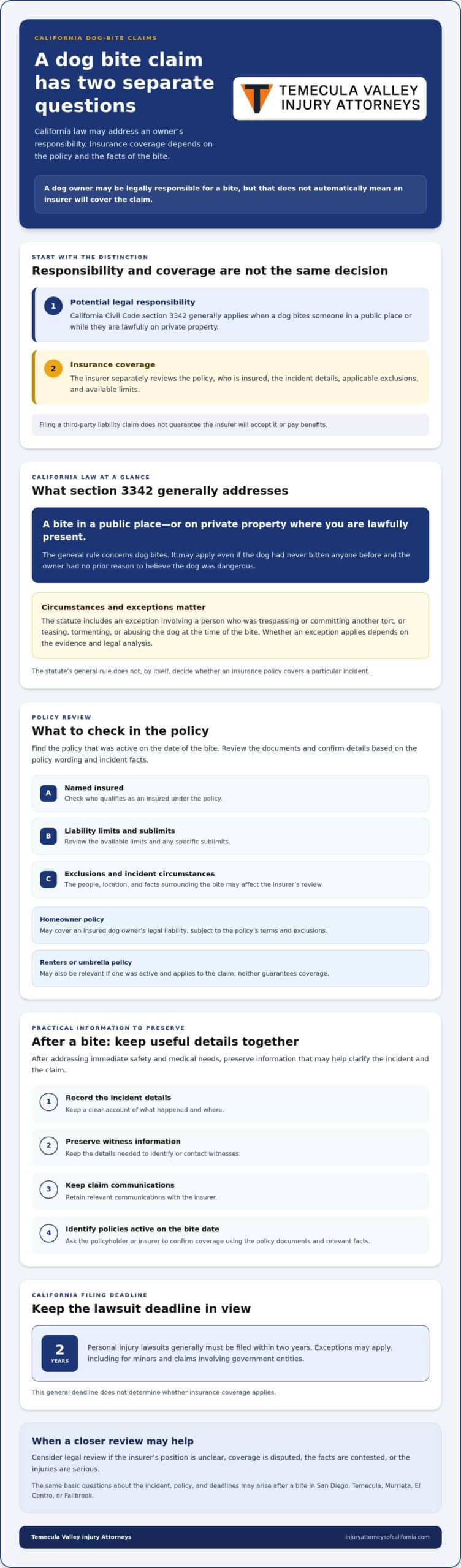
A homeowner’s policy may cover an insured dog owner’s legal liability after a bite, but coverage depends on the policy’s terms and exclusions. The owner’s potential legal responsibility and the insurer’s coverage decision are separate questions. For example, an owner could be legally responsible while the insurer disputes whether the policy covers that particular incident.
A third-party liability claim is a claim made by someone outside the insurance contract, such as an injured person seeking payment from the dog owner’s insurer for losses related to the bite. Filing a claim doesn’t guarantee that the insurer will accept it or pay benefits. The policy limits, exclusions, people and location involved, and other incident details may all affect the insurer’s review.
Coverage depends on the specific policy and claim facts. General information about dog bite liability can provide context, but it isn’t a substitute for California law or the wording of the policy. For a homeowner insurance claim for dog bite San Diego residents are considering, the policy documents and circumstances of the incident need individual review.
What does homeowner liability insurance generally cover?
Personal liability coverage may apply to covered claims against someone insured under the policy. It isn’t the same as your own health insurance: liability coverage concerns an insured person’s potential responsibility to someone else, while health insurance may help pay for your own care under its terms. Don’t assume every dog bite is covered. Review the policy to check who qualifies as an insured and whether any exclusions or limits apply.
Could a renters or umbrella policy also matter?
Yes. If the dog owner rents their home, a renters policy may be relevant. An umbrella policy could also matter if one exists and applies to the claim. Neither is a guarantee of coverage. Identify the policies that may have been active on the incident date, then ask the policyholder or insurer to confirm coverage based on the actual policy documents and relevant facts.
Keep the distinction clear as you gather information: an insurer evaluates what its contract covers, while legal responsibility depends on the circumstances and applicable law. The next sections explain how California dog-bite rules may apply and what practical steps can help preserve useful claim information.
How California Dog-Bite Law Relates to a San Diego Insurance Claim
California Civil Code section 3342 generally makes a dog’s owner liable for damages when the dog bites someone in a public place or while that person is lawfully in a private place, including the owner’s property. The statute generally applies even if the dog had never bitten anyone before and the owner had no prior reason to believe the dog was dangerous. The circumstances of the bite still matter.
In general, a dog’s owner may be strictly liable for a bite in a public place or while the bitten person is lawfully on private property under California Civil Code section 3342. Review the official text of section 3342 for its qualifications and exceptions. The statute includes an exception involving a person who, at the time of the bite, was committing a trespass or other tort, or teasing, tormenting, or abusing the dog. Whether an exception applies depends on the evidence and legal analysis.
What does California Civil Code section 3342 generally say?
The statute concerns bites, not every injury involving a dog. Location and lawful presence matter: a bite in a public place or on private property where you’re lawfully present may fall within the general rule. If the bite happened in a different setting, or the facts raise questions about an exception, don’t assume the statute decides the issue. The statutory text sets out the rule and its qualifications; applying them requires looking at what happened.
Does strict liability automatically mean the insurer pays?
No. Legal responsibility and insurance coverage are separate questions. Even if section 3342 may apply to the owner, an insurer may separately review whether the person is insured under the policy, whether an exclusion applies, and what limits are available. The policy wording and claim facts guide that review. The statute alone doesn’t establish that a policy covers the claim or that the insurer will pay.
The Insurance Information Institute provides background on homeowners insurance liability claims, but the specific policy remains central. Keep relevant records and don’t treat an initial insurer response as a final explanation of your legal rights. If the bite circumstances or coverage position are disputed, Temecula Valley Injury Attorneys may be able to review the dog-bite claim and related policy information.
Which Homeowner Policy Details Can Affect a Dog-Bite Claim?
Start with the policy that was in effect on the date of the bite. The insurer, policyholder, named insureds, covered location, and policy period can help establish whether the policy may be relevant. Don’t assume the homeowner has applicable coverage, but don’t conclude there’s none before checking the available policy documents.
Home insurance terms vary. The Insurance Information Institute offers general context about dog-bite liability and insurance, but that information can’t determine what a specific contract covers. The declarations page and full policy wording matter.
What policy language should you look for?
Gather the declarations page, personal liability provisions, exclusions, and any endorsements that modify coverage. Check whether the dog owner is a named insured or otherwise qualifies as an insured, whether the incident location fits the policy language, and whether any dog-related or prior-incident wording applies. Treat these as provisions to review, not exclusions to assume. Keep copies of the policy and written communications from the insurer.
Use this checklist to organize questions for the policyholder or insurer:
- Policy period and named insured: Was the policy active on the bite date, and does it identify the person whose potential liability is being reviewed?
- Liability limit or sublimit: What limit applies to personal liability, and does the policy state a separate limit for a particular type of claim?
- Exclusions and endorsements: Does the wording address dog bites, a specific dog, prior incidents, or another relevant circumstance?
- Covered location: Does the policy wording address where the incident occurred?
Can a dog-bite claim be denied or limited?
An insurer may dispute coverage or the amount available based on the policy language and the facts. A breed-related exclusion, prior-bite provision, or sublimit may appear in a particular policy, but none should be treated as universal. Ask the insurer to identify the specific provision supporting its position, then compare that explanation with the complete policy, including any endorsements.
If a homeowner’s policy doesn’t appear to apply, that doesn’t by itself establish that no other coverage exists. The policyholder may have another potentially relevant policy, or the available coverage may remain unclear until the documents are reviewed. For a homeowner insurance claim for dog bite San Diego, an organized record of the policy version, incident date, and insurer’s written explanation can help clarify which questions remain.
Steps After a Dog Bite Before an Insurance Claim
Focus first on your safety and health. Once you’re out of immediate danger, take these steps to preserve useful information. You don’t need to resolve questions about fault or insurance before getting appropriate medical attention.
- Get medical attention. Seek appropriate care and keep records related to the bite and any resulting expenses.
- Write down what happened. Record the incident date, time, location, and a factual account while details are fresh. Note what you saw and heard, not guesses about another person’s intentions.
- Collect available contact information. Record the dog owner’s name and contact details, along with names and contact information for witnesses, if available and appropriate to collect.
- Preserve relevant evidence. Save photographs of visible injuries and the location, along with messages, letters, and other communications with the owner or insurer. Keep copies of expense records. Don’t alter or embellish photos or documents.
- Organize claim communications. Keep a timeline of calls and messages, including dates, the people you spoke with, and what they asked or said.
What information can help document the incident?
A clear, factual timeline can help you keep details consistent when speaking with the dog owner, an insurer, or an attorney. Store original photos and records when possible, and make copies for your files. If you don’t know an answer, note that rather than filling gaps with assumptions.
How should you handle insurer contact and deadlines?
Respond accurately to reasonable communications, but take care with questions that ask you to estimate, interpret, or speculate. You can ask what information the insurer needs and request that important communications be provided in writing. If you’re unsure about giving a detailed recorded or written statement, you may want to seek legal guidance first.
Keep filing deadlines separate from the insurance process. In California, a personal injury lawsuit generally must be filed within two years, while a claim involving a government entity may have a much shorter claim-presentation deadline. Exceptions may apply, including for minors, so confirm the deadline that fits the circumstances with a qualified attorney or current California legal sources. Don’t assume that reporting the bite or discussing an insurance claim extends a court deadline.
When Legal Guidance May Help With a San Diego Dog-Bite Insurance Claim
Legal guidance may be useful if the insurer points to an exclusion you don’t understand, disputes what happened, gives an unclear coverage response, or if the injuries are serious. These situations can raise separate questions: what the evidence shows about potential legal responsibility, what the policy says, and whether a filing deadline applies. A lawyer can assess those questions based on the specific facts, but hiring counsel can’t guarantee insurance coverage, payment, or a particular result.
For a homeowner insurance claim for dog bite San Diego residents are considering, Temecula Valley Injury Attorneys handles dog-bite injury claims. Learn more about the firm’s dog bite injury claims practice.
What can an attorney review in a dog-bite claim?
An attorney may review your account of the incident, available photographs, witness details, relevant records, and communications with the insurer or dog owner. They may also assess how California law applies and examine the policy language, including any exclusions or limits cited by the insurer. The analysis depends on the evidence and actual policy wording, so general information can’t determine how a specific claim will be resolved.
Legal review may also help clarify deadlines. A personal injury lawsuit in California generally has a two-year filing deadline, but exceptions may apply, including for minors. Different rules may apply when a government entity is involved. Don’t rely on an insurance discussion to preserve a legal deadline; confirm the applicable time limits with a qualified attorney.
What should you prepare before asking for guidance?
You don’t need every document or answer before seeking legal guidance. Gather what you have so the discussion can focus on the key facts and unanswered questions.
- A brief timeline with the incident date, location, and what happened.
- Photographs, witness names and contact information, and records related to the incident.
- Any available policy details, claim letters, and written communications with the insurer or dog owner.
- A short list of questions, including concerns about an exclusion, disputed facts, or a deadline.
Keep originals where possible and note which information you still need to obtain. A careful review can help you understand possible next steps without assuming that coverage or compensation is certain.
Take the Next Step With Clear Information
A homeowner insurance claim for dog bite San Diego residents consider depends on two separate issues: the facts that may establish the dog owner’s legal responsibility and the policy terms that may determine whether coverage applies. Review the policy active on the incident date, keep relevant records and communications, and take deadlines seriously. Exceptions may apply, including for minors and claims involving government entities.
If an exclusion, disputed account, or unclear insurer response leaves you uncertain, legal guidance may help you identify the questions to address. Temecula Valley Injury Attorneys handles dog-bite claims and serves San Diego, with a verified office there. The firm also notes the importance of location-specific details for claims arising in nearby communities such as Temecula, Murrieta, El Centro, and Fallbrook. No attorney can guarantee insurance coverage or a particular outcome, but reviewing your information can help clarify possible next steps.
Schedule a free case evaluation to discuss your dog-bite claim with Temecula Valley Injury Attorneys. Bring the policy information, incident timeline, and insurer communications you have available so the discussion can focus on your questions and possible next steps.
Frequently Asked Questions
Does homeowners insurance cover dog bites in California?
Homeowners insurance may cover a dog owner’s liability for a bite, but coverage depends on the policy and claim facts. The insurer may review who qualifies as an insured, where the incident occurred, policy limits, and any exclusions or endorsements. A homeowner insurance claim for dog bite San Diego residents pursue isn’t automatically covered just because California law may make an owner responsible. Review the policy active on the incident date.
Can a homeowner insurance company deny a dog-bite claim?
Yes, an insurer may deny or limit a claim based on the policy wording or its assessment of the facts. For example, it may question whether the policy covers the person or location involved, or rely on an exclusion or limit in the contract. Ask the insurer to identify the specific policy language behind its decision. Keep the explanation and policy documents, and consider legal guidance if the reason remains unclear.
What does California law say about dog bites?
California Civil Code section 3342 generally makes a dog’s owner liable for damages when the dog bites someone in a public place or while the person is lawfully in a private place. The rule generally applies even if the dog had not bitten before. The statute includes qualifications and exceptions, and the circumstances matter. Legal responsibility is separate from whether an insurance policy covers the claim.
Can I file a dog-bite claim if the bite happened on private property?
You may be able to pursue a claim if the bite occurred on private property where you were lawfully present. California Civil Code section 3342 includes bites in that setting, but the facts and statutory qualifications still matter. For example, the reason you were on the property and what happened during the incident may be relevant. A private-property location alone doesn’t establish liability or insurance coverage.
How long do I have to file a dog-bite injury claim in California?
You generally have two years from the injury date to file a personal injury lawsuit in California. Different rules may apply in some situations, including when the injured person is a minor or a government entity may be involved. A government claim may have a much shorter deadline. Don’t assume that contacting an insurer preserves your right to sue. Confirm the deadline for your circumstances with a qualified attorney.
Should I speak with the homeowner’s insurance adjuster after a dog bite?
You can communicate accurately with the adjuster, but avoid guessing about details, fault, or coverage. Keep notes of calls and save written messages. If you’re asked for a detailed or recorded statement and feel unsure, you may seek legal guidance before responding. You can ask what information the insurer needs and request its questions or coverage position in writing. Prompt, factual communication can help keep the claim record organized.


