

Could a well-meant “I’m fine” or “I think I caused it” complicate your car accident claim later? If you’re wondering what not to say to an insurance adjuster, stay truthful and concise. Don’t guess about what happened, minimize your injuries, or speculate about fault. You don’t need to have every answer ready during an unexpected call.
An adjuster’s questions can feel pressing, especially when you’re dealing with pain, medical appointments, missed work, or uncertainty about what happens next. Careful communication isn’t the same as evasiveness. If you don’t know or aren’t sure, say so instead of filling in gaps. You can ask why information is needed and take time to understand a request before responding.
This article explains comments that can create confusion, how to answer accurately, and what to consider when an adjuster contacts you, including before giving a recorded statement. It also covers when legal guidance may help you understand your options. The right next step depends on the details of your situation.
Key Takeaways
- What not to say to an insurance adjuster includes unsupported conclusions about fault, injuries, or what you can promise to do.
- Before discussing a claim, identify whether the adjuster represents your insurer or the other driver’s insurer.
- Ask for clarification or time when a request is unclear, and keep your answers limited to what you know.
- After a call, note who contacted you, what they requested, and what you recall discussing. Keep related records.
- Consider legal guidance if fault is disputed, your injuries are serious, or the insurance communications are difficult to understand.
What Not to Say to Adjusters After a California Accident
If you’re deciding what not to say to an insurance adjuster, avoid guessing about how the crash happened, speculating about fault, minimizing symptoms, or making promises before you understand the request. Be honest and accurate. If you don’t know an answer, say so instead of filling in the gaps. Refusing every question or staying silent isn’t a universal solution. First identify which insurer the adjuster represents and what information they’re asking you to provide.
An adjuster handles claims for an insurance company, but doesn’t necessarily represent you personally. An adjuster from the other driver’s insurer works on that company’s claim review. Your own insurer has a different relationship with you, and your policy may describe notice or cooperation requirements. Review your policy and ask for clarification if you don’t understand a request. Our car accident claim information provides related context.
Avoid guessing about how the crash happened
Separate what you personally saw or heard from what you infer. You might say, “I saw the other car enter the intersection, but I’m not sure how fast it was moving.” Don’t estimate speed, distance, or timing if you can’t reliably recall it. In California, shared fault can affect a personal injury claim, so avoid casually accepting blame or assigning it to someone else. An adjuster’s question doesn’t require you to reach a legal conclusion.
Do not minimize injuries or predict recovery
Symptoms and treatment can change over time. Avoid saying “I’m fine” or “I’ll be better by next week” if you don’t know that. Instead, describe what you’re experiencing now and say if you’re still being evaluated. For example: “My neck is sore today, and I don’t yet know how long it will last.” Direct questions about diagnosis or recovery to a qualified clinician.
Be careful about promises, too. Don’t agree to send records, accept a settlement, or provide a statement before you understand the request and have considered your options. Ask the adjuster to explain the request or give you time to review it. These are general California information points, not individualized legal advice. The right response may depend on the crash and your policy terms.
Why an Insurance Adjuster’s Questions Depend on Whom They Represent
An adjuster’s questions make more sense once you know which insurer they work for. Adjusters gather and review information as part of a claim, but they don’t necessarily represent you personally. The other driver’s insurer and your own insurer may ask about the same crash for different reasons. Don’t assume every question must be answered immediately or in the same way.
Questions from the other driver’s insurance company
The other driver’s insurer may ask how the crash happened, when symptoms began, what injuries you’re experiencing, or what care you’ve received. The insurer uses this information to assess its claim. Give accurate, focused answers based on what you know firsthand. If you’re unsure about a date or detail, say so. Don’t guess just to provide a quick response, but don’t assume every request is automatically improper or optional.
Ask what a request is for, whether it’s time-sensitive, and whether you can respond after reviewing it. If the request feels confusing or broad, make sure you understand what the adjuster is asking before answering.
Questions from your own insurance company
Your own insurer may ask for information under your policy. What you’re required to do can depend on the coverage involved and the policy language. Before assuming you can decline to cooperate, review the relevant provisions, including any that address notice, cooperation, or statements. Don’t rely on what happened in someone else’s claim to determine your own obligations.
If you can’t find or understand the applicable terms, ask the insurer to identify the policy provision related to its request. Keep a copy of the request and your policy, and note any response date the insurer provides. Don’t assume every request has the same deadline or consequence. If you’re uncertain about your obligations or how a request may affect your claim, legal guidance may help you evaluate the circumstances.
How to Answer Adjuster Questions Without Guessing or Overexplaining
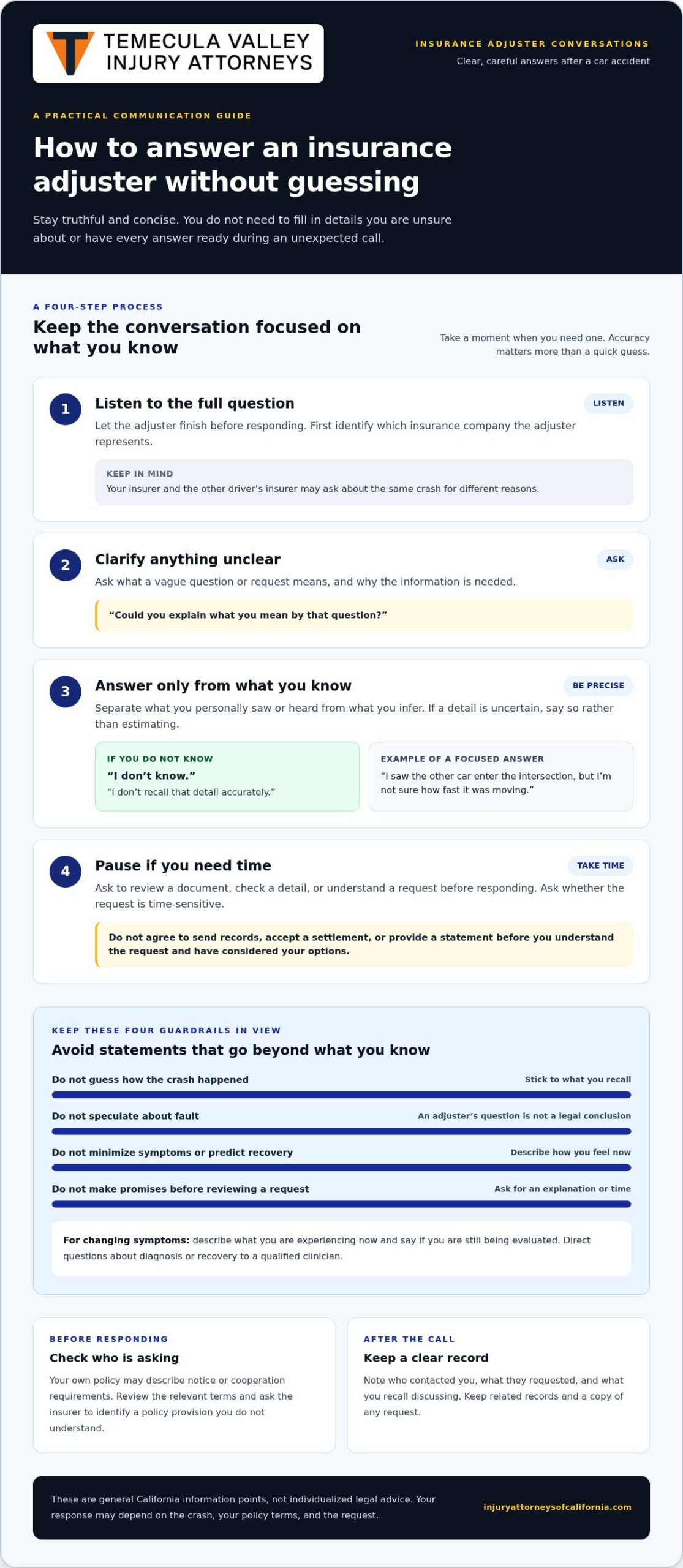
A simple process can help you stay accurate without feeling pressured to fill every pause. Listen to the full question, ask for clarification if needed, answer only what you know, and request time if you need to review a document or gather information. Brief, direct answers are usually clearer than long explanations that mix memory with assumptions.
- Listen: Let the adjuster finish the question.
- Clarify: Ask what a vague term or request means.
- Answer carefully: Share facts you know firsthand, and distinguish them from what you believe may have happened.
- Pause when needed: Ask for time to review a request or check a detail.
What to say when you do not know an answer
You can say, “I don’t know,” or “I don’t recall that detail accurately.” If you need clarification, try, “Could you explain what you mean by that question?” These responses are more reliable than presenting an estimate as fact. For example, if you can’t remember how long after the collision your symptoms began, don’t guess at a precise time. Explain what you do remember and where your memory is uncertain.
Stay focused on the question. You don’t need to speculate about another person’s intentions or add details just to sound certain. A script can help you find calm wording, but it can’t guarantee how an insurer will evaluate a claim.
What to do before a recorded statement or written response
A recorded statement creates a record of your words. Before agreeing to one, ask who is requesting it, what claim it concerns, and how the statement will be used. If your own insurer is asking, review your policy for any relevant requirements. Requests from another insurer may raise different questions, so don’t assume the same obligations apply.
Give written forms the same care. Read each question and your completed answer before submitting anything. If you notice an honest mistake after a call or submission, contact the adjuster promptly to clarify it. Keep a dated copy of your correction and related correspondence so there’s a clear record of what you changed and when. If you’re injured, unsure about a request, or concerned about how your response may affect your claim, consider getting legal guidance before proceeding.
What to Do After a Call or Misleading Comment
A call with an adjuster can leave you wondering what was recorded, what was requested, or whether an offhand remark created confusion. Write down what happened while you still remember the conversation. A clear record can help you track follow-up and explain a correction accurately if needed.
Keep a clear record of claim communications
A simple communication log can help you track each call or message. Record:
- The date and time of the contact
- The adjuster’s name, insurer, and claim reference number
- What information or documents the adjuster requested
- Your recollection of the main questions and answers
- Any follow-up you agreed to make
Save emails, letters, voicemails, forms, and copies of documents you send or receive. Keep original records intact. Don’t edit a message, overwrite a form, or alter a document to match a later recollection. If you need to add context, make a separate dated note and keep it with the relevant record.
Our car accident information provides related context about claims after a collision. Keep claim communications organized alongside relevant repair records, medical paperwork, and other documents.
If you already said something inaccurate or incomplete
Try not to panic, and don’t invent an explanation to cover an honest mistake. Identify what was inaccurate or incomplete, then contact the adjuster to clarify it as soon as you can. Keep the correction factual. Explain what you said and provide the accurate information if you’ve confirmed it. If you still don’t know the correct detail, say so rather than guessing.
Make a dated note of the correction, how you sent it, and any response you receive. Preserve both the original communication and your clarification so the sequence remains clear. If you’re concerned that a statement may affect your claim, an attorney can review the wording and circumstances. Applicable deadlines and exceptions depend on the claim and facts, so get case-specific guidance rather than relying on a general timeline.
When Legal Guidance Can Help With Insurance Adjuster Communications
You may want claim-specific legal guidance if an insurance conversation becomes difficult to manage or understand. For example, the drivers give conflicting accounts, an adjuster asks for a statement you’re unsure how to provide, or a request seems inconsistent with what you understand about your policy. Serious injuries, ongoing medical evaluation, or time away from work can also make it harder to respond while keeping track of the claim.
None of these circumstances automatically means you have a valid claim or that another person is legally responsible. The facts, available evidence, insurance coverage, and applicable law all matter. An attorney may help you organize communications, review questions or documents, and understand how your responses fit into the broader claim. Temecula Valley Injury Attorneys provides information about personal injury claims and issues that may arise after an injury.
Signs that a claim may need closer attention
Consider getting guidance if you’re unsure what an adjuster means, concerned about the scope or purpose of a recorded statement, or trying to respond while your symptoms and work situation remain unsettled. Guidance can help you identify which questions need clarification and what information may be useful to organize. It won’t guarantee a particular claim result, but it can help you make informed decisions about communication.
What to prepare before discussing your situation
Gather basic information so you can explain the issue clearly. Helpful items may include:
- The crash date and a brief description of what happened
- The names of the insurers and adjusters who contacted you
- Claim reference numbers and copies of relevant correspondence
- A note about what the adjuster requested and what concerns you
- A general update on your injuries, evaluation, and any work disruption
You don’t need to share unnecessary sensitive details in an initial conversation. Focus on the communication or decision you’re concerned about, including what not to say to an insurance adjuster in your particular circumstances. This article provides general information, not advice based on your facts and policy. If you’d like to discuss your situation, speak with our legal team.
Take a Clear, Careful Next Step
After a car accident, you don’t need to have every detail figured out before an adjuster calls. Keep your answers truthful and limited to what you know. If a question is unclear or you’re unsure of a detail, ask for clarification or say you don’t recall rather than guessing. Also identify which insurer the adjuster represents, since your own policy may affect what information you’re expected to provide.
If you’re concerned about what not to say to an insurance adjuster, remember that careful communication isn’t the same as refusing every request. Keep a record of calls and documents, and promptly clarify any honest mistake without changing or hiding the original information. If fault is disputed, your injuries are serious, or a request leaves you uncertain about your options, legal guidance may help you understand the issues specific to your claim.
Temecula Valley Injury Attorneys can discuss your concerns and help you consider possible next steps. Speak with our legal team when you’re ready. You can take this one step at a time.
Frequently Asked Questions
What should you never say to an insurance adjuster after a car accident?
Avoid guessing about how the crash happened, making unsupported statements about fault, minimizing symptoms, or predicting when you’ll recover. Don’t promise to provide documents or accept terms before you understand the request. The goal isn’t to hide information or refuse every question. Be truthful, keep answers focused on what you know, and say when you’re uncertain. What not to say to an insurance adjuster depends on the question and who the adjuster represents.
Can I refuse to give a recorded statement to the other driver’s insurance adjuster?
You may ask to understand the purpose and scope of the request before deciding how to respond. A request from the other driver’s insurer doesn’t automatically mean you must provide a recorded statement, but your obligations can depend on the circumstances. Don’t assume the same answer applies to a request from your own insurer, since your policy may include cooperation terms. If you’re unsure, review the request and policy, and consider getting legal guidance.
Should I talk to the other driver’s insurance company after a California crash?
You can communicate with the other driver’s insurer, but you don’t need to answer under pressure or speculate to fill gaps in your memory. First confirm who the adjuster represents and what information they’re requesting. Keep answers accurate and limited to what you know firsthand. If a question is unclear, ask for clarification. If the request involves a recorded statement, broad documents, or terms you don’t understand, consider seeking advice before responding.
What should I say if I do not know or remember an answer?
Say plainly, “I don’t know,” or “I don’t remember that detail accurately.” If the question is unclear, ask the adjuster to explain what they mean before answering. Don’t turn an estimate into a definite fact. For example, if you can’t recall the exact time symptoms began, explain what you do remember and be clear about what you’re unsure of. Accurate uncertainty is better than a confident guess that may later need correction.
What happens if I already gave an adjuster incorrect information?
Don’t panic or invent an explanation. Identify what was inaccurate, confirm the correct information if you can, and clarify the mistake with the adjuster promptly. Keep the original communication and make a dated record of your correction and any response. An honest error doesn’t automatically determine the outcome of a claim, but its significance depends on the facts and what was said. An attorney can help assess how the statement may affect your particular situation.
Should I sign a medical authorization or settlement document from an adjuster?
Don’t sign until you understand what the document authorizes or resolves. A medical authorization may give an insurer access to records, and its scope can matter. A settlement document may include terms that affect your ability to pursue further compensation for the claim. Read the entire document, ask questions about unclear language, and consider legal guidance before signing, especially if your medical evaluation is ongoing or you’re unsure what rights the document may affect.


