

What if the first settlement offer arrives before you know the full cost of your injuries? If you’re asking, “should I accept the first settlement offer,” the answer depends on what the offer covers, what losses may still lie ahead, and the terms you’d agree to.
An early offer can feel like welcome relief when you’re dealing with treatment, bills, or missed work. But the timing alone doesn’t show whether it accounts for your accident-related losses. Accepting may require you to sign a release, which can limit your ability to seek more compensation for the claims it covers.
Before deciding, compare the offer with your medical care, lost income, property damage, and any unresolved questions about your recovery. Read the release and note any conditions or response date in the offer.
This article explains how to evaluate an initial offer and compare accepting, negotiating, or declining it. We’ll also cover when legal guidance may help you assess your documented losses and the proposed release before choosing your next step.
Key Takeaways
- When deciding “should I accept the first settlement offer,” weigh the evidence, documented losses, unresolved questions, and release terms, not just the fact that it’s the insurer’s first proposal.
- Review medical expenses, income losses, and other accident-related costs. Consider whether ongoing treatment or incomplete records leave important details unclear.
- Compare accepting, making a counterproposal, and pausing to seek advice. Each option has different considerations.
- Keep the offer and related communications. Gather relevant medical, wage, expense, accident, and insurance records before you reply.
- An attorney may help review your records and the release language, identify unresolved losses, and assist with communications or negotiations.
Should I accept the first settlement offer after a California car accident?
If you’re wondering, “should I accept the first settlement offer,” don’t decide based only on the fact that it’s the insurer’s first proposal. The offer may be fair, or it may leave losses or questions unaddressed. Review the evidence, documented expenses and income losses, unresolved issues, and settlement documents before deciding.
An insurer’s proposal is an offer to resolve a claim, not necessarily a complete assessment of what the accident has cost you. You may still be receiving care, waiting for bills or wage records, or trying to understand how an injury affects your daily activities. Those details matter when comparing the offer with your personal injury claim and the losses you can document.
Why the first offer alone does not determine whether it is fair
Timing doesn’t establish fairness. A prompt offer isn’t automatically inadequate, and an offer made later isn’t automatically sufficient. The question is whether the amount and terms reasonably account for the available information about your claim. That may include medical expenses, lost income, property damage, and other accident-related losses. The picture may still be incomplete if records are arriving or the effects of your injuries remain unclear.
Consider what the insurer appears to have reviewed. Does the offer reflect the records you provided? Are there unanswered questions about expenses, missed work, or responsibility for the crash? Identify these issues before you decide. Don’t assume every insurer uses the same approach or that an initial proposal is always intentionally low.
What accepting a settlement may mean for your claim
Settlement paperwork may include a release. In plain terms, a release is an agreement describing the claims you agree to resolve. Its wording matters because documents can differ in the claims they cover and how broadly they are written. Signing a release may limit your ability to pursue additional compensation for covered claims, even if you later learn more about your losses. The specific effect depends on the document, the circumstances, and applicable law.
Read the entire agreement, not only the payment amount. Check which claims and parties it identifies and whether it addresses unknown or future losses. Don’t assume a release has standard terms or the same consequences in every case.
In short: The first offer alone can’t tell you whether a settlement is fair. Review the evidence, losses, unresolved questions, and release terms. This is general information, not legal advice about your specific claim.
What should you evaluate before accepting a California car accident settlement?
Before deciding whether to accept, compare the proposed amount with the losses you can document and the questions that remain open. Review medical expenses, income losses, other accident-related costs, and the settlement terms separately rather than treating the offer as one number.
Are your medical treatment and accident-related losses fully understood?
Gather the records you have and note what may still be missing. Relevant information can include:
- Medical bills and available treatment records related to the accident
- Pay stubs, employer records, or other documentation of missed work and lost income
- Receipts or records for other accident-related expenses, such as transportation to appointments or out-of-pocket costs
- Accident information and insurance correspondence that help explain the claim and the offer
Ongoing symptoms, appointments, or pending bills can leave important details uncertain. Don’t try to predict future medical needs yourself. A qualified medical professional can discuss your care, while an attorney can help you consider how unresolved information relates to the settlement documents.
A complete settlement review compares the offer amount with documented medical expenses, income losses, and other relevant costs, identifies missing records or unresolved questions, and checks whether the written terms address the claims described in the offer. This is a practical review framework, not a calculation of what your individual claim is worth.
What do the offer letter and release actually say?
Read the offer letter and any proposed release together. Check the amount, conditions for payment, claims or parties identified in the release, and any response date. A release describes claims being resolved, but its scope and wording can vary. Don’t assume a date in an offer is automatically a legally enforceable deadline, or that signing has the same consequences in every case.
If you’re unsure what a provision means or whether the release reaches claims beyond those described in the offer, consider getting legal guidance before signing. The California Department of Insurance’s guide to auto claims and settlement practices provides consumer information about the claims process.
For help reviewing the documents and identifying unresolved questions, you can discuss your settlement offer with our team. Advice about your specific offer depends on its wording and your circumstances.
Should you accept, negotiate, or decline the first settlement offer?
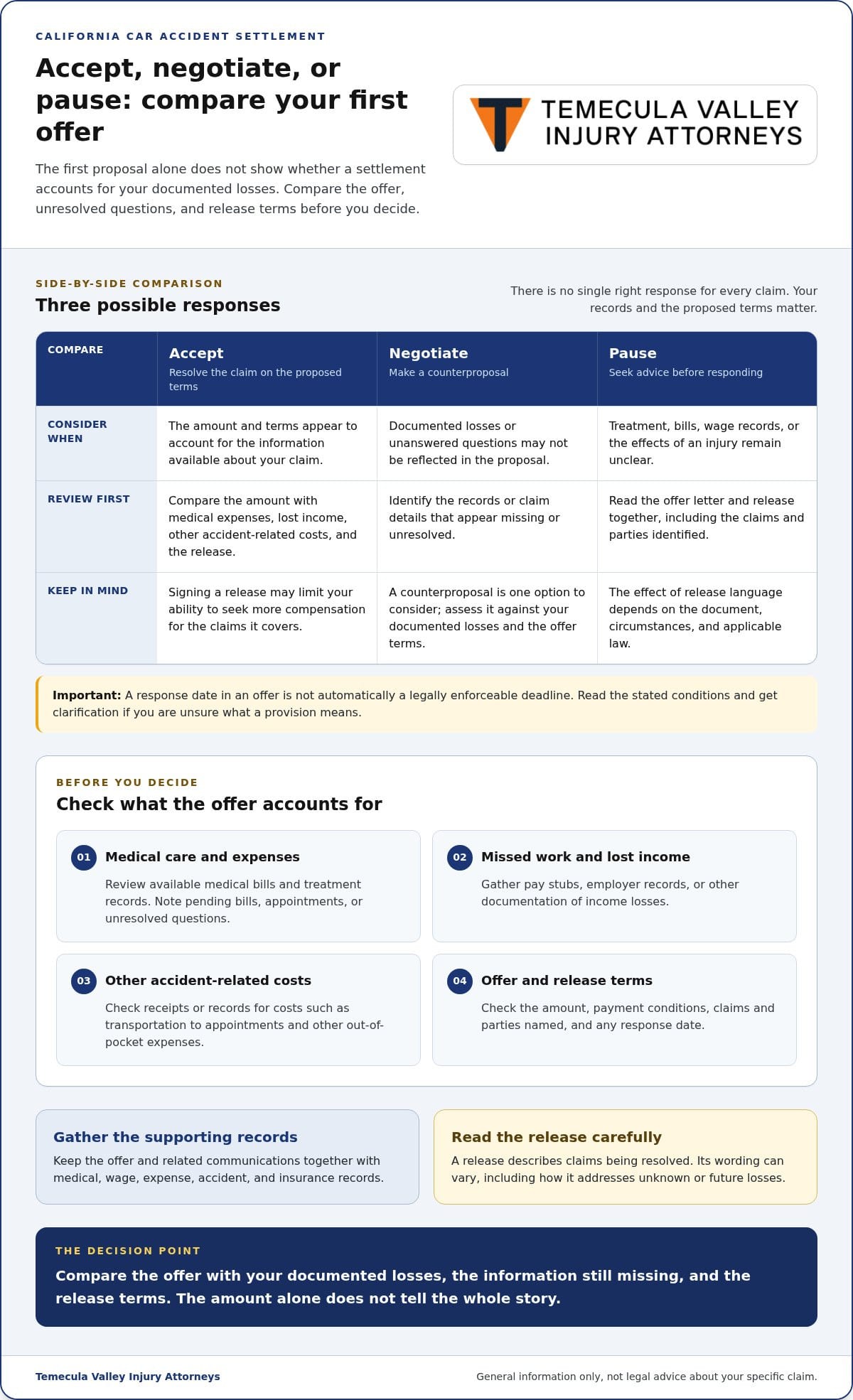
There isn’t one right response for every car accident claim. If you’re asking, “should I accept the first settlement offer,” compare it with your documented losses, the information still missing, and the release terms. You can accept, make a counterproposal, or pause to seek advice before responding. Each choice has trade-offs, and you can’t predict the insurer’s next step.
When might accepting be worth considering?
Acceptance may be worth considering if you’ve reviewed the available information, understand which losses the offer addresses, and are comfortable with the release’s scope. An offer isn’t necessarily adequate just because it covers some bills or arrives promptly. Consider your specific facts and documents, including questions about expenses or unresolved losses.
When might negotiating or pausing for advice make sense?
A counterproposal may make sense if you can explain why the offer doesn’t account for documented losses or if you’re still gathering relevant information. For example, you might identify a documented expense that isn’t reflected in the offer and provide the supporting record. A counterproposal is a possible response, not a guarantee of a higher offer. Pausing to get advice can help if the release language is unclear or facts are disputed. Declining may affect your options, depending on the offer and circumstances, so review its terms before responding.
Keep the offer letter and related communications. When appropriate, respond in writing so you have a record of what was said. If the insurer lists a response date, note it and seek clarification or legal guidance rather than assuming what it means. Our team at Temecula Valley Injury Attorneys can help you understand the documents and considerations specific to your situation.
What steps should you take before responding to a settlement offer?
Organizing your records can help you see what the offer covers and what needs clarification. If you’re weighing whether to accept, counter, or wait, use this checklist before responding.
- Preserve the offer and related communications. Save the offer letter, emails, texts, and letters from the insurer. Keep copies and note when each communication arrived. Don’t alter original records.
- Collect documents about your losses. Gather available medical bills and records, wage or employer documentation for missed work, receipts for accident-related expenses, and relevant accident and insurance information. These records can help explain your situation, but no single document guarantees a particular settlement result.
- Read the offer and release together. Identify the proposed amount, payment conditions, claims covered by the release, and any stated response date. If the release’s wording or effect is unclear, don’t sign or return it until you understand what it says.
- Write down what remains unresolved. Note missing bills or wage information, ongoing treatment or symptoms, disputed accident facts, unclear terms, and questions about how the offer addresses your losses. A written list can help focus any follow-up communication.
- Check deadlines and response instructions. Note how the insurer asks you to respond and any expiration date stated in the offer. A date in an offer is not automatically a universal legal deadline. California claim-filing deadlines can depend on the circumstances, and exceptions may apply. Verify the deadline through an authoritative source or with counsel. Don’t assume settlement discussions pause a legal filing deadline.
Before you reply, compare your notes with the offer. Are important losses still unclear? Does the release cover more than you intended to resolve? Is the insurer asking for a specific response, and do you understand what that means? These questions can help you decide whether to respond, request clarification, or seek legal guidance.
If you’re still unsure whether to accept the first settlement offer, Temecula Valley Injury Attorneys can help review the offer documents, release language, and questions about unresolved losses. Discuss your settlement offer with our team.
How can a California car accident attorney help you evaluate an offer?
An attorney can help you look beyond the payment amount and understand how the offer fits the available evidence, documented losses, and proposed release. If you’re unsure whether to accept, negotiate, or wait, car accident legal guidance may help you identify what needs closer review. The goal is to clarify your options, not to promise a particular case value or result.
What an attorney may review before you make a decision
Legal counsel may compare accident information and available records with the losses you’ve documented. An attorney can also review the offer’s conditions and the release, which describes the claims the agreement would resolve. Reviewing these materials together may help identify unanswered questions, such as whether the offer addresses a loss shown in your records or whether the release reaches beyond the claim you expected to settle.
The review depends on your circumstances and the documents available. It can help you understand the issues to consider, but it can’t guarantee a particular valuation, negotiation outcome, or recovery.
When a conversation with our team may help
You may want to discuss the offer if you’re uncertain about the release, have unresolved questions about treatment or expenses, disagree with how the accident facts are presented, or can’t tell what the offer requires you to do. Our team can review those concerns with you and explain possible next steps. Depending on the situation, we may also help with communications or negotiations, but we can’t guarantee how the insurer will respond.
For broader context on how injury claims are handled, our California personal injury representation information may be useful. General information can help you organize your questions; advice about your specific offer requires reviewing its terms and your circumstances.
You can also contact Temecula Valley Injury Attorneys to discuss your offer and release with our team.
Make your next step with a clearer picture
If you’re asking, “should I accept the first settlement offer,” don’t let the offer’s timing decide for you. Consider whether it reflects the losses you can document, whether important questions remain, and what the release says you would be resolving.
Accepting, negotiating, or pausing to seek advice may each make sense in different circumstances. Before responding, keep the offer and related communications, review any stated conditions or response date, and make sure you understand the release. Medical records, income documentation, and other relevant information can help you assess what the offer addresses, though no document guarantees a particular result.
Every claim has its own facts and terms. If you’re uncertain about the offer or what signing could mean, our team at Temecula Valley Injury Attorneys can discuss your circumstances and help you understand what questions to consider. Discuss your settlement offer with our legal team.
You deserve the time and information to make a thoughtful decision about your next step.
Frequently Asked Questions
Should I accept the first settlement offer after a car accident?
Not automatically. Before deciding, make sure you understand the offer, the losses it addresses, and the release you may be asked to sign. If you’re still receiving treatment or don’t have a clear picture of your accident-related expenses and missed income, you may need more information. The right choice depends on your facts and documents. Consider individualized legal guidance if the consequences are unclear.
Can I negotiate a car accident settlement offer in California?
You may be able to respond with a counterproposal or information supporting your position, but negotiation doesn’t guarantee a higher offer. Organize relevant records, review the insurer’s terms, and keep written communications. The effect of a response can depend on the offer’s wording and the circumstances. An attorney may help you understand possible options and review your supporting information, without promising how the insurer will respond or what result you’ll receive.
What happens if I accept a car accident settlement offer?
Accepting an offer may involve signing a release, a document describing the claims being resolved. The wording matters because releases can differ in scope and effect. Read the complete agreement, including any conditions, before signing. Don’t assume every release has the same terms or consequences. If you’re unsure what claims the document covers or how it may affect your options, seek legal advice based on the exact documents and circumstances.
Can an insurance company take back its first settlement offer?
Whether an offer can be withdrawn or changed depends on its terms, related communications, and applicable law. Don’t assume a response date in the offer is meaningless or that it automatically sets a universal legal deadline. Save the offer and related messages, and note any dates or instructions. If you’re unsure how or when to respond, seek timely guidance based on the offer’s wording and your circumstances.
Should I accept an offer if I am still receiving medical treatment?
Ongoing treatment may mean you don’t yet have a complete picture of your medical expenses or other related losses. Before accepting, understand what the offer covers and what the release may affect. Don’t estimate future care needs on your own. Discuss questions about your care with your healthcare provider, and consider legal guidance if you need help understanding the settlement documents or how they may affect your claim.
How do I know whether a settlement offer is fair?
No single amount is fair for every car accident claim. Consider the available evidence, documented medical expenses and income losses, other relevant costs, unresolved questions, and release terms. A useful review depends on the specific facts and records, not just the offer’s timing. An attorney may help assess those materials and identify issues to consider, but no one can guarantee a particular case valuation or settlement result.
Do I need a lawyer to review a first settlement offer?
You aren’t required to hire an attorney simply because you received a settlement offer. Legal review may help if losses remain unclear, fault is disputed, or you don’t understand the release or offer conditions. A lawyer can explain potential options based on your circumstances and documents. This FAQ provides general information, not legal advice for your specific claim. If you’re uncertain about what signing may mean, consider discussing the offer with an attorney.


