

A totaled car doesn’t erase its loan. If you’re asking what happens when your car is totaled and you still owe money, you’re generally responsible for any balance left after the insurance payout is applied. The insurer typically bases that payout on the car’s actual cash value, minus your deductible, and pays the lender first.
It’s understandable to expect the insurance payment to close out the loan, especially while you’re dealing with a crash’s aftermath. But your car’s value and your loan balance are separate amounts, so a gap may remain.
This article explains how an insurance payout affects your loan, why payments may still be due while a claim is pending, and how gap coverage may help with a shortfall. You’ll also learn what to review if you believe the insurer’s valuation doesn’t reflect your car’s condition or market value, and which steps can clarify your remaining balance.
Key Takeaways
- Compare the insurer’s payment with your lender’s current payoff figure to identify whether a balance may remain.
- Review your loan and insurance documents to understand whether gap coverage applies and what it excludes.
- Keep track of payment due dates while the claim is pending, and get any payment pause agreement from your lender in writing.
- If you dispute the vehicle valuation, organize records that show its pre-accident condition, features, and comparable market value.
- When the crash also caused injuries, consider how legal guidance may help you address the injury claim separately from the vehicle loan.
What Happens to Your Loan When Your Financed Car Is Totaled?
If you’re asking, “What if my car is totaled and I still owe money?” the loan generally remains your responsibility after the insurance payment. The insurer usually sends the settlement to the lienholder first, and the lender applies it to your debt.
Loan and Lease Balances After a Total Loss
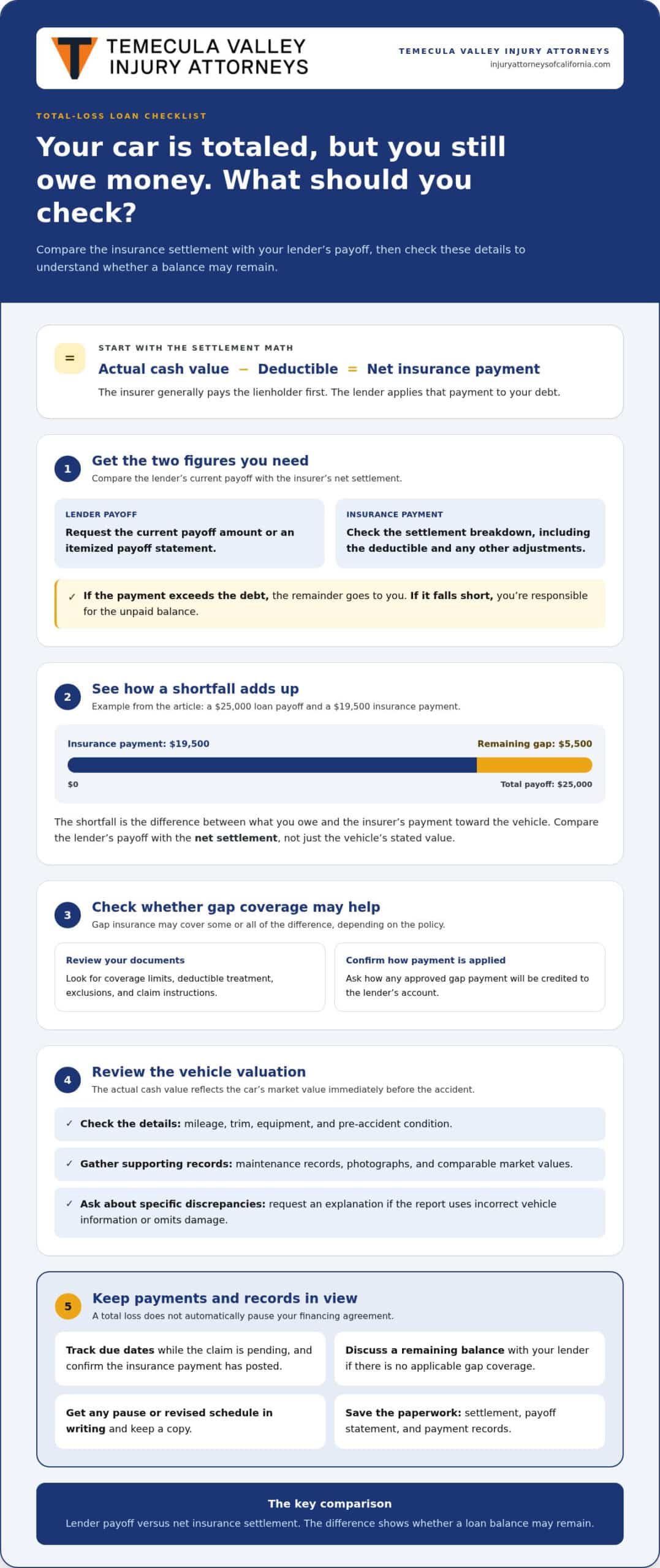
A total loss doesn’t cancel your loan or lease agreement. After a car accident, the insurer generally calculates the vehicle’s actual cash value and subtracts your deductible before paying. The lender or leaseholder receives the settlement first. If the payment exceeds the debt, the remainder goes to you. If it falls short, you’re responsible for the unpaid balance. Request the lender’s current payoff amount to see how much you owe.
When the Balance Exceeds the Car’s Value
The shortfall is the difference between what you owe and the insurer’s payment toward the vehicle. For example, a loan balance of $25,000 and an insurance payment of $19,500 leave a $5,500 gap. A car may depreciate while the loan balance declines more slowly, even when you’ve made regular payments. Compare the lender’s payoff amount with the net settlement, which accounts for the deductible.
Gap Insurance and the Payout Shortfall
Gap insurance is designed to cover some or all of the difference between the primary insurance payout and your remaining loan or lease balance. It may help when the car’s actual cash value is less than the debt, but the policy terms determine what it covers. Review your policy or loan paperwork for coverage limits, deductible treatment, exclusions, and claim instructions. Ask how any approved payment will be applied to the lender’s account.
Paying a Shortfall Without Gap Coverage
Without applicable gap coverage, you’re responsible for any debt left after the settlement is applied. Ask the lender for an itemized payoff statement and confirm that the insurance payment has posted. If a balance remains, discuss repayment arrangements with the lender. Get any revised payment schedule or deferment agreement in writing, and keep copies of the settlement and payment records.
The practical answer to “what if my car is totaled and I still owe money” depends on comparing the insurer’s settlement with the lender’s account. Review the vehicle valuation, deductible, loan payoff, and any gap coverage payment as separate items. If a payment hasn’t been credited, contact the insurer or lender about that specific discrepancy. Comparing the figures can clarify whether the balance reflects the vehicle’s value, the loan amount, or a claim calculation that needs explaining.
What Is a “Total Loss” Vehicle?
An insurance company generally declares a vehicle a total loss when estimated repair costs meet the applicable threshold compared with its pre-accident value. The method can vary by state, so review the insurer’s written decision and valuation report.
How Insurers Determine a Total Loss
The insurer compares the estimated repair cost with the vehicle’s pre-accident actual cash value and applies the relevant state rule. That decision determines whether the claim proceeds as a repair claim or a total-loss settlement.
Ask for the repair estimate and written total-loss determination. Check whether the estimate includes the damage identified during inspection and whether the vehicle details used in the comparison are accurate. If the insurer’s assessment omits damage or uses incorrect vehicle information, raise those specific issues with the adjuster. A repair estimate alone may not show how the insurer applied the threshold.
You may be able to keep a vehicle declared a total loss, depending on the claim process and applicable rules. If you retain it, the insurer may reduce the settlement to account for its salvage value. If a lender has a lien, its financial interest must also be addressed. Ask the insurer how keeping the vehicle affects the payment, and ask the lender how it will handle the proceeds before assuming you can use the full payout to reduce the loan.
Calculating Actual Cash Value
Actual cash value, or ACV, is the vehicle’s market value immediately before the accident. It reflects the vehicle’s value at that time, not its purchase price or outstanding loan balance. The insurer’s valuation matters because it is the starting point for calculating a total-loss settlement.
Review the valuation report for accurate mileage, trim, equipment, and pre-accident condition. These details help distinguish your vehicle from other models or versions with different features. Maintenance records and photographs can support a correction if the report describes the car inaccurately. Ask the adjuster to explain how the vehicle details and valuation information in the report affected the ACV calculation.
The settlement calculation may also account for your policy deductible and, if you keep the vehicle, a salvage deduction. These adjustments affect the amount available to the lender or leaseholder. GAP insurance may cover some of the difference between the primary insurance payment and the loan or lease balance, subject to the policy terms. Review exclusions for deductibles, overdue payments, late fees, or added interest, and check whether the policy limits payment based on the vehicle’s actual cash value.
Keep the insurer’s valuation, repair estimate, and settlement breakdown together. Comparing these documents can help you identify whether a disagreement concerns the vehicle’s condition, the total-loss assessment, or a settlement deduction. If the car is financed, compare the proposed payment with the lender’s payoff information before deciding how to respond.
Continuing loan payments while a claim is being settled
A totaled vehicle doesn’t automatically pause your financing agreement. Keep making scheduled payments while the insurer reviews your claim, unless your lender agrees to different terms.
Payments During the Insurance Claim
The insurance company’s investigation and payment process may take time, but your loan account remains active during the review. A pending total-loss claim alone doesn’t change the payment schedule in your financing contract. Check your next due date and payment method in the lender’s account portal or statement.
If the lender receives an insurance payment before your next due date, confirm how it will apply the funds. A payment to the loan may not close the account immediately, especially if the insurer’s settlement doesn’t cover the full payoff. Ask the lender for an updated account balance and whether another scheduled payment is still due.
Leases also involve contractual obligations. Contact the leasing company to learn how it handles insurance proceeds and any remaining balance under the lease. Keep the claim number, settlement details, and written communications together so you can compare the insurer’s payment with the lease account records.
What to Do If You Can’t Make a Payment
If a claim delay or accident-related expenses make a scheduled payment difficult, contact the lender before missing it. Ask whether it offers a deferment or forbearance, and request the terms in writing. A verbal conversation may not clearly document whether the lender has changed your due date or payment obligation.
- Write down the lender representative’s name and the date of the conversation.
- Ask which payments the agreement covers and when regular payments resume.
- Keep the written agreement with your insurer’s claim documents.
- Check your account afterward to confirm the lender applied the arrangement.
These records help distinguish an approved payment pause from an overdue installment. Don’t assume an adjuster’s claim update changes your lender’s payment schedule. Only the lender can explain or approve a change to your loan or lease payments.
Credit Records and the Remaining Balance
A missed payment may affect your credit if the lender treats the account as delinquent or in default. That risk remains even when your car is undriveable and the insurer has accepted the total-loss claim. A written deferment or forbearance agreement can document the lender’s approved arrangement and help prevent a mistaken default status.
After the insurer sends payment, ask the lender to confirm the amount credited, your account’s status, and any remaining balance. If gap coverage applies, track that claim separately and ask when its payment should reach the lender. Keep copies of payment confirmations and account statements. If the lender’s records show a missed payment despite a written deferment, contact the lender promptly and provide the agreement and payment history.
Can You Negotiate Insurance Payout for Totaled Car?
You can challenge a total-loss settlement by identifying specific problems with the insurer’s valuation or claim calculation. A focused review can help you determine whether the offer reflects your vehicle and the applicable policy terms.
Steps After a Total-Loss Declaration
Keep the insurer’s written decision, valuation report, repair estimate, and claim correspondence together. These records show how the insurance company assessed the damage and calculated its proposed payment.
Review your policy for rental-car reimbursement after an accident, including coverage limits and conditions for ending coverage. Ask the adjuster how rental expenses are handled after the total-loss decision, and keep receipts for expenses you submit. Contact your lender to understand how the proposed settlement affects your car loan. Organizing claim and loan records makes it easier to track unanswered questions.
If the accident caused injuries, keep records of medical care, missed work, and insurer communications. A vehicle settlement concerns damage to the car, while an injury claim concerns losses related to harm suffered in the crash. Keeping these records separate can help you explain each issue clearly.
Negotiating the Total-Loss Valuation
Negotiating means showing the insurer that its valuation may contain errors or overlook relevant vehicle details. Before disputing the proposed amount, check the report for inaccurate mileage, trim, equipment, or pre-accident condition.
Send a concise written explanation supported by records, photographs, or comparable vehicle information. Identify each discrepancy and ask the adjuster to explain how correcting it would affect the valuation. Specific evidence gives the insurer a clear issue to review, unlike a general request for a higher offer.
Total-loss thresholds and methods vary by state, so the applicable rule depends on where the claim is handled. A threshold helps determine when damage results in total-loss treatment; it doesn’t establish the vehicle’s settlement value. Review the insurer’s classification separately from its valuation calculation.
For rental reimbursement, rely on your policy and the insurer’s written explanation rather than assuming coverage continues until you replace the vehicle. If you’re also addressing injuries from the crash, keep a separate record of injury-related expenses and communications. This can help you distinguish the vehicle claim from questions about your health, missed work, and other accident-related losses.
Estimating a vehicle’s pre-accident value
An insurer’s actual cash value estimate reflects the vehicle’s market value at the time of the accident, not its original purchase price or loan balance. To assess the proposed payout, review the valuation report and compare its vehicle details with your own records.
Depreciation helps explain why purchase price and current value can differ. A vehicle may depreciate about 12.5% in its first year. That figure is a general example, not a calculation of your car’s value. Your vehicle’s age, mileage, condition, and equipment also affect its valuation.
Start with the insurer’s written valuation. Check for errors in mileage, trim, installed features, or pre-accident condition. Then gather records showing what the vehicle was like before the collision:
- Maintenance and repair records documenting recent work or replaced parts.
- Photographs showing the vehicle’s condition before the accident.
- Purchase or equipment records identifying features included in the vehicle.
- Comparable vehicle listings matching its model, trim, age, and condition.
Use comparable vehicles carefully. A listing for a different trim or condition may not be a useful comparison. Note the differences and explain why a selected example better matches your car. The insurer’s estimate should describe the vehicle being valued, not a loosely similar model.
Separate the vehicle’s value from the settlement calculation. The insurer generally starts with actual cash value, then accounts for your policy deductible. The resulting payout may be lower than the valuation itself. If the vehicle has a lien, the lender’s payoff is a separate figure. Comparing these amounts helps show whether a disputed valuation changes the funds available after the claim payment.
A repair invoice can document the vehicle’s history, but it doesn’t automatically increase its market value by the full repair amount. For example, records may show that a damaged component was repaired before the accident. Ask the adjuster how that information was considered, and keep the response with the valuation report. This helps clarify whether the disagreement concerns the vehicle’s documented condition or another part of the estimate.
If the report includes inaccurate details, send the insurer a written correction with supporting records. Identify each error, attach relevant evidence, and ask the adjuster to review the valuation. Keep a copy of your submission and any response with your claim documents. A clear record makes it easier to track which vehicle details the insurer accepted or continues to dispute.
Temecula Valley Injury Attorneys: Car Accident Attorney
Temecula Valley Injury Attorneys helps people understand their options after a car accident causes injuries. A car accident attorney may be helpful if you’re facing medical bills, missed work, disputed fault, or questions about an injury claim. The vehicle loan and total-loss payout are separate financial issues, but the accident may also raise questions about responsibility and what losses an injury claim can address.
Gather relevant records, including accident-related insurance correspondence, medical bills, and documentation of missed work. Our team can discuss how the circumstances of the crash relate to a potential injury claim and explain possible next steps. If you were injured in a car accident and need guidance, contact Temecula Valley Injury Attorneys to discuss your situation.
Choose Your Next Step With Confidence
If you’re still wondering what happens when your car is totaled and you owe money, separate questions about the vehicle account from concerns about injuries after the crash. Keep claim correspondence and lender records organized, then note what remains unclear. This can help you focus a conversation with an attorney on the issues that matter to you, such as medical bills, missed work, or an insurer’s questions.
Temecula Valley Injury Attorneys represents people in car accident, motorcycle accident, and truck accident matters. Our team can discuss the circumstances of your crash and explain potential options related to an injury claim. Whether you have an injury claim depends on the facts and evidence.
Before deciding what to do next, write down the questions you want answered and the records you may need to discuss. Request a conversation with our legal team when you’re ready. A clear next step can make a difficult situation easier to approach.
Frequently Asked Questions
What Is GAP Insurance?
GAP stands for guaranteed asset protection, a type of coverage that may help address the difference between a vehicle claim payment and a financed balance. The exact protection depends on the contract. Check whether your paperwork describes an insurance policy or a lender’s GAP waiver, then find the claim instructions and exclusions. Ask the provider what documents it needs and whether you must open a separate claim.
I Still Owe Money on My Totaled Car. What Are My Options?
Your options may include making a GAP claim, discussing repayment terms with the lender, or disputing an insurer’s calculation with supporting evidence. Request a payoff statement that shows how long the quoted amount is valid, since account balances can change. Keep the lender’s statement, insurer’s settlement notice, and any GAP decision together. Comparing dated documents can help identify whether a payment, credit, or adjustment hasn’t appeared.
What Happens to My Loan If the Other Driver Is At Fault?
The lender’s contract remains separate from a dispute about who caused the crash. If the other driver’s insurer is reviewing responsibility, ask your own insurer what coverage may apply while the review continues. Keep claim numbers and written updates from both companies. Before signing a property-damage release, read which claims it resolves and whether it affects any separate injury claim.
How To Tell if Your Car Is Totaled?
Severe visible damage can suggest a total loss, but appearance alone doesn’t establish the insurer’s decision. Ask whether the vehicle has been inspected and whether the estimate includes possible hidden damage. If a repair facility later identifies additional damage, send the updated estimate to the adjuster. The written decision, not the vehicle’s damaged appearance or an initial repair opinion, tells you how the insurer classified it.
How Do You Determine if Your Car Is Totaled?
The insurer uses its damage estimate and vehicle valuation to apply the relevant total-loss method. Ask for the written calculation behind its decision, including the repair estimate and the value used for comparison. Keep these questions separate: whether the insurer classifies the vehicle as a total loss, and whether its proposed settlement amount is accurate. Raise each disagreement on its own.
How Is the Actual Cash Value of a Totaled Car Determined?
The insurer estimates the vehicle’s market value just before the accident. To review the report, ask for the comparable vehicles it used and the adjustments made for differences. Check whether each comparison matches your car’s model year, trim, mileage, and equipment. If a listing is materially different, explain the mismatch and provide a closer comparison. This makes your valuation dispute specific and easier to review.
Who Gets the Insurance Payout When a Totaled Car Has an Outstanding Loan?
The lender with a lien generally receives the payment first. If the proceeds exceed the amount needed to settle the account, ask the lender how it will release the remaining funds and confirm that the lien has been cleared. For a leased vehicle, the leasing company can explain its account process. Keep the payment confirmation and final account statement for your records.
What Happens if the Insurance Payout Is Less Than the Loan Balance?
A shortfall may remain after the insurer’s payment, so confirm the lender’s final account figures before deciding how to address it. Ask whether a pending payment, credit, or GAP claim could change the amount due. If a balance remains, request the lender’s available repayment terms in writing. Don’t assume that financing a replacement vehicle automatically settles the debt from your totaled car.


