

Insurance may cover towing and storage after a crash, depending on your policy and the circumstances of the claim. To get your car out of an impound lot after an accident, first find out where it was taken, then ask the tow yard what documents and payment it requires for release. Contact your insurer promptly to ask whether your policy covers the tow or storage and how to handle the claim.
It’s understandable to feel overwhelmed by vehicle damage, possible injuries, insurance questions, and a car you can’t access. Taking the right steps can help you avoid delays and understand what you may have to pay yourself. This guide explains how to locate the tow yard, confirm its release requirements, review the charges, and preserve information that may matter to your insurance claim or injury case.
Key Takeaways
- Ask your insurer whether your policy may cover accident-related towing and storage, and what steps it requires for a claim.
- Contact the tow yard to confirm its release documents, any police authorization, and how you can pay before arranging pickup.
- Get an itemized breakdown of towing, storage, and other charges so you understand what is required to release the vehicle.
- Before authorizing a tow, confirm the destination and request a receipt or invoice for your records.
- If the crash caused injuries or the insurance claim is complicated, Temecula Valley Injury Attorneys can discuss your car accident claim and possible next steps.
Does car insurance cover towing and storage fees after an accident?
- Call your insurer and ask whether your policy covers the accident tow and impound storage. Coverage depends on your policy and the reason for the tow. Ask whether the insurer will pay the tow yard directly or reimburse you after you pay. Give the representative the vehicle’s location, the tow date, and any claim number.
Ask how the insurer handles storage while it reviews the damage or decides whether the vehicle is a total loss. Storage may continue during that process, so find out what documentation the adjuster needs and how soon the insurer expects the vehicle to be moved. Save the claim representative’s name and instructions.
- Keep evidence linking the towing and storage charges to the crash. Request an itemized tow-yard statement, the police incident information, and any tow authorization or receipt. Send copies to your insurer and keep the originals. If the insurer disputes a charge, these records can help show when the vehicle was towed and why it was taken to that lot.
Ask whether your policy includes roadside assistance or another applicable benefit, but don’t assume it covers an accident-related impound. The policy wording and circumstances matter. If you pay first, keep proof of payment and ask the insurer how to request reimbursement.
- Collect the other driver’s insurance information and preserve available crash evidence. Record the insurer, policy details, and claim contact information from the exchange or police report. If a dash camera recorded the collision, save the original footage promptly and make a separate backup. Avoid editing the file, since the complete recording may provide context about what happened before impact.
Also preserve photographs of the vehicle, tow paperwork, and messages with insurance representatives. These records can help document the vehicle’s condition and the sequence of events if questions arise during the claim.
- Ask the officer or agency whether police ordered the tow and what release steps apply. An officer who finds a driver without auto insurance may issue a warning or citation, or impound the vehicle. The response depends on the circumstances and local rules. If lack of insurance led to the impound, ask what proof of coverage the lot requires for release.
An impound by itself does not affect your insurance rate. Keep that separate from questions about a citation or coverage claim. Ask your insurer about your policy status and the vehicle-release documents rather than assuming the tow changes your premium.
- Read settlement and release paperwork carefully before signing. A vehicle-damage payment and an injury claim may involve different losses, and the document’s wording can affect which claims it resolves. Check whether it addresses only vehicle damage or also mentions injuries, medical expenses, or other losses.
If the wording is unclear, ask the insurer to explain in writing what the release covers before you sign. Keep a copy of the final agreement with your claim records, especially if you are still addressing injuries or related expenses.
Tow-yard storage fees and release charges
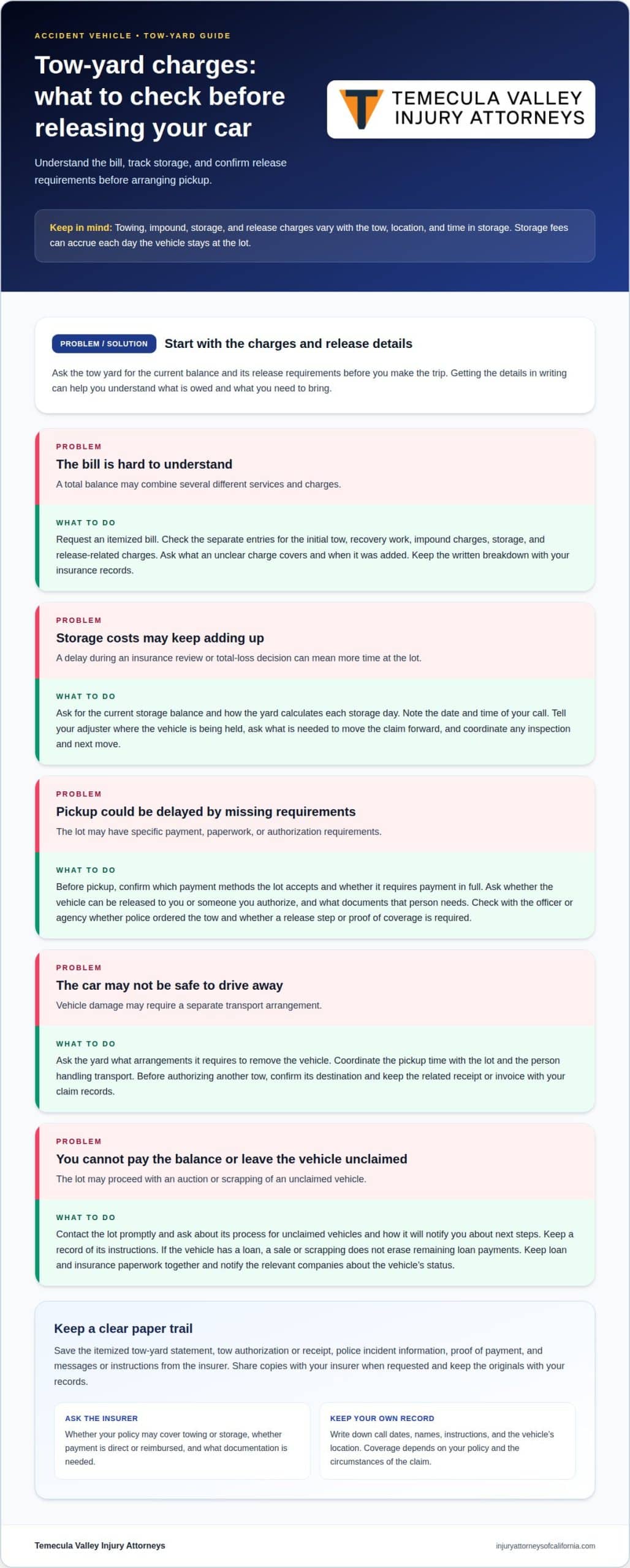
Accident tow, impound, and storage charges depend on the tow, location, and time in storage. Storage fees can accrue each day the vehicle remains at the lot. If you cannot pay or leave the vehicle unclaimed, the lot may proceed with an auction or scrapping, and any remaining loan payments remain your responsibility.
-
Review Towing and Impound Charges
Ask the lot for an itemized bill before arranging release. Separate the initial tow from recovery work, impound charges, storage, and release-related charges. The tow may include loading and transport, while recovery work can involve extra steps to remove a damaged vehicle from the scene.
Compare each line with the paperwork you received after the collision. If a charge is unclear, ask what service it covers and when it was added. Keep the written breakdown with your insurance records, especially if the insurer is reviewing accident-related expenses or asks you to explain the bill.
-
Track Storage Fee Accumulation
Ask the yard for the current storage balance and how it calculates each storage day. Record the date and time of your call, then ask how the balance changes while the vehicle remains there. Storage fees accrue daily, so delays during an insurance review or total-loss decision can increase what you owe.
Tell your adjuster where the vehicle is being held and ask what documents are needed to move the claim forward. If the insurer needs to inspect the damage, coordinate the inspection and the vehicle’s next move. Keep a record of calls, names, and instructions.
- Ask which payment methods the lot accepts and whether it requires payment in full before release. Clarify whether the vehicle can be released to you or someone you authorize, and what paperwork that person needs. Getting these details before pickup can prevent a wasted trip due to missing documents or an unavailable payment method.
If damage makes the car unsafe to drive, ask what arrangements the lot requires for its removal. Coordinate the pickup time with the yard and the person handling transport. Before authorizing another tow, confirm its destination and keep the related paperwork with your claim records.
- If you cannot pay the balance, contact the lot promptly and ask about its process for unclaimed vehicles. A tow yard may auction or scrap a vehicle if its owner cannot pay the impound charges or provide proof of insurance. Ask how the lot will notify you about next steps, and keep a record of its instructions.
If the vehicle has a loan, its sale or scrapping does not erase remaining loan payments. Keep loan and insurance paperwork together, and notify the relevant companies about the vehicle’s status. If an injury claim or vehicle-damage dispute complicates your next steps, organize the tow-yard invoice, claim correspondence, and any documents about the vehicle’s condition for review.
Choosing a tow company and destination
Before your vehicle leaves the crash scene, confirm its destination and the towing terms. A clear plan can help prevent unnecessary transfers and keep the vehicle accessible for inspection or repair.
- Ask the driver which tow company will take your vehicle and the exact destination. Write down the company name, lot address, and dispatch contact before the truck leaves. If police arranged the tow, ask which company they authorized and where the vehicle will be held. This information helps you locate the car and contact the right yard.
- Tell the tow operator where you want the vehicle taken, if you have a choice. That could be a repair facility, an insurer’s inspection location, or a storage yard you select. Before agreeing, confirm that the destination can receive the damaged vehicle and coordinate access for an insurance inspection. Changing the destination after pickup may require another tow.
- Ask the operator to explain the towing charge and any additional or storage charges before handing over the keys. Clarify whether the quoted service includes recovery from the scene, loading, and transport to the stated destination. If the answer is unclear, request a written estimate or invoice. Keep it with your accident paperwork and insurance records.
- Get a receipt or invoice before the vehicle is released to the tow truck driver. Check that it identifies the towing company, vehicle, destination, and listed charges. Note the pickup time and photograph the vehicle’s condition, including visible damage and its position on the truck. These records can help document the vehicle’s condition during transfer.
- Call your insurance company before choosing a destination if an adjuster needs to inspect the vehicle. Ask where the insurer wants it taken and how access will be arranged. If the vehicle may be a total loss, clarify the inspection and handling steps before authorizing repairs or another move. Keep a record of the representative’s instructions.
- Review your roadside assistance terms if you plan to use that benefit. Some plans cover basic towing for 5-15 miles, but the plan’s scope and the accident circumstances matter. Ask whether the benefit applies to this tow and destination. If the vehicle must travel farther, confirm the arrangements and document who authorized any additional transport.
Finding the tow yard and checking release requirements
Start by identifying the lot, then ask who must authorize release and what documents it requires. The registered owner generally handles pickup, but a police release form or other local requirement may also apply.
-
Locate the Impound Lot
Call the police agency that responded to the crash and ask which towing company took the vehicle. If you have the incident or tow paperwork, use the company name and contact information shown there. If the officer cannot identify the lot, ask which agency or dispatch office can trace the tow using the crash details.
Once you have a likely tow yard, call to confirm it has your vehicle. Provide the license plate or vehicle identification number and the crash date. Get the lot’s address, hours, and release contact before traveling. Don’t assume the first location named by a dispatcher is still holding the car.
-
Confirm Release Authorization and Requirements
Call the tow yard and ask whether the registered owner can retrieve the vehicle directly. Owners generally need government-issued identification, proof of ownership, proof of insurance, and payment of required charges. Ask whether the lot also requires a signed release agreement or written authorization for another person.
An insurer or towing company does not automatically replace the owner’s release documents. If someone else will pick up the car, ask what written permission the lot accepts. Have the representative list each required document and confirm whether originals or copies are needed before you leave.
-
Check for a Police Hold
Ask the tow yard directly whether police placed a hold on the vehicle. Some lots require a police release form before releasing a car towed after a crash. If there is a hold, contact the investigating agency named by the yard and ask what authorization is still outstanding.
Don’t treat an insurance company’s inspection approval as proof that police have cleared a hold. These are separate steps. Record the agency contact, required form, and instructions, then ask the yard how it will confirm the release once the paperwork arrives.
-
Check Local Release Rules and Fees
Ask the lot which local release rules apply to your vehicle and how it classifies the tow. Requirements can differ by state, city, county, and whether a municipality or private company holds the car. The type of impound may also affect the required authorization and pickup process.
Ask for the specific documents, approvals, payment methods, and pickup conditions that apply at that location. A general checklist may not include a local police form or a rule tied to the type of impound. Get instructions from the agency or lot handling your vehicle.
- A practical part of getting your car out of an impound lot after an accident is gathering the right documents before pickup. Bring your driver’s license, proof of ownership, insurance information, and claim paperwork. Write down the vehicle identification number and the names of anyone who gave release instructions. If the yard and police agency give different directions, ask which authorization is still needed.
Getting your car out of an impound lot after an accident also means confirming each step with the lot holding your vehicle. Keep its release instructions together with your tow and claim records so you can refer to them during pickup.
Confirming towing and storage charges
Review the tow-yard invoice line by line before arranging payment or moving the vehicle. A clear record can help you identify duplicate charges and organize paperwork for your insurance claim.
- Request an itemized invoice showing the initial tow, recovery work, transport, impound charges, and storage. Ask the yard to identify the service and date for each line. For example, a recovery charge should describe work beyond transporting the vehicle. Keep the invoice and any earlier receipt together so you can compare them.
- Confirm when storage began and how the yard calculates each storage day. Ask for the current balance and how it may change if pickup is delayed. Storage charges generally continue while the vehicle remains at the lot, including during an insurance review. Record the date, time, and employee who gave you the balance.
- Compare the invoice with the tow details you received at the scene. Check that the vehicle, pickup location, destination, and type of service match your records. If the truck performed winching or recovery, ask where that work appears on the bill. If a charge seems duplicated, request a corrected itemization.
- Ask whether after-hours release, indoor storage, administrative processing, or other services appear separately. Have the yard explain which services were performed and when. Don’t treat a general estimate as the final bill. Request an updated total for your planned pickup date, since storage may continue until the vehicle leaves.
- Call your insurance company with the invoice and ask which towing or storage charges your policy may cover. Clarify whether the insurer pays the yard directly or requires you to pay first and submit proof for possible reimbursement. Keep the claim representative’s instructions with your invoice, payment record, and tow paperwork.
- Before paying, confirm which payment methods the yard accepts and whether it requires full payment for release. Ask for a receipt showing the amount paid, date, vehicle, and any remaining balance. If you dispute a line, identify the specific entry and request supporting documentation. Keep a record of your questions and the yard’s responses.
- Once you understand the charges, coordinate the release time with the lot and whoever will move the vehicle. If damage makes it unsafe to drive, arrange transport to the intended destination and confirm the yard’s pickup instructions. Keep the final invoice and receipt with your accident and insurance records.
Temecula Valley Injury Attorneys
Temecula Valley Injury Attorneys can help you understand how an impounded vehicle relates to your accident injury claim. If towing or storage charges, vehicle damage, or insurance communications are adding to your stress, our team can review the circumstances and explain possible legal next steps.
We represent people injured in car, motorcycle, truck, and pedestrian accidents. An attorney can help you organize claim documents, assess how vehicle evidence may relate to the crash, and understand what to consider before signing insurance paperwork. Legal guidance may be especially useful when an injury claim and vehicle-damage settlement are being handled together.
If you have questions about your accident or injury claim, contact Temecula Valley Injury Attorneys to discuss your situation.
Protect your next steps after the crash
Knowing how to get your car out of an impound lot after an accident is only one part of protecting your interests. Keep the vehicle’s photographs, repair information, and insurance correspondence together. If the car may be moved, repaired, or declared a total loss, preserve relevant records and ask how the insurer will document its condition. A clear paper trail can help you explain what happened and track decisions about the vehicle.
Injuries can bring separate concerns, including medical expenses, missed work, and questions about insurance communications. Temecula Valley Injury Attorneys represents people injured in car, motorcycle, and truck accidents. Our team can review how the crash affected you, explain potential legal options, and help you understand the role of available evidence. You don’t have to sort through every claim document alone.
Contact Temecula Valley Injury Attorneys to discuss your accident and possible next steps. A calm, informed decision can help you move forward.
Frequently Asked Questions
Where will the car get towed after an accident?
The vehicle may go to a tow yard selected by police or the towing operator, or to a destination you request. Ask the officer or tow driver for the company name and destination before the vehicle leaves. If you’ve already left the scene, contact the responding police agency with the crash details. When you call a possible yard, give the license plate or vehicle identification number to confirm whether it has the car.
Can I get my belongings out of a towed vehicle?
Ask the tow yard whether you can retrieve personal items separately from the vehicle and what access arrangements it requires. Give the employee the vehicle details and describe the items you need, such as medication, a work bag, or a child’s car seat. Confirm whether you must be present and what identification to bring. Access to belongings is separate from removing the vehicle from the lot.
Can you get a car out of impound without insurance?
It depends on why the vehicle was impounded and the lot’s release requirements. If the car was impounded because it lacked insurance, you generally need to obtain coverage and show proof for that vehicle before release. If the tow followed an accident for another reason, ask the holding agency what documents it requires. An insurance claim alone does not prove the vehicle has active coverage.
How long can I leave my car in a tow lot after an accident?
There isn’t one timeframe that applies to every tow yard or insurance policy. Ask the lot for its deadline for an unclaimed vehicle, and ask your insurer how long it will cover storage during its review. Get both answers in writing, then coordinate inspection and removal. Act promptly: the lot’s deadline and the insurer’s storage allowance may differ.
What can I do if my car was totaled and is still sitting in an impound lot after the accident?
Tell your insurer where the vehicle is and ask how it will arrange an inspection and removal. Before the vehicle is moved or disposed of, preserve photographs of the damage and keep the tow and claim records. Ask the adjuster what steps remain in the total-loss process and who will coordinate with the yard. If the vehicle has a loan, contact the lender about how the claim affects the account.
What documents do I need to release a car from an impound lot after an accident?
Bring your government-issued identification, proof of vehicle ownership, and proof of insurance. The yard may also require a police release form, a signed release agreement, or written permission if someone else collects the vehicle. Call ahead with the vehicle identification number and ask whether original documents are required. Confirm whether there is a police hold, since the yard may need separate authorization before pickup.
What are the impound lot’s hours, payment methods, and release procedures?
Only the lot holding your vehicle can give you its current hours, accepted payment methods, and pickup instructions. Call before traveling and ask whether you need an appointment, what documents to bring, and whether the vehicle is subject to a police hold. Also ask how the lot handles pickup outside its usual hours. Record the employee’s name and instructions so you can prepare for the trip.
Can I retrieve personal belongings from an impounded car before paying the fees?
Ask the tow yard whether you can access personal belongings before paying to release the vehicle. Explain that you want to collect items, not remove the car, and ask whether the yard requires an appointment, identification, or staff assistance. The lot’s access procedure may differ from its vehicle-release process. Confirm the arrangement before visiting, especially if you need a particular item promptly.


