

Feeling fine after a crash can leave you unsure what to do next. Symptoms may emerge after the immediate stress of the collision has passed, so how you feel at the scene may not show the full picture. If something feels different later, take the change seriously and note when it began.
It’s understandable to expect an injury to cause pain right away. But symptoms can become noticeable later, and uncertainty about their cause can add stress while you manage appointments, work, and insurance questions. A careful record of what changed gives you and your healthcare provider a clearer account to discuss.
This article explains why symptoms can be delayed and how whiplash or a concussion may affect you. It covers warning signs that need prompt medical attention, what to tell a healthcare provider, and how records may help if an insurer questions your injury. You’ll find practical ways to make informed health decisions and understand when legal guidance may help.
Key Takeaways
- Feeling okay immediately after a collision doesn’t rule out an injury; symptoms can emerge later as the body responds to trauma.
- Neck stiffness, headaches, dizziness, confusion, or trouble concentrating may signal injuries that need medical evaluation.
- Seek urgent medical attention for severe or worsening symptoms, including difficulty breathing, fainting, repeated vomiting, or new weakness or numbness.
- Write down when symptoms begin and how they affect daily activities, and share new or changing symptoms with your healthcare provider.
- Clear medical records and accident documentation can help explain how an injury developed when an insurance claim is disputed.
Why Do Some Injuries After a Car Accident Have a Delay in Symptoms?
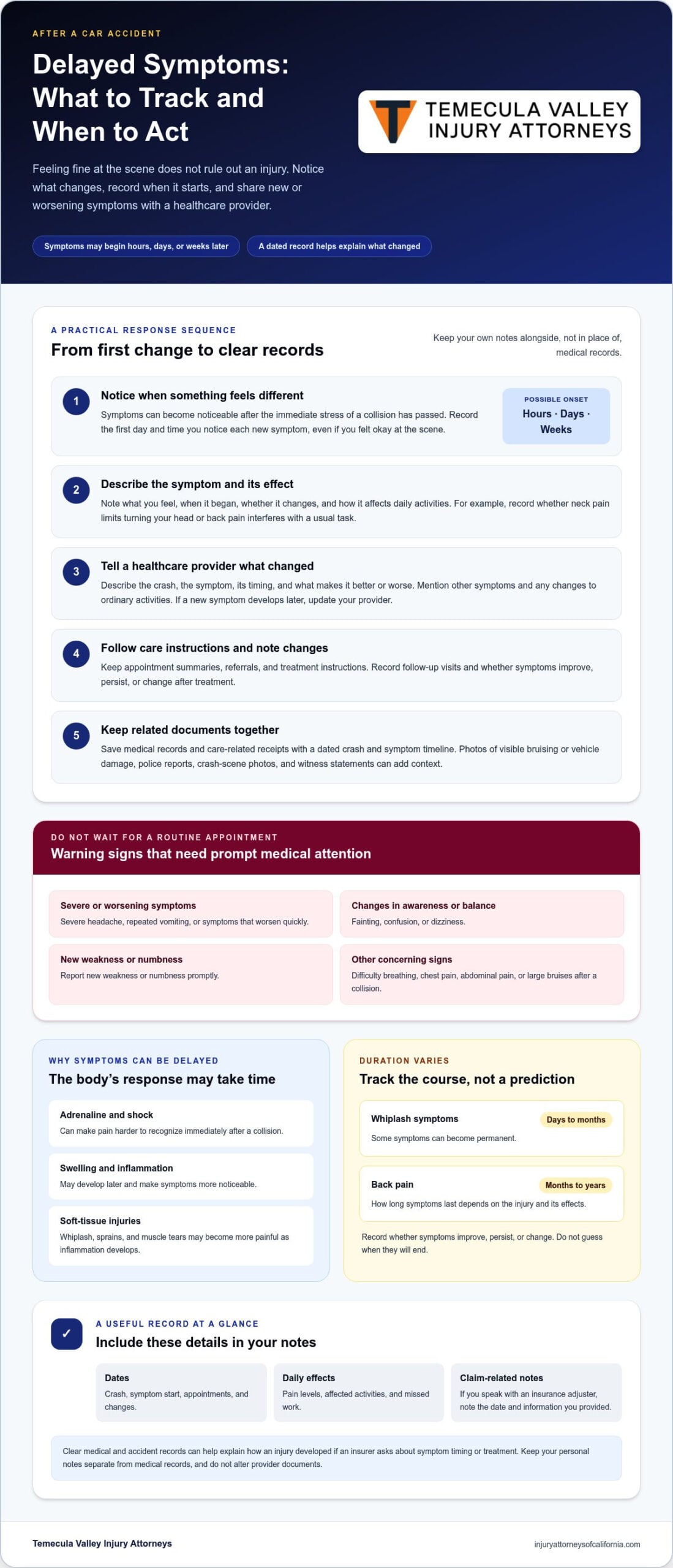
After a collision, adrenaline and shock can make pain harder to recognize, while swelling and inflammation may develop later. This delay can affect your health decisions and how clearly you document an injury for an insurance claim. A careful timeline helps explain what changed and when.
Timing of Symptom Onset
Symptoms may begin hours, days, or even weeks after a car accident. Feeling fine at the scene doesn’t rule out an injury. Note when a symptom first appears so you can describe its timing to a healthcare provider or insurer.
Soft-tissue injuries, including whiplash, sprains, and muscle tears, may become more painful as inflammation develops. Write down when new pain or headaches begin and what you were doing. This timeline can help connect your account with medical records and accident evidence.
Duration of Common Delayed Symptoms
How long symptoms last depends on the injury and its effects. Whiplash symptoms may continue for days or months, and some can become permanent. Back pain may persist for months or even years.
These timelines matter when you describe your condition and its effect on daily activities. Record treatment visits, missed work, and limits on routine tasks as they occur. Don’t guess when symptoms will end; note whether they improve, persist, or change.
For an insurance claim, keep a dated record of the crash, symptom start dates, medical visits, and changes in your condition. Save appointment summaries, treatment instructions, and care-related receipts. Photos of visible bruising or vehicle damage after a crash may also help document what you observed after the collision.
Police reports, crash-scene photos, and witness statements can provide context about the collision and its severity. Keep these materials with your medical records. If you speak with an insurance adjuster, note the date and what information you provided. Consistent records can help answer questions about when you reported an injury.
Medical evidence helps explain the injury, care received, and effects on your routine. Tell your healthcare provider when each symptom started and whether it has changed. For example, if headaches begin after the crash, share when they started and any related changes. Clear details make the medical record more useful if an insurer asks about your injury.
Compensation may involve documented medical expenses, lost income, and other losses connected to an injury. The evidence and circumstances matter; a delayed report alone doesn’t establish a claim’s value or outcome. An attorney can review records, organize supporting evidence, and respond to an insurer’s questions about the cause or seriousness of your injury.
Keep a symptom journal with your medical documents. Note dates, pain levels, affected activities, and changes after treatment. For example, record whether neck pain limits turning your head or back pain interferes with a usual task. These observations help communicate how the injury affects you over time.
For information about injury claims, our personal injury resources explain how documentation may fit into the process.
Seeking medical attention after symptoms appear
New symptoms after a collision deserve attention, even if they weren’t present at the scene. A medical evaluation can help identify what needs care and document when your condition changed.
Warning Signs Requiring Medical Attention
Some symptoms need immediate medical attention because they may signal a serious injury. These include repeated vomiting, a severe headache, chest pain, fainting, weakness, numbness, confusion, or difficulty breathing. Abdominal pain, dizziness, or large bruises after a collision also warrant prompt evaluation, since internal injuries may not be obvious at first.
Don’t wait for a scheduled appointment if symptoms worsen quickly. For example, a headache that becomes severe alongside nausea needs prompt assessment. If you feel confused or faint, ask someone nearby to help you get care rather than managing alone. Clearly describing what changed can help medical professionals assess the situation.
Medical Evaluation and Treatment
When a new symptom starts, contact a medical professional and describe the crash, the symptom, and its timing. Explain what makes it better or worse, whether it affects ordinary activities, and whether other symptoms appeared with it. For example, mention whether nausea began after a headache or tingling occurs during a specific movement. These details help guide an evaluation.
Follow your provider’s treatment plan and attend recommended follow-up visits. If another symptom develops after your appointment, update your healthcare provider through a patient portal or at a follow-up visit. Don’t wait until the next routine check-in to report a major change. Your provider can use the new information to reassess your care.
Keep a simple record with your medical documents. Write down the date of each appointment, the symptoms you discussed, instructions you received, and questions you still have. Save visit summaries, referrals, and treatment instructions in one place. If symptoms change between visits, add the date and a short description before contacting your provider.
Accurate records can clarify how your condition developed if an insurer later asks about treatment or symptom timing. Keep medical records separate from your own notes, and don’t alter provider documents. If you miss work or need help with routine activities, record those effects and when they occurred. This creates a practical timeline without replacing a medical assessment.
Whiplash symptoms
Symptoms that appear later can include neck stiffness, headaches, shoulder or arm pain, back pain, tingling, and changes in memory, vision, or sleep. Whiplash may become noticeable the next day or later.
Delayed Whiplash Symptoms
Whiplash is a neck injury caused by the head moving forcefully back and forth. Neck pain or stiffness may take hours or days to become noticeable after a collision. That delay can make it harder to connect discomfort with the crash, so note when it starts and how it affects movement.
Watch for persistent headaches or pain that travels from your neck toward your shoulders or arms. A symptom log can give your doctor useful details, such as whether turning your head or resting changes the discomfort.
Whiplash and Neck Strain
Whiplash and neck strain can involve soreness, stiffness, and difficulty moving the neck normally. Symptoms may become more apparent as the muscles react to the collision, rather than immediately at the scene.
More serious whiplash can also involve memory difficulties, blurry vision, or changes to your usual sleep pattern. These symptoms can overlap with signs associated with traumatic brain injury. Tell a doctor about each change rather than assuming it comes only from neck strain.
Back and Neck Pain
Back pain may occur alongside whiplash, but it can also involve injury to muscles, ligaments, or tendons. Persistent pain that worsens with movement may indicate a soft-tissue injury. Describe which movements trigger it and whether it limits routine tasks.
Back pain can continue for months or even years. If discomfort affects bending, lifting, or sitting through an ordinary activity, record what it limits and when. Those specifics can help a doctor understand how your symptoms change.
Symptoms aren’t always limited to the neck and back. Tingling or numbness may be associated with a pinched nerve, herniated disc, brain injury, or another nervous system problem. Note where the sensation occurs, when it began, and whether movement changes it. Share those details with a medical professional.
Headaches after a collision can have several possible causes, including whiplash, concussion, traumatic brain injury, or cranial bleeding. A headache alone doesn’t reveal its cause. Tell your doctor when it began and whether dizziness, nausea, confusion, or vision changes accompany it.
Seek medical evaluation for new or worsening neck or back pain. A healthcare professional can assess your symptoms and determine appropriate care. Keep records of symptom changes and follow-up visits, especially if pain affects sleep, movement, or everyday responsibilities.
Delayed concussion and mild TBI symptoms
A concussion is a traumatic brain injury that can affect memory, balance, and concentration. After a crash, symptoms may develop gradually, even if they weren’t noticeable at the scene.
Headaches and Possible Concussion
A headache after a collision can have several causes, including whiplash, concussion, traumatic brain injury, or bleeding in the skull. The headache alone can’t identify its cause, so tell a medical professional when it began and how it has changed.
A headache with nausea needs prompt medical attention because it may signal a concussion or more serious brain injury. Note accompanying symptoms, such as dizziness or vision changes, and explain whether they appeared together or at different times.
Concussion Symptom Patterns
Concussion symptoms can include dizziness, confusion, difficulty focusing, irritability, nausea, vomiting, slurred speech, or ringing in the ears. Some people also notice brain fog, light sensitivity, memory problems, or trouble sleeping.
Symptoms may emerge days, weeks, or months after a car accident, and some can gradually worsen. A concussion can occur without loss of consciousness, so being awake throughout the crash doesn’t rule one out.
Pay attention to changes in your routine during the days after a collision. For example, difficulty following a conversation, forgetting a recent task, or feeling unusually irritable may be important changes to report. These signs can have other causes, so describe what you’re experiencing rather than diagnosing yourself.
Monitor symptoms closely for at least several days, and watch for new or worsening changes in the following weeks. Keep a written timeline: record when a headache, balance problem, or concentration difficulty began, then note whether it improved or intensified. Share that information with your healthcare provider.
Seek medical care when symptoms begin rather than waiting to see whether they disappear. Repeated vomiting, confusion, slurred speech, or worsening symptoms call for immediate evaluation. A headache combined with nausea also warrants prompt care. A medical professional can assess your symptoms and determine appropriate next steps.
Changes in mood or thinking can be difficult to explain after a traumatic event. Note when anxiety, forgetfulness, or trouble concentrating starts, and whether it affects work or everyday tasks. Share these details with your healthcare provider, who can consider the full pattern alongside physical symptoms.
Keep copies of medical records and follow-up instructions, and write down when symptoms first appeared. If a personal injury claim raises questions about when your condition began, those records may help explain the timeline. A lawyer can review how medical documentation and crash evidence relate to your claim, without treating a symptom list as a diagnosis or a guarantee of compensation.
Why car accident symptoms may be delayed
A crash can set several physical responses in motion, and they don’t all become noticeable at once. Adrenaline and shock can temporarily mask pain, while swelling, inflammation, and muscle spasms can make an injury clearer later. This delay reflects how the body responds, not proof that nothing happened.
Immediately after a collision, your attention may focus on the vehicles, other people, or getting somewhere safe. Stress can make it difficult to notice a developing ache or stiffness. For example, you might recognize neck pain only when you try turning your head later. Record when a symptom first becomes noticeable rather than assuming it began at the scene.
Soft-tissue injuries, such as whiplash, sprains, and muscle tears, can feel worse as swelling and inflammation develop. The immune system responds to injury, but inflammation can sometimes complicate recovery. Muscles may also spasm to protect an injured area. When they relax, underlying pain can become apparent days or weeks later, and sometimes months later.
Movement can reveal symptoms that were less apparent while you were still. A sore shoulder might hurt when you reach overhead, or back pain might worsen when you bend. These examples don’t identify a particular injury. They show why it helps to note which movements trigger discomfort and whether it changes over time.
Internal injuries can follow a different course. Damage to an organ may not cause immediate symptoms, and internal bleeding can go unnoticed for several days. Worsening pain, abdominal discomfort, or shortness of breath after a crash needs medical evaluation. A delayed warning sign can still indicate a serious injury.
Emotional changes can also emerge after a traumatic collision. Anxiety, forgetfulness, or difficulty concentrating may relate to concussion, traumatic brain injury, or post-traumatic stress. These changes can persist, worsen, or affect behavior. Note what has changed in your daily routine, then share those details with a healthcare provider.
This pattern matters if an insurance adjuster questions symptoms reported after the crash. A dated record can show the sequence: collision, first symptom, medical visit, and later changes. Keep appointment records and note how pain affects sleep, movement, or work. That timeline gives an attorney concrete information to review alongside crash evidence.
The key takeaway is to treat a new or worsening symptom as new information, not as proof of its cause. Record its start, triggers, and effects, and seek medical attention when symptoms appear. If an insurer disputes how your injury developed, you can discuss your delayed injury claim with our legal team.
Temecula Valley Injury Attorneys: Car Accident Attorney
Temecula Valley Injury Attorneys helps people understand their options after a car crash injury, including symptoms that emerge later. Our team can review medical records, crash documentation, and insurance communications, then explain potential next steps for a personal injury claim.
Consider speaking with a car accident attorney if an insurer questions when your symptoms began, disputes their connection to the collision, or presents a settlement before you understand your injuries. Keep following your healthcare provider’s guidance and save records of your symptoms and treatment. Clear documentation can help us assess the issues and discuss how your claim may proceed.
If you have questions about a crash-related injury, contact Temecula Valley Injury Attorneys to discuss your situation.
Take the Next Step With a Clear Plan
New symptoms can leave you balancing recovery with questions about work, medical records, and insurance communications. Focus on your health, and make decisions about a claim with a clear understanding of the information available. A conversation with an attorney can help identify which records and details may matter as you consider what to do next.
Temecula Valley Injury Attorneys represents people in car accident, motorcycle accident, and truck accident cases. If delayed symptoms after a car accident have raised questions about your options, our team can listen to your concerns and discuss your situation. The right next step depends on the facts and evidence involved.
Contact Temecula Valley Injury Attorneys to discuss your situation. You deserve clear information as you move forward.
Frequently Asked Questions
What should you expect physically and mentally after being in an accident?
There isn’t one predictable response to a collision. You might feel physically sore, tired, or emotionally unsettled, while someone else notices little at first. Your sleep, concentration, and comfort with ordinary activities can also change. Pay attention to changes from your usual baseline, such as needing more breaks during routine tasks, and share persistent or concerning changes with a healthcare professional.
What if your pain was delayed?
Tell a healthcare professional when the pain began, where you feel it, and what affects it. For example, note whether discomfort appears during a particular task or remains present at rest. Avoid guessing about the injury’s cause. An accurate timeline supports your care and helps distinguish new symptoms from conditions that existed before the crash. Keep a copy of any visit summary.
Why Do Some Car Accident Injuries Show up Later?
The body’s response to trauma can make an injury harder to notice immediately. Stress and adrenaline may temporarily reduce awareness of pain, while inflammation or muscle spasms can make discomfort clearer later. Timing also varies by injury and person. A symptom that appears after a collision deserves attention, but its timing alone can’t identify the underlying condition.
Can You Still File a Personal Injury Claim if Injuries Appear Later?
You may still be able to pursue a personal injury claim when symptoms emerge after the crash. A later report doesn’t, by itself, establish whether the injury is related or determine the filing deadline. Deadlines and exceptions depend on the circumstances and applicable law. Preserve records showing when you first noticed symptoms, sought care, and informed the insurer.
Can you get PTSD from a car accident?
Yes. A traumatic collision can be followed by post-traumatic stress symptoms, including anxiety, distress when reminded of the crash, or changes in behavior. These effects can persist or worsen and interfere with daily life. If you notice ongoing emotional changes, discuss them with a healthcare professional. Describe what changed and how it affects activities such as driving, sleep, or work.
Can you still get compensated for your injuries?
Compensation may be available for crash-related losses when the evidence and applicable law support a claim. Potential losses can include documented medical expenses, income lost because of the injury, and other effects on daily life. Keep records showing how the injury affected your finances and routines. The amount and outcome depend on the claim’s specific facts, evidence, and available coverage.
How Can You Tell if Delayed Symptoms Are Serious?
Pay attention to symptoms that intensify, appear alongside other problems, or interfere with basic activities. Sudden confusion, fainting, difficulty breathing, or rapidly worsening pain needs urgent medical assessment. Don’t use the crash’s apparent severity or your initial condition to judge the risk. If you’re unsure whether a change needs urgent care, contact a medical professional promptly.
How Can a Lawyer Help With a Delayed Injury Claim?
A lawyer can organize the timeline of symptoms, treatment, and insurance communications, then assess how the available evidence supports your claim. For example, your lawyer may compare medical records with the crash report and address an insurer’s questions about when symptoms began. A lawyer can also explain relevant filing deadlines and review settlement terms before you decide how to respond.


