

The person who opened the door may be liable, but responsibility depends on how the crash happened and who created the hazard. A bicycle accident lawyer for a dooring incident can assess whether a driver, passenger, or another party may be responsible, including when you swerved to avoid a door without hitting it.
A door opening without warning can leave you facing injuries, medical bills, missed work, and uncertainty about insurance. It is understandable to want clear answers about who may be at fault and what options you have.
This article explains how liability may be established after a dooring crash in Temecula, when you may have a claim beyond insurance benefits, and what evidence can clarify what happened. It also covers when legal guidance may help and what a lawyer can do to assess your options.
Key Takeaways
- Learn who may bear responsibility when a vehicle door creates a hazard for a cyclist.
- Understand what can affect your ability to pursue a claim beyond available insurance benefits.
- See how witness accounts, photos, and official reports can help clarify what happened, including in a hit-and-run.
- Recognize how distraction and street conditions may contribute to a dooring crash.
- Consider when legal help may be useful for investigating fault, handling insurance issues, and evaluating your options.
Who Is Liable In A Dooring Accident?
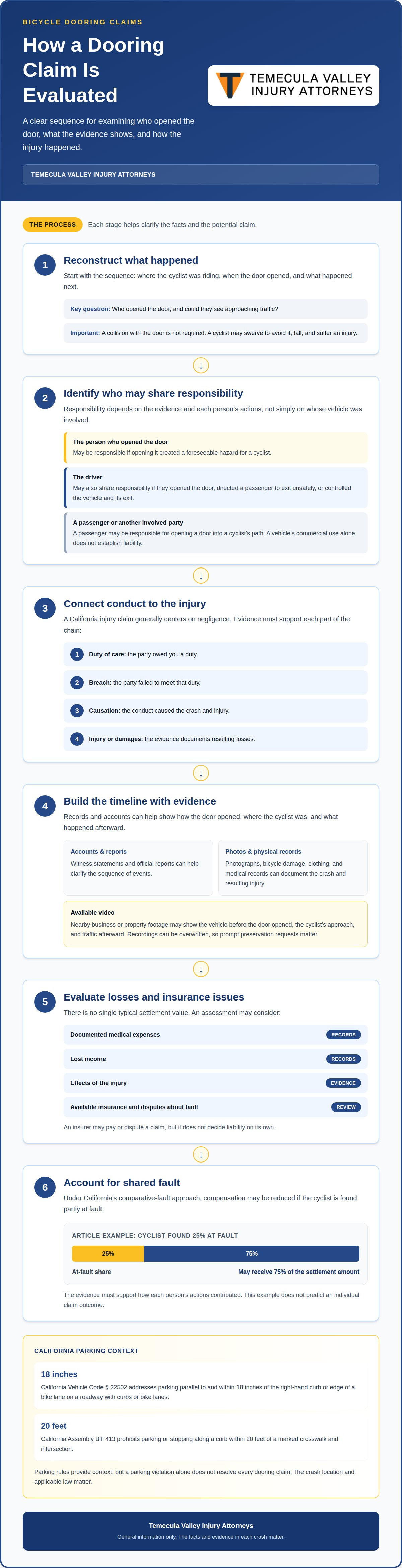
The person who opened the door may be responsible if doing so created a foreseeable hazard for a cyclist. A driver may also share responsibility if they opened the door, directed a passenger to exit unsafely, or controlled the vehicle and its exit. Liability depends on the available evidence, not simply on whose vehicle was involved.
A collision is not required for every claim. A cyclist, for example, might swerve to avoid an opening door, fall, and suffer an injury. Evidence that the door entered the cyclist’s path can help explain the fall. A bicycle accident lawyer for a dooring incident can assess whether the person who opened the door, the driver, or both may be responsible.
Passengers can be liable when they open a door into a cyclist’s path. A taxi or rideshare passenger may have opened it, while the driver’s actions may also matter. The vehicle’s commercial use alone does not establish liability. The investigation considers who opened the door, what each person could see, and how the exit unfolded.
California parking rules provide context, but a parking violation alone does not resolve every dooring claim. According to the California Legislature, California Vehicle Code § 22502 says that on a roadway with curbs or bike lanes, a vehicle’s right-hand wheels may be parked parallel to and within 18 inches of the right-hand curb or edge of the bike lane. According to the California Legislature, California Assembly Bill 413 prohibits parking or stopping a vehicle along a curb within 20 feet of a marked crosswalk and intersection. These rules address where vehicles may stop, while dooring evidence concerns how someone opened a door.
Dooring laws and driver responsibilities vary by state and city. California rules apply to a crash here. Other jurisdictions may use different language or parking restrictions, so the crash location and applicable law matter.
There is no single typical settlement value. An assessment considers documented medical expenses, lost income, the effects of the injury, and evidence connecting those losses to the crash. Available insurance and disputes about fault can also affect potential recovery.
Shared fault may reduce compensation under California’s comparative-fault approach. For example, if a cyclist is found 25% at fault, the cyclist may receive 75% of the settlement amount. The evidence must support how each person’s actions contributed.
A personal injury attorney can assess liability by comparing accounts, photographs, witness statements, and available video. Key questions include who opened the door, whether the cyclist had room to react, and whether the driver or passenger could see approaching traffic. Those details can help distinguish an unsafe exit from a crash caused by another factor.
Can You Sue Beyond No-Fault After a Dooring Crash?
In California, a bicycle dooring injury claim generally centers on negligence, not a no-fault injury threshold. To pursue a claim against another party, evidence must support that the party owed you a duty of care, breached it, caused the crash, and caused injury or damages. An insurer may pay or dispute the claim, but does not decide liability on its own.
Do not assume that another state’s “no-fault” rules govern a California collision. The central questions here are whether someone’s conduct caused your injury and what losses the evidence supports. An insurer may be involved, but its role is separate from determining who acted negligently.
A bicycle accident lawyer can assess the claim process, including identifying relevant insurance policies, gathering records of your losses, and responding to an insurer’s position. The lawyer can also evaluate whether the available facts connect the door opening to your injury. If a car door forced you into a moving vehicle, for example, the sequence and each driver’s conduct may matter.
When multiple vehicles may have contributed, an investigation must distinguish each person’s actions. A cyclist might swerve after a door opens, then collide with a second vehicle. Evidence about timing, vehicle positions, and the accounts of those involved can help determine whether one or more parties contributed. Insurers may dispute the sequence, so a clear account of each event is important.
A lawyer can help move the claim forward by:
- Identifying the people and insurers potentially connected to the crash.
- Organizing medical and income records that document claimed losses.
- Comparing the insurer’s account with available evidence and identifying disputed facts.
- Preparing a claim that explains how the conduct caused the injury and damages.
For an insurance claim, an attorney can prepare supporting records, communicate with the insurer, and address questions about fault or the cause of your injury. Share the collision details, medical records, and insurance correspondence you have. Clear information helps keep the claim focused on what happened and how it affected you.
If another moving vehicle struck you after the dooring, the car accident claim may involve overlapping evidence and insurers. A lawyer can examine how each party’s conduct relates to your injury and whether the available evidence supports claims against multiple parties.
Evidence, witnesses, and hit-and-run investigations
Evidence can help establish how the door opened, where the cyclist was riding, and what happened next. A lawyer can organize records, witness accounts, and available video to build a clearer timeline.
How a lawyer can preserve evidence and surveillance video
A lawyer can identify nearby businesses or properties with cameras and send requests to preserve footage. Video may show the vehicle before the door opened, the cyclist’s approach, and traffic afterward. Because recordings can be overwritten, prompt requests matter. Your lawyer can also collect photographs, bicycle damage, clothing, and medical records documenting the crash and resulting injury.
Keep original files of any images or messages about the collision. A lawyer can record when each item came from and what it shows, then compare it with witness accounts. A photo of the car door’s position, for example, may help explain where the cyclist was riding. An initial consultation can help identify evidence that needs prompt preservation.
Evidence of Negligence and Distraction
Negligence means failing to use reasonable care. Evidence might include a witness who saw a passenger open the door without looking, or video showing the driver focused elsewhere. The lawyer compares these details with the cyclist’s path, the door’s location, and the timing of nearby traffic. No single item automatically proves distraction or fault; consistency across the evidence matters.
Useful witness accounts describe observable details, not guesses. A witness might say the car stopped, the door opened suddenly, and the cyclist swerved. Messages sent soon after the crash can also preserve early descriptions. A lawyer can compare these statements with the scene and other records to identify differences that need follow-up.
Police Reports and Evidence Collection
Call 911 to report the collision and request assistance when needed. A police report can record the parties, witnesses, scene observations, and initial accounts. It is one piece of evidence, not necessarily a complete account. Review the report for factual errors, such as an incorrect vehicle description or missing witness, and share those concerns with your lawyer.
After a hit-and-run, give responding officers the details you remember, including the vehicle’s color, make, direction of travel, and any partial license plate characters. Witness names and telephone numbers can help investigators follow up. A lawyer can organize the report, witness contacts, photographs, and available camera footage, then assess whether the materials identify the vehicle or clarify how the door opening caused the crash.
Preserve insurance messages and any records identifying the vehicle or its occupants. A lawyer can use those materials to connect the collision evidence to the injury claim, while keeping the timeline and source of each item clear.
Dooring causes, including distraction and street design
A dooring crash can happen when an occupant opens a vehicle door without noticing a cyclist approaching from behind. A driver or passenger focused on a phone, conversation, or navigation screen may miss traffic beside the vehicle. For example, a passenger might open the curbside door just after the car stops as a cyclist rides past. The cause may involve the person exiting, the driver, or conditions that left little room to react.
Street design can affect the space between moving bicycles and parked vehicles. A bike lane beside curbside parking may put cyclists close to doors that open into their path. When parked vehicles narrow the riding space, a cyclist may have little room to avoid an opening door. The bike lane’s location, parked cars, and travel lane can help explain the paths available.
Visibility matters, too. A tall vehicle, a row of parked cars, or poor lighting may make it harder for someone exiting to see an approaching cyclist. A cyclist may also have limited visibility of someone preparing to exit, especially when vehicle windows are obscured. For example, a passenger opening a door between two parked cars may create a hazard that is difficult to anticipate from farther away.
Investigators can examine the sequence rather than assume a single cause. They may consider where the car stopped, whether the cyclist was visible, how quickly the door opened, and whether another vehicle blocked an escape route. Photos of the curb, lane markings, parked vehicles, and door position can help explain the scene. A diagram or available video may show how the street layout shaped the cyclist’s movement.
Prevention practices can reduce risk, though they do not determine legal responsibility. The Dutch Reach uses the hand farther from the door, encouraging an occupant to turn and look back before opening it. Cyclists are also advised to leave space from parked cars when practical. These precautions do not replace evidence about the crash, but can help explain whether someone had a reasonable chance to notice the other person.
After a crash, distinguish what you saw from what you inferred. Accurately describe the vehicle’s position, the door’s movement, nearby traffic, and any immediate medical concerns. Those details help connect the cause to the injury and support a compensation claim. An assessment may consider medical records, income losses, and how clearly the evidence explains each person’s actions.
When to hire a bicycle accident lawyer
Consider legal help if your injuries, disputed liability, or insurance problems make the next steps unclear. After a dooring collision, timing matters most when evidence could disappear or an insurer is already questioning your account.
Timing a Lawyer Consultation
Seek advice promptly if you need ongoing medical care, have missed work, or need help responding to an insurance adjuster. Early legal guidance can help preserve nearby video and organize witness accounts before memories fade. You can share crash details, medical records, photographs, and insurance letters during an initial discussion.
A consultation may also help if the driver denies opening the door, a passenger left, or another vehicle contributed to the collision. An insurer might argue that your sudden movement caused the crash, while a witness says the door opened into your path. A lawyer can assess the conflicting accounts and identify evidence that could clarify liability.
Get legal advice before signing a release or accepting a settlement. A release may resolve claims covered by its terms, even if you later discover additional losses. Review the document alongside your injury records, wage information, and the insurer’s explanation before deciding how to proceed.
Choosing a Dooring Case Lawyer
Choose counsel who can explain how they would investigate the door opening, identify potentially responsible parties, and handle insurance communications. Ask who will manage your case, how you will receive updates, and what records the legal team needs. Clear answers can help you understand the process and your role.
Look for a lawyer who discusses both helpful and challenging facts. The evidence, for instance, may show that a passenger opened the door while also raising questions about visibility or the cyclist’s route. A careful evaluation should connect each fact to liability, injury, and claimed damages rather than promise a particular result.
Before deciding, ask how the lawyer will preserve evidence, follow up with witnesses, and handle insurer negotiations. Make sure you understand the representation terms and how decisions about a claim will be communicated. A practical discussion should leave you with a clear picture of the next steps, without pressure to decide before you understand them.
Temecula Valley Injury Attorneys: Bicycle Accident Attorney
Temecula Valley Injury Attorneys helps injured cyclists assess potential liability, organize claim evidence, and address insurance communications after a dooring crash. We can review the circumstances, including whether a driver, passenger, or another vehicle may have contributed, and explain how those facts may affect your options.
Legal guidance may help if your injuries require ongoing care, fault is disputed, a vehicle left the scene, or an insurer is requesting a recorded statement or offering a settlement. Sharing the records and correspondence you have can help our team discuss practical next steps for your bicycle injury claim.
A careful review can help you understand the issues affecting your claim and decide how you want to proceed.
Take the Next Step With a Clear Plan
After a dooring crash, you may still be managing medical appointments, missed work, or questions from an insurer. You do not need to decide on a settlement before understanding what the available evidence means for your claim. A bicycle accident lawyer for a dooring incident can review your situation and help you consider a practical path forward.
Whether a claim can proceed depends on the facts, evidence, applicable law, and available coverage. Our team also handles injury claims involving cars, motorcycles, and trucks when another vehicle is part of the collision.
Bring the information you have, such as insurance correspondence, photographs, or records related to your injuries. We can discuss your questions and explain potential next steps without pressure or promises about an outcome.
Discuss your dooring crash with Temecula Valley Injury Attorneys. A thoughtful conversation can help you move forward with greater clarity.
Frequently Asked Questions
Can I have a dooring claim if I never actually hit the car door?
A claim may be possible if a door’s opening caused you to swerve, fall, or enter another vehicle’s path. The key is connecting the unsafe opening to your injuries. A witness who saw you change direction immediately, for example, may help explain the sequence. Medical records created after the crash can also support when symptoms began and how the incident affected you.
Are There Parked Car Open Door Accident California Laws?
California parking rules may help establish where a vehicle was positioned, but parking location alone does not establish fault for a dooring injury. A claim also examines how the door opened and whether that conduct caused harm. Photographs of the parked vehicle and its open door, for instance, may add context to witness accounts and the cyclist’s route.
Can I recover lost income if I am self-employed?
You may support a lost-income claim with records showing how the injury affected your work. Useful documents can include invoices, client correspondence, appointment calendars, prior tax records, and canceled contracts. A scheduled project you could not complete, for example, may help show a specific work loss. Keep records organized by date so the claimed interruption can be compared with your usual business activity.
Can the Insurance Company Still Blame the Cyclist?
Yes. An insurer may dispute how the collision happened or argue that your actions contributed. Its position is not the final determination of fault. Compare its explanation with witness accounts, photographs, and the timing of events. If an adjuster asks for a statement, stick to what you personally remember and avoid guessing about details you did not see.
Do I Have to Prove a “Serious Injury”?
For a California bicycle negligence claim, the key issue is generally whether someone’s failure to use reasonable care caused an injury and related damages. The “serious injury” threshold mentioned in some no-fault systems is a separate concept. Medical records can document the injury and its effects, while evidence about the crash can connect those losses to the dooring incident.
Do You Have a Case if You Were Partly at Fault in a Dooring?
Partial fault does not automatically decide whether you can recover. California uses a comparative-fault approach, which may reduce damages according to the share of responsibility assigned to you. The parties may disagree, for example, about whether you had time to react or room to avoid the door. Evidence about the scene and each person’s actions helps assess those competing accounts.
How can a bicycle accident lawyer help after you are hit by an opening car door?
A lawyer can assess who may be responsible, organize evidence, and handle communications with insurers. They can also compare the insurer’s account with available records and identify information that could clarify disputed details. If the crash involved another moving vehicle, the lawyer can examine how its actions relate to the door opening and your injuries.
Who is liable for a bicycle dooring accident in the United States?
Liability depends on the law where the crash occurred and the facts of the incident. The person who opened the door may be responsible, while a driver or another party could share responsibility if their conduct contributed. For a crash in California, the assessment focuses on evidence of careless conduct, its connection to the collision, and the resulting injury and damages.


